
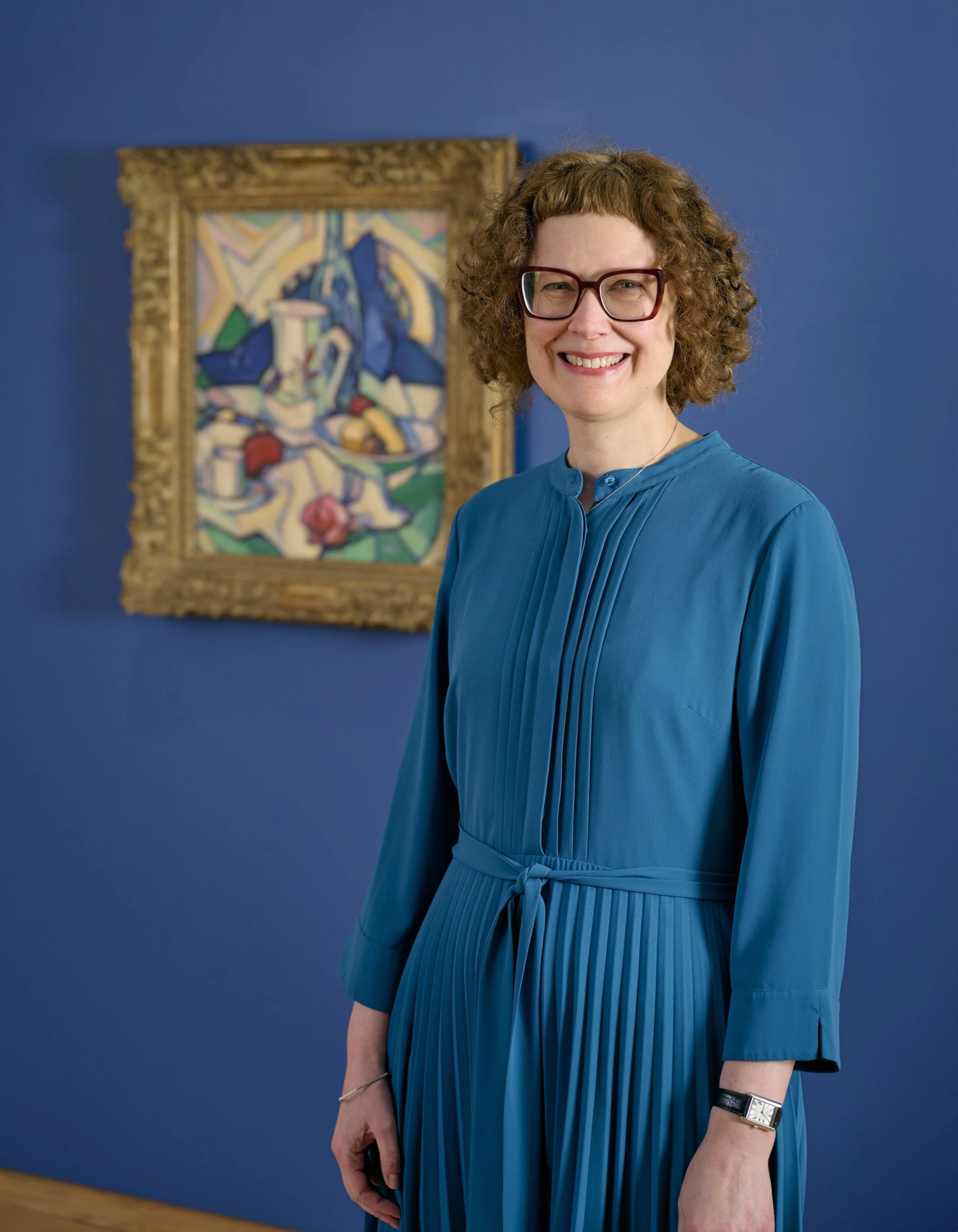
Alice Strang: A Life in Art
Alice Strang will be known to many readers for the roles which she has ably fulfilled within the Scottish art world - as Senior Curator with the National Galleries of Scotland for 22 years, author editor and contributor to several books including Scottish Women Artists, Winifred Nicholson, Wilhelmina Barns-Graham, and the Scottish Colourists; and as a promoter of Scottish Art in general through her public talks and social media profile.
I met with Alice at Lyon & Turnbull auction house in Edinburgh, to talk about her life, career, and about her latest project, her book on the Scottish Colourists. Alice is very warm and person-centred, taking time to ask after my family. In addition to these qualities, she is highly focussed on her work, lasering into the queue of tasks within her varied schedule. Alice clearly has a passion and a vocation for her work, and in relation to spreading the word about the immense cultural capital which we have within the visual arts in Scotland. Alice meets me in person at the reception desk, and guides me up to the Boardroom.
I start by asking about how it feels to be multitasking to a high level, between writing a book, working for Lyon & Turnbull, her Trustee positions, and family life. Alice replies, “it’s busy, but that’s good, and if you enjoy what you do, it doesn’t feel like work. I think the book has taken 18 months to two years, done around a full time job”.
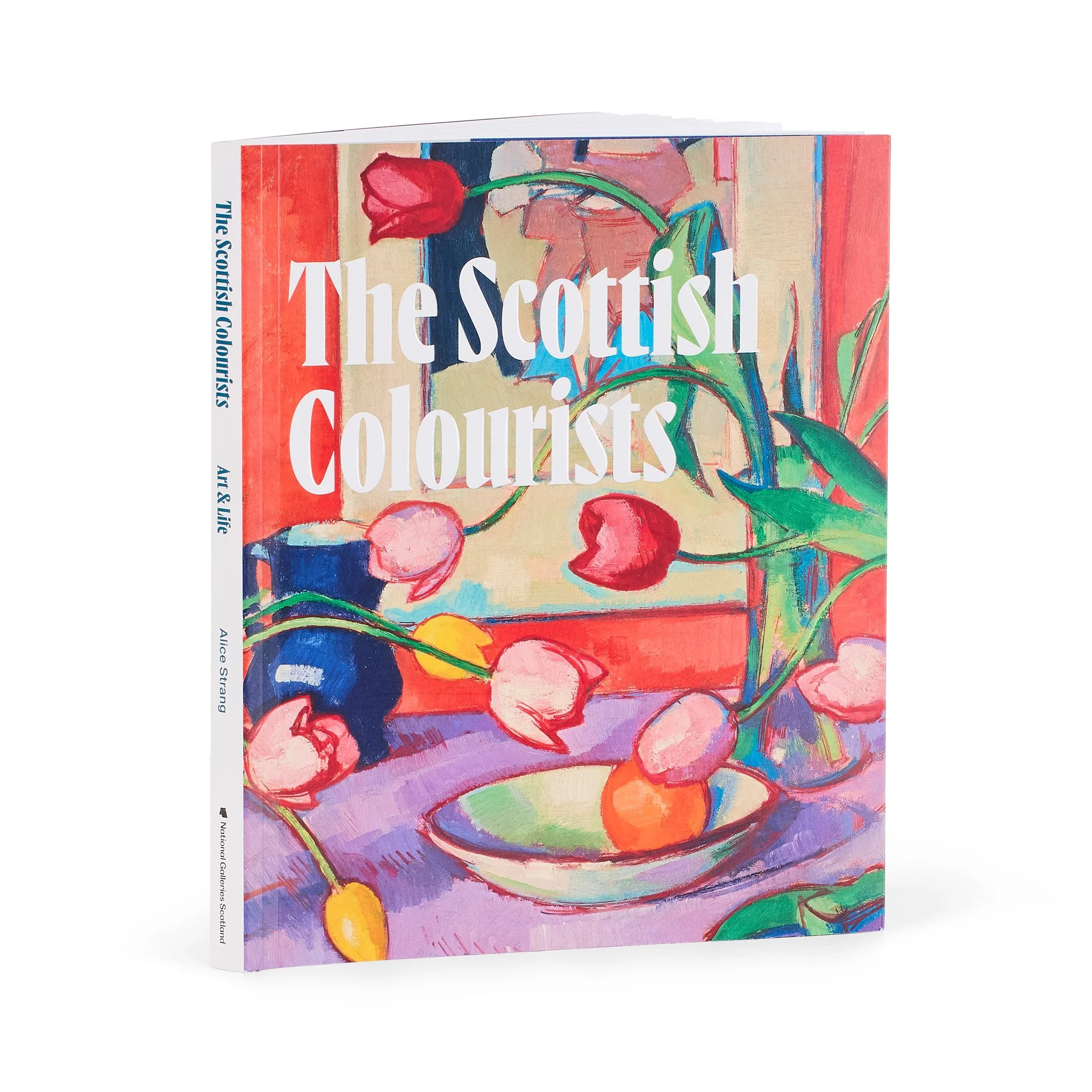
The Scottish Colourists: Art & Life, Alice Strang, Pub. National Galleries of Scotland, 2026. ISBN 978-1911054740. Image courtesy of Lyon & Turnbull.
I explore the background to Alice’s authorship of The Scottish Colourists: Art & Life, published this autumn. [1] Alice is keen to emphasise that the project is a team effort, and notes that the book builds on previous research by, amongst others, T.J. Honeyman, Roger Billcliffe [2], Philip Long and Elizabeth Cumming [3], and the monograph on George Leslie Hunter by Bill Smith and Jill Marriner [4], written to mark the 2012 Hunter exhibition at the Edinburgh City Art Centre.
The current book was commissioned by Catherine Aitken, the Publishing Projects Director at the National Galleries of Scotland (NGS), who reached out to Alice by e-mail. Alice explains that the last book published by the NGS on the Colourists, was in the year 2000. Research by the NGS had shown that many more people had heard of the Scottish Colourists than could name any of the individual artists. The purpose of this book was to re-introduce the individual artists, describing the movement and their legacy, and how describing the Colourists as a group is and isn’t appropriate. The publication was to be image-led, and to celebrate the artists’ work within the National Collection, in addition to works in UK public and private collections. Alice knew that this was going to be a major undertaking, and spoke to her husband Gavin (Managing Director of Lyon & Turnbull) about the offer. Alice recalls that Gavin had said, “what a marvellous offer; it’s the opportunity of a lifetime, and we’ll make it work”. In taking the project forward, Alice had the support of Jonny Clowes of the NGS, who edited the book.
We turn to Alice’s family background. Alice was born in Leicester; her father was a lecturer in Indian History. Her mother was a businesswoman, who sold Regency reproduction furniture and was also a property developer, restoring then selling older properties in partnership with a builder. “My parents restored a Victorian house and then a Queen Anne Rectory”. Alice had one older sister, Faith, and as children they “did everything together”. Alice and her sister attended the then recently opened Leicester Grammar School, which offered a broad academic education. After school, Alice took a gap year in Florence to work as an au pair. On days off she was able to visit the Classical and Renaissance sights, “but that’s when I became interested in modern and contemporary art, as I thought that if I saw another Renaissance Madonna and Child, I was going to scream. So the Museo Marino Marini Firenze became a very attractive place.” [5]
Alice achieved a place at the University of Cambridge, where she read firstly History with Italian Language for Part One, and secondly History of Art for Part Two, at Emmanuel College. Amongst many Lecturers, Alice particularly remembers Deborah Howard and Jean-Michel Massing for their teaching; however, “no twentieth-century papers were taught, so I volunteered one day per week at the Fitzwilliam Museum, and one day per week at Kettle’s Yard” [the famous bijou museum which grew out of Jim and Helen Ede’s home and private art collection]. Alice muses, “it is a place of magic and wonder that I have known all of my life”. Alice treasured the naiveté of the Alfred Wallis paintings: “they are hung quite low down, which is wonderful for a five-year-old, and that sort of naivety - it is probably one of the formative experiences of my life”.
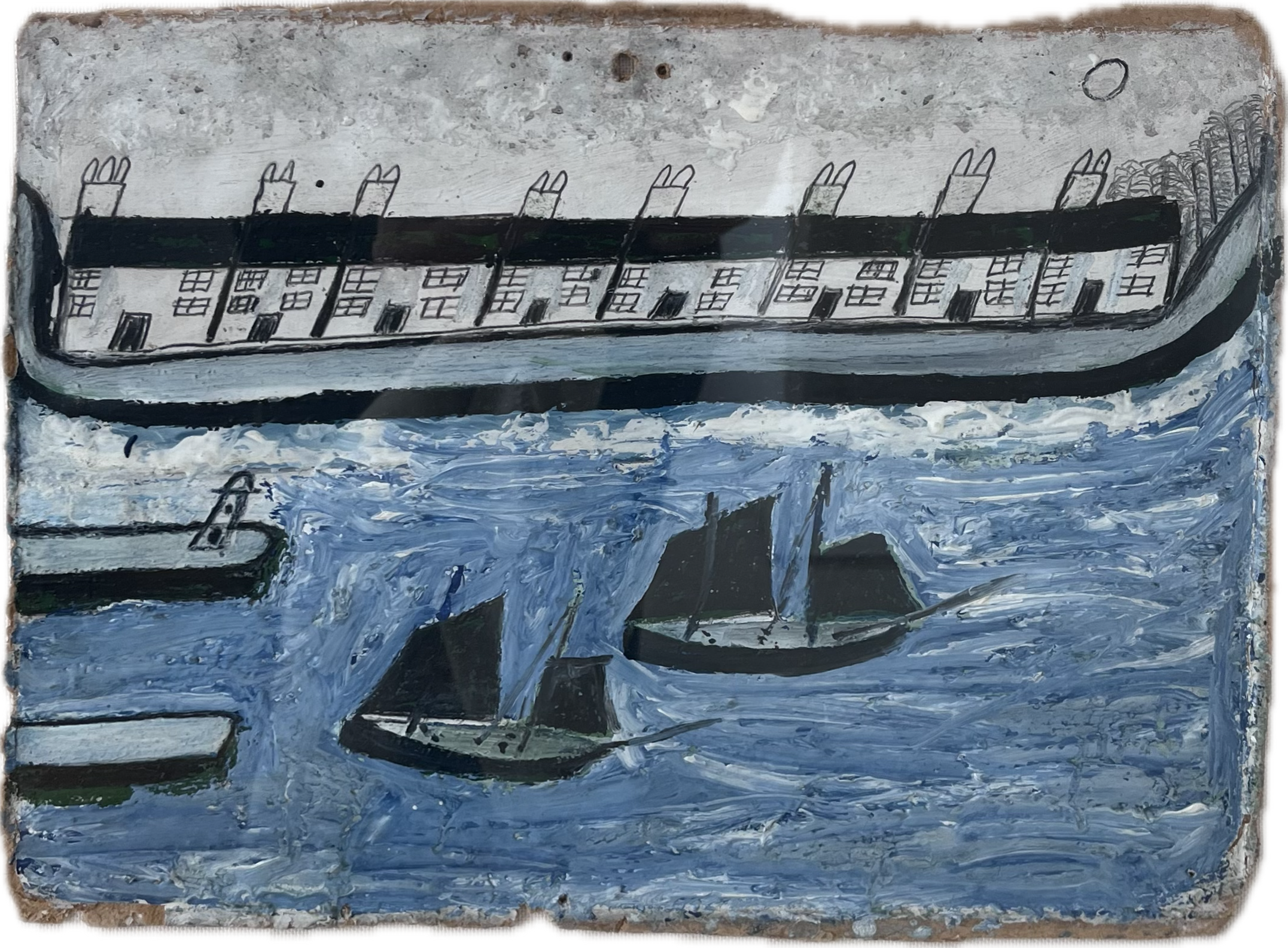
Alfred Wallis, Houses at the Water’s Edge, 23x30cm, Oil and Graphite on card, 1925-28.
Alice remembers the then Director, Michael Harrison, “showing me around and teaching me to appreciate the effect of natural light on paintings, and how the light shone through plants and lenses that Jim and Helen had hung, and the difference that made to looking at works of art, not just seeing them”. In relation to her degree, “I ended up doing my dissertation on Henri Gaudier-Brzeska; Jim and Helen collected his work and ended up looking after his estate. They let me look at the archives and study his work at Kettles Yard…. that was a marvellous situation to be in as an undergraduate”. All being interconnected, Gaudier-Brzeska’s short life interfaced with that of J.D. Fergusson; his work was published in the proto-modernist Rhythm magazine, of which Fergusson was the Art Editor between 1911 and 1913. [6]
Following the completion of her degree Alice was taken onto the Christie’s graduate training scheme, and found her métier amongst the rapidly moving auction environment, cataloguing and writing about work which was being consigned. “You spent three months each in the Picture Department, Object Department, and the front counter, then it was always lucky dip depending on who needed help. It could be Shipping, it could be the Press Department, so the idea was to give you an overall sense of how the company worked, and if you worked hard, and there was an opportunity, you might get taken on, and I was. I worked across various departments, Impressionist, Modern, and Contemporary Art. And it was an amazing training. I feel that my time at Christie’s, three and a half years, was like an apprenticeship, because you see so many works by so many artists at first hand. You are physically cataloguing, and you are working with the specialists who are incredibly knowledgeable, and who would be discussing things at a really high level. You’d be dealing with deadlines, proofing and publishing, and clients”. I ask if there was any formal training. “I think that specialists would explain things as they went along, so you had an immediate answer. You definitely pick up so much from being in that environment, seeing how they catalogue a work and handle it. You would get a sense of how they looked after clients, and how they would prioritise work to meet a deadline. You would have to come together as a team to get things over the line”.
Was a curatorial role on the horizon? “Yes. This was before the internet, before mobile phones, the place to look for a job was in The Guardian on a Monday, and in the same issue there were basically identical junior curator jobs, in what would become the Tate Modern, and here in the Dean Gallery [now the Scottish National Gallery of Modern Art 2]. They were new curatorial posts, which are really rare”. Alice applied for both, preparing for the application by making a day trip to Edinburgh on the day that the Dean Gallery opened in 1999. The Tate then phoned to say that they had lost the funding for their post. Alice was successful in her interview for the NGS post, the Tate phoning a week later to say, “we have the funding back, do you want to come for an interview?” Alice said “thank-you; fate has intervened”. This is the same fate which has given Scotland a celebrated curator of many high-profile exhibitions over the years, and increasingly, delivered talks in order to enhance public knowledge and appreciation of the work being shown.
Alice gives a deep laugh about her youthful intention to stay at the NGS for only two years, following which she went on to serve for 22 years. I ask about her memories of working at the Galleries at a time of several celebrated shows. “Well, it was really exciting because I arrived at the end of May 1999. It was about a week before the Queen re-opened the Scottish Parliament, and there was a really engaged Culture Minister in the Scottish Parliament: it was a time of Lottery funding which was new, Millennium funding, and there was an entirely new gallery [the Dean] with a wonderful collection of Surrealist art. There had been gifts and bequests from Gabrielle Keiller, Roland Penrose, and the Paolozzi gift of his studio, and it was the most amazing, exciting, and stimulating environment”. What about the level of creative freedom Alice was given? “Yes, well Patrick Elliott [recently appointed as Curator of Modern Paintings at the National Gallery in London] was my line manager, and he is one of the best human beings in the world. He was a mentor and encourager, and a teacher”.
After over two decades at the NGS, Alice, after some consideration, took up the position of Associate Director and Senior Specialist in Modern and Contemporary Art at Lyon & Turnbull. I ask how she felt about taking on the theatre of leading an auction sale from the podium. Alice smiles, and admits “I was nervous the first time, and there is quite a lot of maths to process” but “then I enjoyed seeing the momentum of the sale develop”.
Alice has a large social media presence, currently on Instagram. Alice explained that her use of social media started when she was on furlough during Covid. She was looking for positive means of brightening the collective mood. Alice found that she could relate current events to key artworks, and used the example of the news that hairdressers could re-open, which led to many more ‘caring and sharing’ posts on social media.
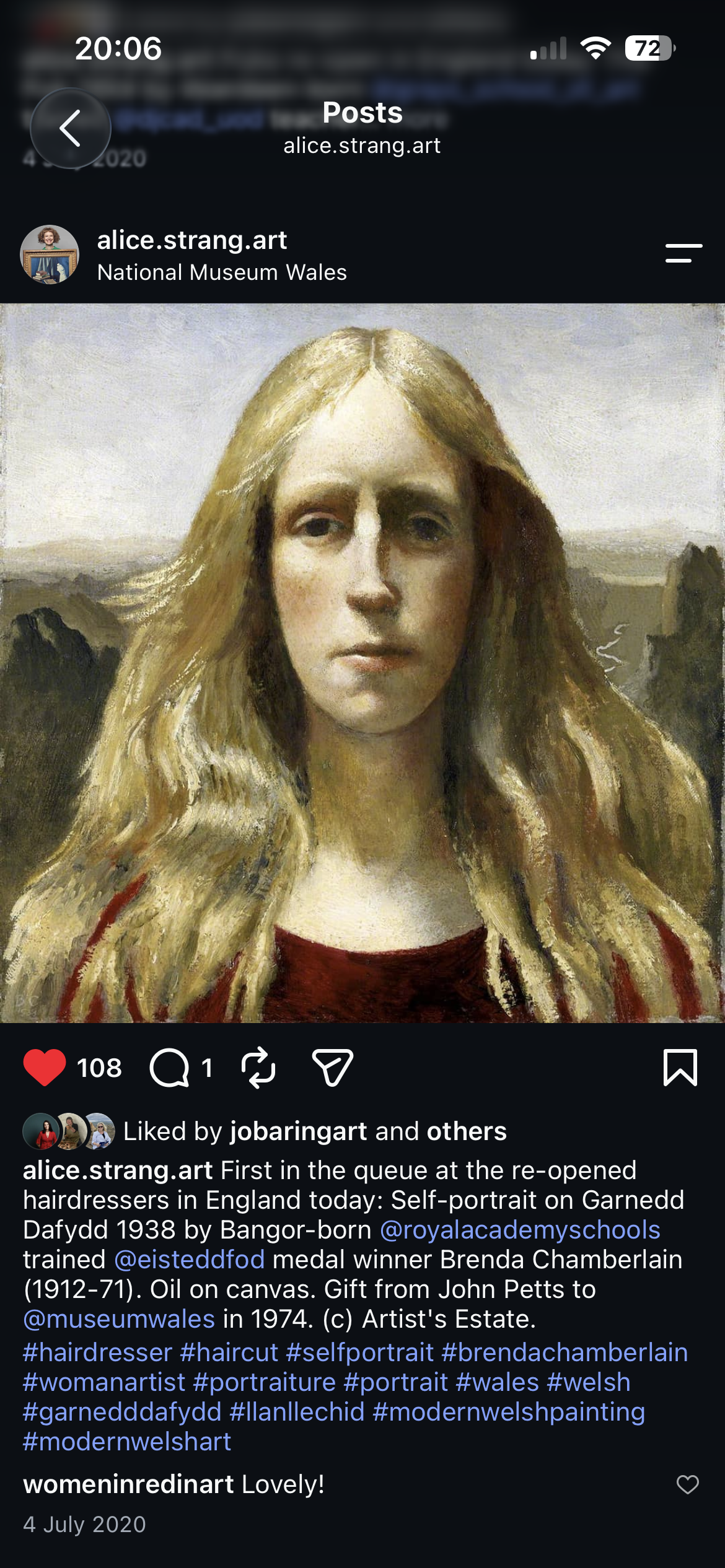
Image from Instagram @Alice.Strang.Art - Brenda Chamberlain, self-portrait, 1938, courtesy of Alice Strang.
When I propose that the ability to build a narrative around important examples of Colourist artwork has helped the paintings achieve their full potential at auction, Alice tacitly agrees. [7] Plainly however, her passion for the visual arts, including sculpture, goes well beyond commercial considerations, and this is apparent in her academic but also very humane writing, exemplified by her newly published book on the Scottish Colourists. Alice is again keen to acknowledge the team-work involved - from Jonny Clowes, her Editor at the NGS, to the fellow experts and writers who have carved a path with their own research.

F.C.B. Cadell, Interior: Lady in Black, Oil on canvas, 62x75cm, 1920’s. Private collection. Image courtesy of Lyon & Turnbull.
I ask whether story-telling of various forms provides a firm foundation for increasing public appreciation of the visual arts, using the example of Vincent van Gogh and how the correspondence with his brother helped people tune into the struggles and the joys in his life. [8] Alice responds: “there’s a balance to be found, because I think that an artist’s private life, their personality, is up for discussion when it applies to their work, but it’s unnecessary to get too tied up in an artist’s love life, and one can get too involved with that side of things, and completely forget what they were creating, because of X, Y and Z. But when I was researching for the book, you want the artists to be real people, and people want to hear about them, not an art historian’s musings. The British Newspaper Archive is an incredible resource, and through that I found that The Scotsman had reported on Cadell’s funeral, and it reported that he had been buried in a royal blue coffin, because that was his favourite colour. A Colourist to the end. And I felt that was an amazing summing up of his dedication to colour. Also, I could not resist including Fergusson’s favoured method of tanning, oiling himself, standing up, turning every 15 minutes, and I felt that was fair enough, as he and Morris were practitioners of the inter-war wellbeing and outdoors philosophy. He paints himself as being deeply tanned as a symbol of being physically healthy, compared with what a tan had been associated with earlier, which was essentially being an outdoor labourer. And whenever possible I’ve tried to quote the Colourists from letters and interviews, because again, they are the people who know their work best”.
I then reference a different kind of story-telling, that of the origins of the art movements relevant to that period, the Colourists’ early work, and the underpinning philosophies. I note that Alice has helped to bring out these influences by mentioning Fergusson’s deep connection with the Parisian scene, and his awareness of Henri Bergson, with his philosophy of the Elan Vital. Alice: “That’s right, it was important for Fergusson, less so for the others. I think that Bergsonian theory was very important for Fergusson, and best expressed by Les Eus, the work in the Hunterian Gallery. Fergusson more than any other British artist was involved in the birth of modern art in Paris, before the First World War, years ahead of, for example, the Bloomsbury Group, and so he is the one with the most significant international standing”. I note that Fergusson had met so many key figures of the time, including Pablo Picasso and Gertrude Stein, and that a work by Kandinsky was published in the Rhythm magazine which he edited. Alice references the importance of the Fergusson and Morris Archives in Perth, which she says contains “about three PhD’s worth” of unexplored material. “But it also about how he and Morris worked together, and much more research could be done on that front”.
Back to the narrative: does Alice agree that the four Scottish Colourists, although very different in personality and style, had hard lives? Alice disagrees; she has an affirmative view. “Peploe was cushioned by family money, however modest. That’s not to downplay his courage in continually developing his practice. He had a very steady married life, and loved his two sons”. In an extract from the book, Alice notes “by June 1912, Peploe had moved back to Edinburgh where he lived for the rest of his life”. However, Peter McOmish Dott of The Scottish Gallery thought Peploe a ‘lost soul’ on seeing his new work, and refused to sell it.
We move on to F.C.B Cadell. Alice comments that “Cadell had a terrific sense of humour, which helped him through some tricky patches, quite often of his own making. He was quite hopeless with money, and continually living beyond his means”. Cadell had to contend with societal disapproval over his gay identity, within the prevailing mores and the law. Alice: “Charles Oliver, who was presented officially as his manservant, was Cadell’s life partner, and of course homosexuality was illegal in Scotland until 1982 - it was mind-boggling, wasn’t it? - so yes, he was a gay man who couldn’t live openly, but he was also in a long term committed relationship. Which of course isn’t the same as being able to live in an open relationship, but he also had a talent for friendship, and had a lot of great friends”. Cadell’s estate was left almost in its entirety to his partner.
In relation to J.D. Fergusson, “I think that he and Margaret Morris [the founder of the international Margaret Morris dance movement] had periods when they had very little cash, which can’t have been easy, but I think they both had a great sense of vocation. They believed entirely in what they were doing, individually and collaboratively. Some people are less motivated by money, and their priority was their creativity”. Fergusson was always focussed on his art, and on creating a forum for intellectual debate and the sharing of creativity, driven by his international experience, his editing, reading philosophy, and the creation of art clubs. On moving to Glasgow during the Second World War, Fergusson and Morris started the influential New Scottish Group.
G.L. Hunter probably had the most challenging life of the four, partly due to financial problems. Alice has had conversations with a medical specialist, raising the possibility that he was neurodiverse. “She [the specialist] said, with many caveats, that there were signs, such as painting without cessation, to the neglect of eating, washing, or changing clothes, and that he couldn’t keep appointments”. We discuss Hunter’s episodes of mental and physical collapse, and how he would retreat to his sister’s house to recuperate. At the end of the day, Hunter had patrons who understood his innovative style. He remained committed to painting until the end of his life, which was cut short by a sudden abdominal crisis at the age of 54, in 1931.
We return to the original question, Alice commenting: “it’s interesting that you used the word ‘hardship’. And yet the vast majority of all four artists’ work is joyful, very optimistic, and I think that is one of the reasons why people are still drawn to it, now”. In agreement, I respond that the ‘colour of life’ is the essence of the Colourists’ shared mission.
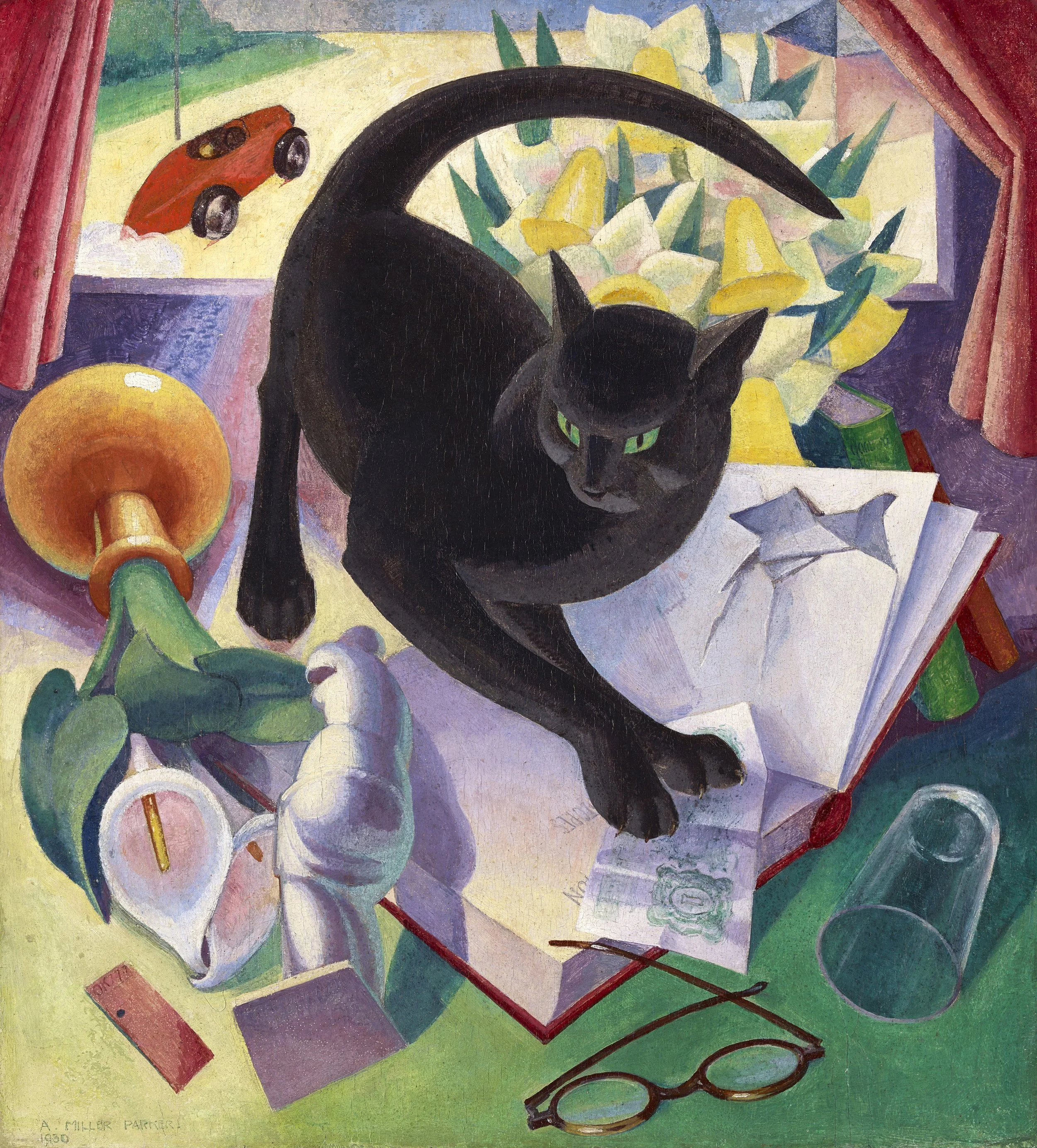
Agnes Miller Parker, The Uncivilised Cat, Tempera on board, 53 x 48 cm, 1930. Image courtesy of The Fleming Collection.
I ask about Alice’s work to raise the profile of Scottish women artists (she has edited a book with this title). Alice affirms that there has been growing interest, but also that there is some way to go ensure their proper recognition. “Joan Eardley hasn’t yet had a big public gallery exhibition in England, and I think that people would be blown away”. I ask if Eardley’s work would sit well on an international stage. Alice agrees, and she highlights the growing international stature of artists such as Wilhelmina Barns-Graham, who has just had a show in the Netherlands. We share our appreciation of artists such as Millie Frood and of Agnes Miller Parker. Alice mentions Miller Parker’s painting The Horse Fair (1928), and we then move on to the outstanding tempera painting, The Uncivilised Cat of 1930, now part of the Fleming Collection. “This brilliant painting represents an unapologetic championing of women's rights. The cat is breaking down financial, physical and political restraints, and is subverting the established order to put women on an equal footing with men”. [10]
In a quiet but definite way, Alice refers to the continuity thread within Scottish art; at the very end of her book she mentions having reached out, based on instinct alone, to Caroline Walker, who was able to confirm that her interiors had been influenced by the Scottish Colourists. “I explained that I was writing a book on the Colourists and trying to look at how they are thought of today. I asked if the Colourists had had an impact on Caroline’s practice, and she said ‘yes’ straight away. Peploe primarily, and then Cadell, and that’s partly because she grew up in Dunfermline and used to go to Kirkcaldy Art Gallery, which has a marvellous holding of Peploe’s work. Caroline said ‘I love the way in which Peploe pushes paint around on the canvas, so it’s not as if he decides what he wants to do and does the brush stroke, he will bring a loaded brush to the canvas, and then figure it out while he’s painting. To do it successfully, you have to be really confident’”.
Alice is optimistic about the current market for Scottish Art: “What has been really encouraging here is seeing the growth of interest in the Colourists internationally. I think that they have essentially always been enjoyed and admired in Scotland. Their reputation and stature within Modern British Art and within the rest of the UK is growing, but what is marvellous is that this is almost being overtaken by their links with modern French art, and they are being shown in French exhibitions, and are being collected, not just where there are Scottish diaspora, but people are coming to them through an interest in the history of colour, and in Art History, especially relating to L’École de Paris between the Wars. This is a marvellous re-interpretation of them, through a European lens”. I comment that it is like a rediscovery, after the French Government acquired Scottish Colourist works in the 1920s. Alice responds, “that’s right. And I think the concept of showing them together was market-led, that was Alexander Reid showing them all, and his son A.J. McNeill Reid brought them together; Duncan MacDonald was part of that, and it is through the Alex Reid & Lefèvre exhibitions in London and Paris that they developed an international standing. They also had exhibitions in New York, all but Cadell. The Colourist concept and name was crystallised by T & R Annan in 1948. The Colourists strike me as being one of the most obvious groups of artists who have a debt of gratitude to the art market”.
I ask for Alice’s impression of the contemporary art scene in Scotland. Alice is again positive, but pragmatic. “Well, I remember how exciting things were in 1999, and I think that questions of funding have become more acute than they were. That is partly due to the knock-on effect of lockdown, which was very hard financially and in all sorts of other ways, to the public arts sector. I think that Scotland has its wonderful art colleges, and people working really really hard in the public sector. They are absolute champions, but you can’t underestimate the challenges”. I ask if there are any particular art movements in Scotland which are catching our attention? We are both stuck for a while. “That’s a hard one to answer. I think that artists’ practice, in general, has started to widen. Traditionally the Royal Scottish Academy would define you as a painter, or a sculptor, and now that people have started to practice in a multidisciplinary way, there are fewer defining characteristics. Artists’ boundaries have expanded, and become more fluid and flexible”. I reference increasingly global spheres of interest and of knowledge. Alice reflects that this “perhaps could be almost a little overwhelming, you know, it is the same with music and fashion and so on. And yet I see more boys, for instance, wearing all black tracksuits, and it’s almost as if, in the face of so much choice, you default to one thing, and more people end up wearing that, before when you would have less choice”. Alice laughs when I comment that there is no better colour than black. We conclude that the contemporary art world can break new ground, and of course we continue to see the success of contemporary Scottish artists at an international level.
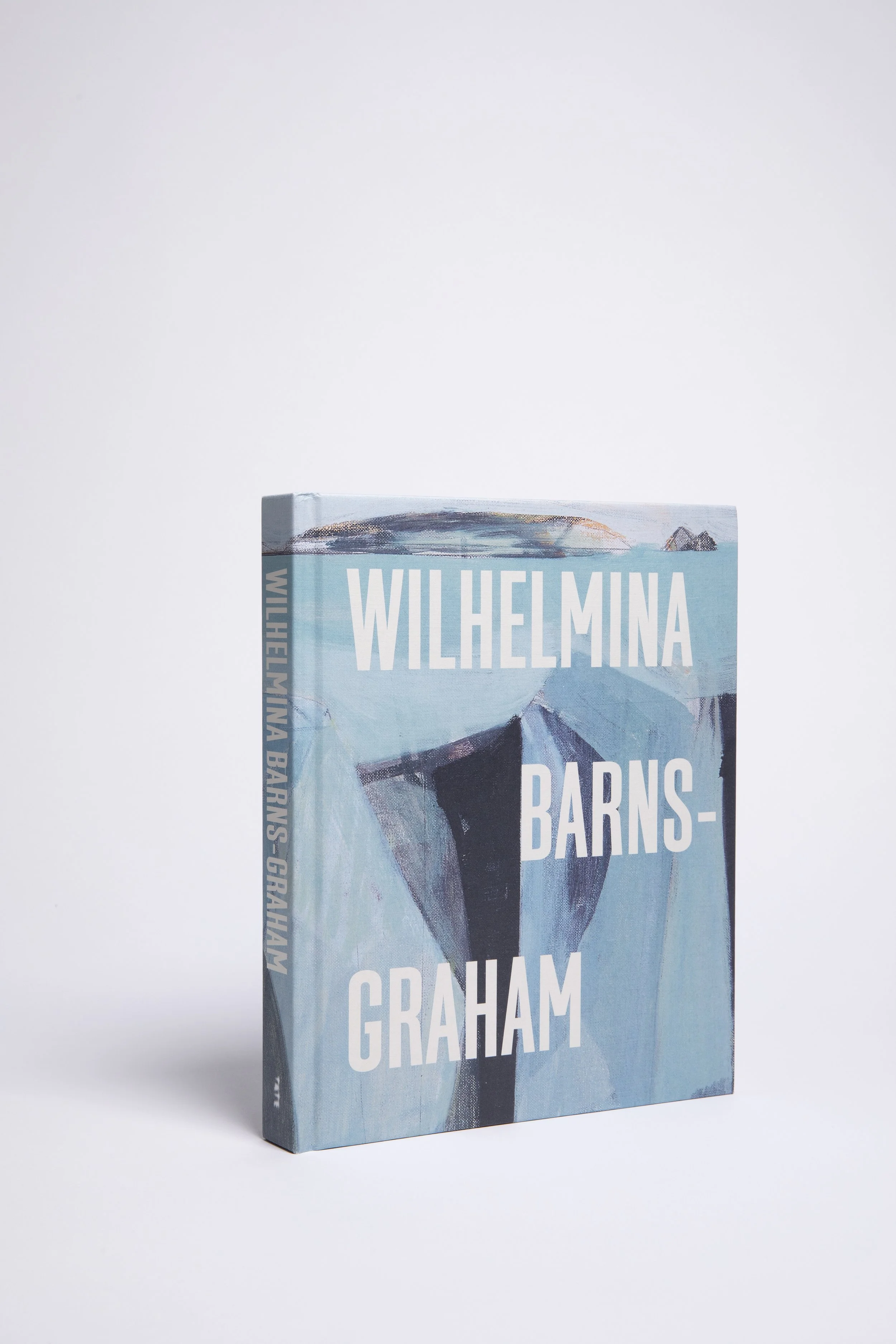
Wilhelmina Barns-Graham, Exhibition book, Tate Publishing, 2026. Image courtesy of the Tate.
Does Alice have another project lined up? “Yes, I’ve already done it! So, after this slog, I then got another unexpected email, saying ‘would I contribute an essay to The Tate retrospective exhibition catalogue on Wilhelmina Barns-Graham?’ It was to examine her childhood, and her time at Edinburgh College of Art in the 1930s, and then at St Andrews in the 1940s, therefore it was in areas which I had already researched extensively”. [11]
We move on to the broader role for the Arts within society. Alice was immediately passionate about the arts being a birthright for everyone, as consumer or creators. She recognises the great value of Scotland maintaining its free entry to museums and galleries, and also the role of foundations including the Hugo Burge Foundation (Alice is a Trustee), which has a mission to support creativity throughout the UK. I introduce Prof. Daisy Fancourt’s book, Art Cure, [12] which presents the results of hundreds of scientific studies, proving the immense benefits of arts participation to mental and physical health. I summarise the findings of a study which compared two groups: one group regularly attended a gallery and looked at original works of art. The other group looked at reproductions of the same works. The intervention group had a very significant reduction in indices of cellular inflammation, of cortisol, and other measures of stress. Alice comments, “isn’t that marvellous? And I think that in this increasingly digital world, the impact of a real-life physical experience, becomes stronger, more important, more appreciated”.
When I float the idea that all school children should have the opportunity for regular gallery visits as part of the curriculum, Alice enthusiastically agrees. “I think that when you’re young, you enjoy drawing and making things, and then you reach a point when you become self-conscious about it, and the majority of people stop making and being creative, and that’s a shame. And we can all do that. So whether it’s making, or going to see what someone else has made, and being moved by it… you know, it’s still only a proportion of the population who go to galleries, who feel comfortable. Wouldn’t it be amazing if from nursery, we brought every single child into a public gallery, museum, or library, every term? I mean, they are amazing places, on our doorsteps, for free, how astonishing is that?”
As we are coming towards the end of the interview, I ask what Alice likes to do to relax. She answers, “Write books. Research. My happy place is a library or in an archive [laughs]. And then, going to see galleries and exhibitions”. I recall that I had written about my feelings about research at the Gabrielle Keiller archives in the National Galleries, [13] with the simile of being surrounded by oxygen and fireworks. “Yes, it’s amazing isn't it, and I just think if you can find a way to enjoy and be stimulated by art, you will find enjoyment and stimulation for the rest of your life. The longer I am in this world, the more that I realise that there is more to discover. And that is inspiring. And I think that’s what I hope, if I can, to communicate to other people”.
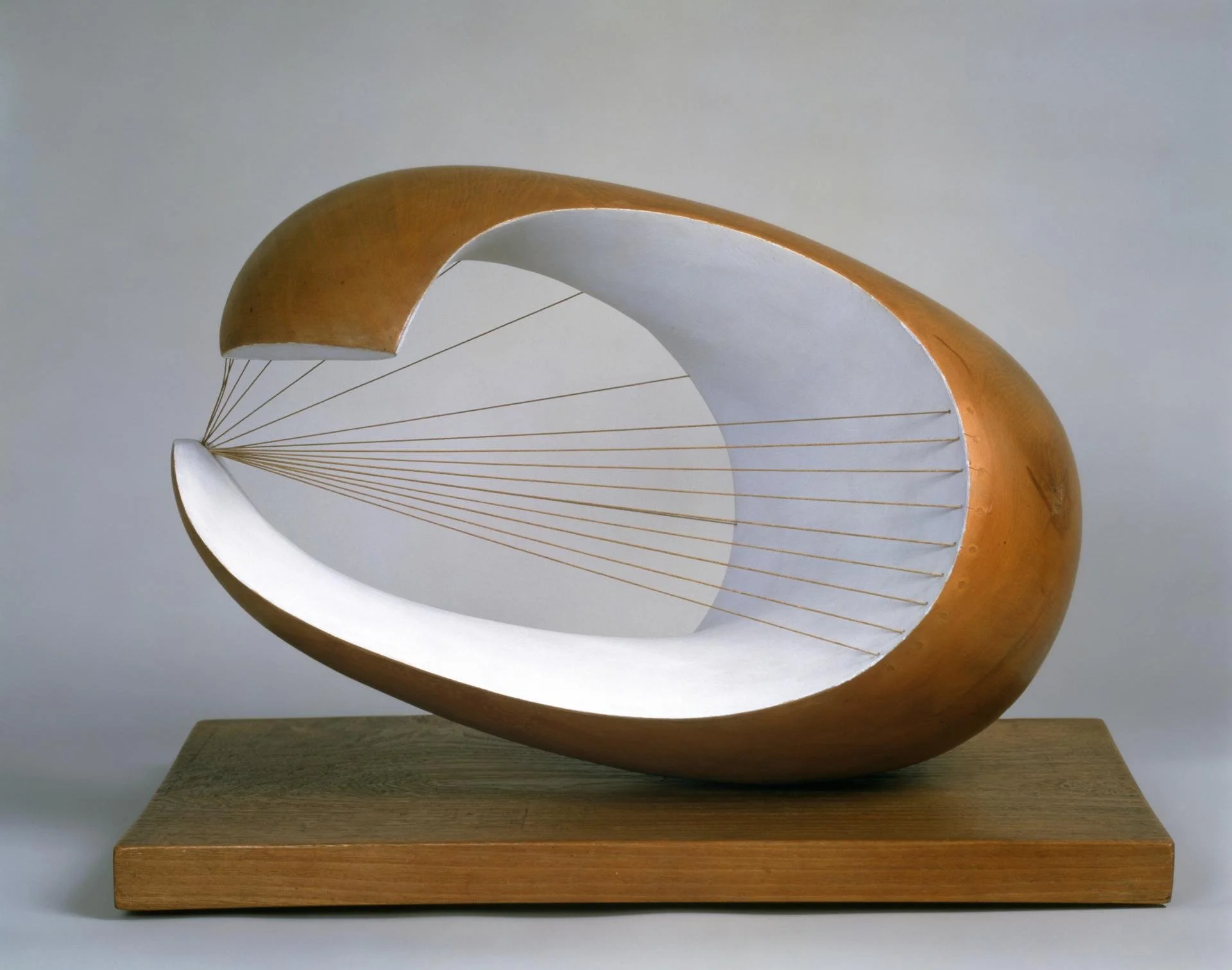
Barbara Hepworth, Wave. Wood, Paint, and String, 30.5 x 44.5 x 20 cm, 1944. © Bowness for works by Barbara Hepworth, Photography by Antonia Reeve. Courtesy of the National Galleries of Scotland.
Finally, I pose some Desert Island questions. What book would Alice take to read on the Desert Island? Alice has already spoken of her intense research in resources such as the Perth Gallery J.D. Fergusson archives, and the National Library of Scotland. Alice is so focussed that she admits to not having time for reading many novels, and so she chooses T.J. Honeyman’s book, Three Scottish Colourists (Thomas Nelson & Sons Ltd., 1977). For a soundtrack - possibly an audio book or podcast - on art! And for an artwork - a very apt choice of Barbara Hepworth’s sculpture, Wave. “It used to belong to a really interesting artist and advertising designer called Ashley Havinden, and I was involved in its acquisition just as I arrived at the National Galleries. It’s an absolutely stunning work by a woman artist, and if there ever was a moment when I needed to remind myself why I’m in the art world, I would go and sit and look at Wave”.
After we end the interview, Alice gives me a tour of the Lyon & Turnbull ‘Five Centuries’ sale, with our interest being caught by an exquisitely carved Breton wood cabinet, lot 360, with detailed carvings of musicians and rural life. [14]
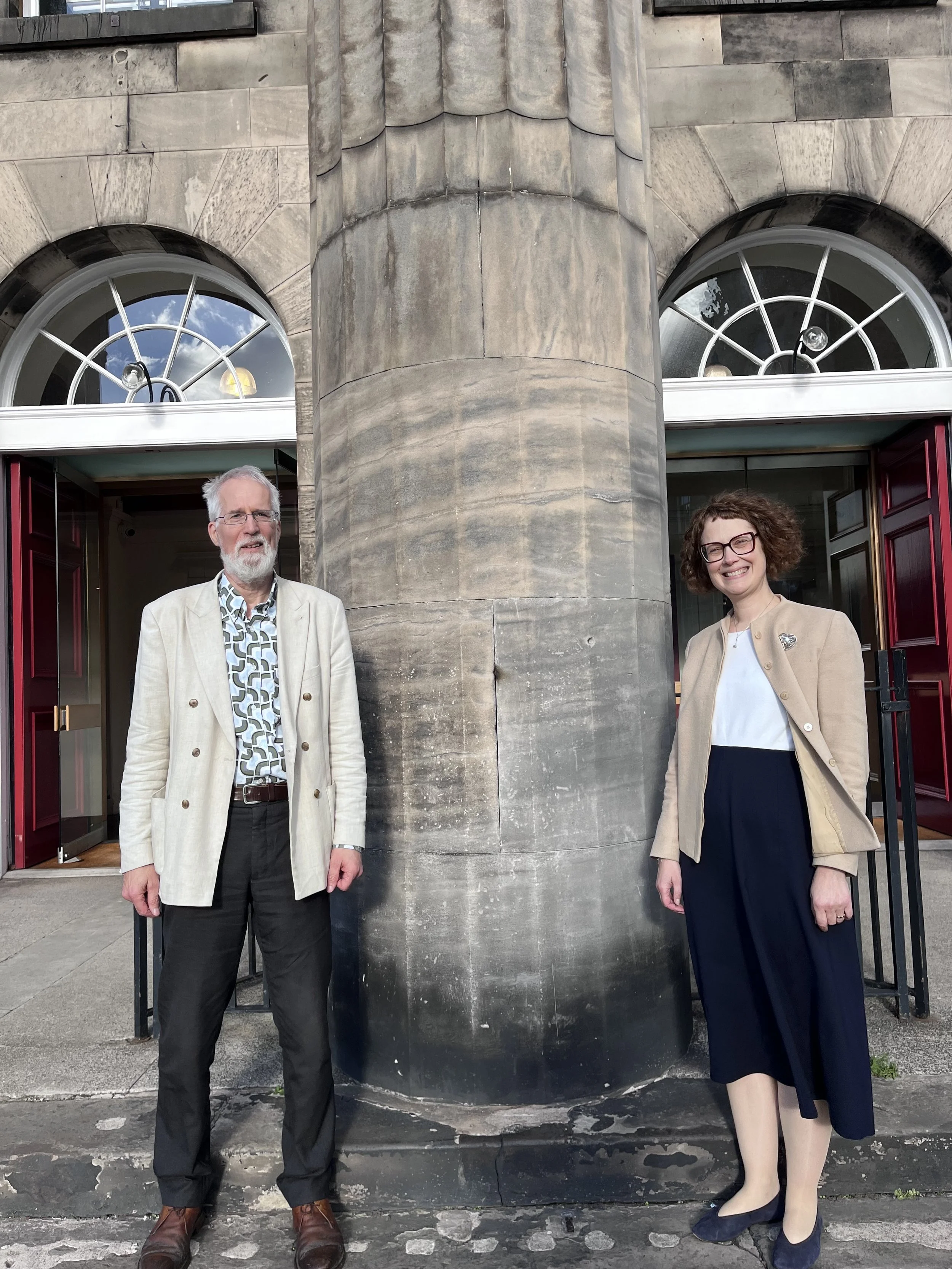
The author and Alice Strang, outside Lyon & Turnbull, October 2026, image courtesy of Laura Peterkin.
I thank Alice for her time. I am sure that our readership will want to join me in applauding Alice’s commitment to the visual arts in Scotland, while recognising that her expertise extends right through Modern British Art. Alice has a wonderfully warm and media-friendly approach to expanding public awareness of the visual arts, but in addition, she is also a very kind mentor to many within and outside her field. Alice Strang’s knowledge and research abilities place her as being one of the most able and best-known figures in the visual arts within Scotland, and increasingly, in the wider art world.
Robert De Mey © 8 November 2026
References
1. The Scottish Colourists: Art & Life, Alice Strang, Pub. National Galleries of Scotland, 2026. ISBN 978-1911054740.
2. The Scottish Colourists, Roger Billcliffe, Pub John Murray (Publishers) Ltd., 1989. ISBN 0719547342
3. The Scottish Colourists, 1900-1930, Elizabeth Cumming and Philip Long, Pub. Mainstream Publishing in association with the National Galleries of Scotland, 2000. ISBN 1840183837
4. Hunter Revisited: The Life and Art of Leslie Hunter, Bill Smith and Jill Marriner, Pub. Atelier, 2012. ISBN 978-1873830239
5. Museo Marini website: https://museomarinomarini.it/
6. Modernist Journals website page on Rhythm: https://modjourn.org/introduction-to-rhythm-and-the-blue-review/
7. Discussion of Cadell’s Lady in Black: Interior, on the Lyon and Turnbull website: https://www.lyonandturnbull.com/stories/cadell-and-the-modern-interior?srsltid=AYCX9vJyV_KdO51WlEo0o2CR2Z6ML0LRYS5-WjoBwEcDCVd8BzUw_Jh1
8. The Letters of Vincent van Gogh, Edited by Ronald de Leeuw, Pub. Penguin Books, 1997. ISBN 978-0140446746
9. Modern Scottish Painting, J.D. Fergusson, Pub. William McLellan, Glasgow, 1943.
10. Description of The Uncivilised Cat, on the Fleming Collection website https://flemingcollection.com/collection/search-the-collection/the-uncivilised-cat-1930-3259
11. WIlhelmina Barns Graham, exhibition book published to coincide with the retrospective at Tate St. Ives: Ed. Katy Norris, Pub. Tate Publishing, 2026 ISBN 9781917055468
12. Art Cure - the Science of how the Arts transform our Health, Daisy Fancourt, Pub. Cornerstone Press, 2026. ISBN 978-1529935530
13. Art-scot issue 16; Gabrielle Keiller - an Appreciation, in twenty-five objects, Robert De Mey, 2026 https://www.art-scot.com/gabrielle-keiller