
Re-Instating William Lamb
Gillian Zealand first came upon the work of William Lamb while working at Montrose Museum in the 1970s and told his story in The Book of the Braemar Gathering, 1993. Here she takes a fresh look at this gifted artist whose achievements are celebrated by his many 'Friends' in the Angus town.
Of all the Angus burghs, Montrose makes the grandest gestures, its impressively wide High Street overlooked by the three-storey Town House and Gillespie Graham’s 220ft steeple. Scrutinising this scene from high stone pedestals are the statesmen Joseph Hume (a native of the town) and Sir Robert Peel, resplendent in white marble.
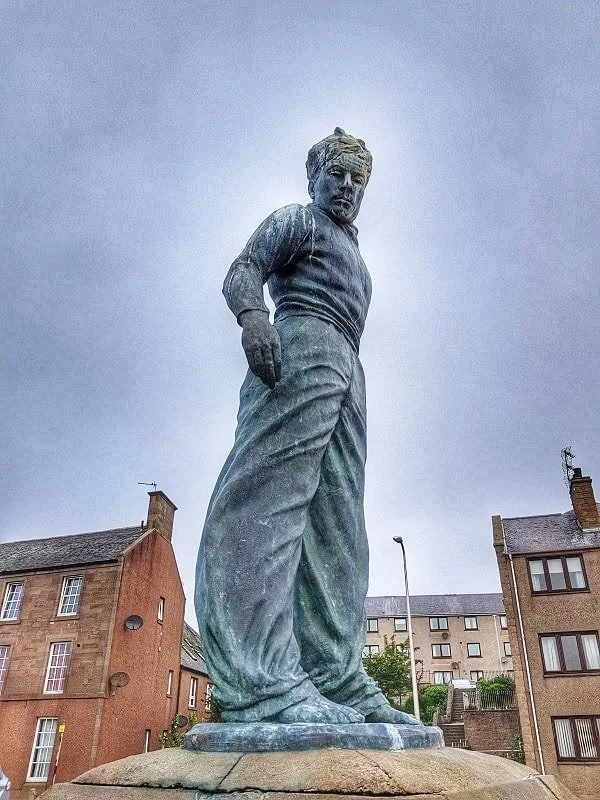
Recently, two other statues have joined these celebrated nineteenth century reformers. One commemorates the famous Marquis, cutting a dash outside his family mansion. The other, in front of the Town House, is of a rather different stamp. Cast in bronze, it shows a strongly-built young man in working clothes, his sleeves rolled up and his feet squarely on the ground as he gazes composedly out at the passing folk of the town. His name is Bill the Smith. To my mind, this artisan blacksmith, comfortably at ease in his grand surroundings, could almost be a metaphor for the life of his creator, the sculptor William Lamb. Except that, unlike his reassuringly permanent creation, William Lamb very nearly sank out of view.
The side-streets and vennels running east of the High Street lead down to Market Street, a much more modest affair despite the seeming importance of its name. At number 24, a high blank wall conceals a small courtyard building entered via a wrought-iron gate in the neighbouring close. This is the William Lamb Memorial Studio. Inside the entrance is another bronze figure: a boy this time, with his legs tucked beneath him and his head leaning on his shoulder; a lazy boy, passing the time doing nothing. His name – unexpectedly, after the down-to-earth ‘Bill the Smith’ – is Le Parasseux. French names and blacksmiths: we’re not even in the Studio yet but already William Lamb is emerging as a man of surprising contrasts.
Inside it’s quiet now apart from the respectful murmurs of visitors. In the high-ceilinged workshop, people in twenty-first century clothes weave among pale plaster figures, the ‘positive’ models prepared for casting. Bronze busts and figurines are aligned against the white walls in graphic simplicity. An adjacent room contains evidence of printmaking (though the press is missing, currently being put to good use in a local printmaker’s workshop). Above this is the restful, wood-lined apartment where Lamb did his colour work and entertained clients and guests; hanging on the walls are his prized certificates confirming his Associateship of the Royal Scottish Academy and his 1929 Guthrie Award, given to the most promising young artist of the year. Protected in folios but nonetheless a major part of the Studio’s contents is an astonishing collection of drawings, etchings and watercolours. In the 1930s and 40s this whole building was dedicated to art, and it still contains much of the output of a man who was regarded as one of the foremost artists of his time.
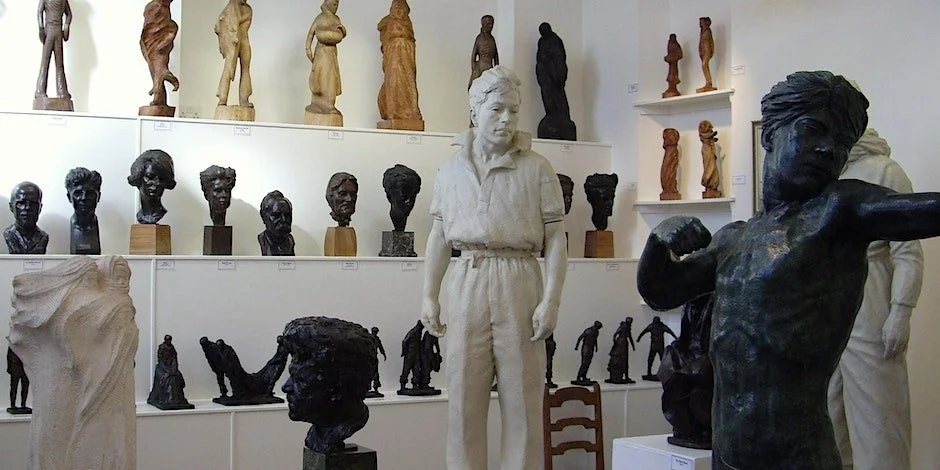
William Lamb Studio, main gallery.
It also bears witness to the astonishing collection of people who passed through these doors, leaving their traces behind in the form of statues and busts and providing further evidence not just of William Lamb’s talent and productivity but also his social orbit. Salmon fishers rub shoulders with the great and the good of Montrose, while county landowners, and even royalty, mingle with Scottish nationalists and the movers and shakers of the Scottish Renaissance. This was where the men and women of Ferryden, Montrose’s fishing community across the South Esk, came to be immortalised in clay and bronze, their likenesses going to the Paris Salon and the Edinburgh and London Academies and gaining Lamb many accolades and his Guthrie Award. It’s where Lamb and Violet Jacob, poet, novelist and a Kennedy-Erskine of Dun, giggled together over Lamb’s spectacular rendering of Hugh MacDiarmid - all flaming hair and fervour - and it’s also where the Duchess of York, later the Queen Mother, was once entertained to tea. Yet to many Montrosians, William Lamb was just a ‘puir cratur’ who went about on a bicycle, a misfit who lived an increasingly spartan existence propped up by a close group of friends. T.S. Halliday and George Bruce, in their overview Scottish Sculpture: A Record of Twenty Years (1946), acknowledged his work as ‘markedly individual’ but failed to find any biographical information about the man. Even his colleagues at the RSA (and he exhibited every year from 1925 until his death in 1951) regarded him as something of a recluse, though his obituarist, writing in 1951, states that in conversation he was lively, educated and informed.
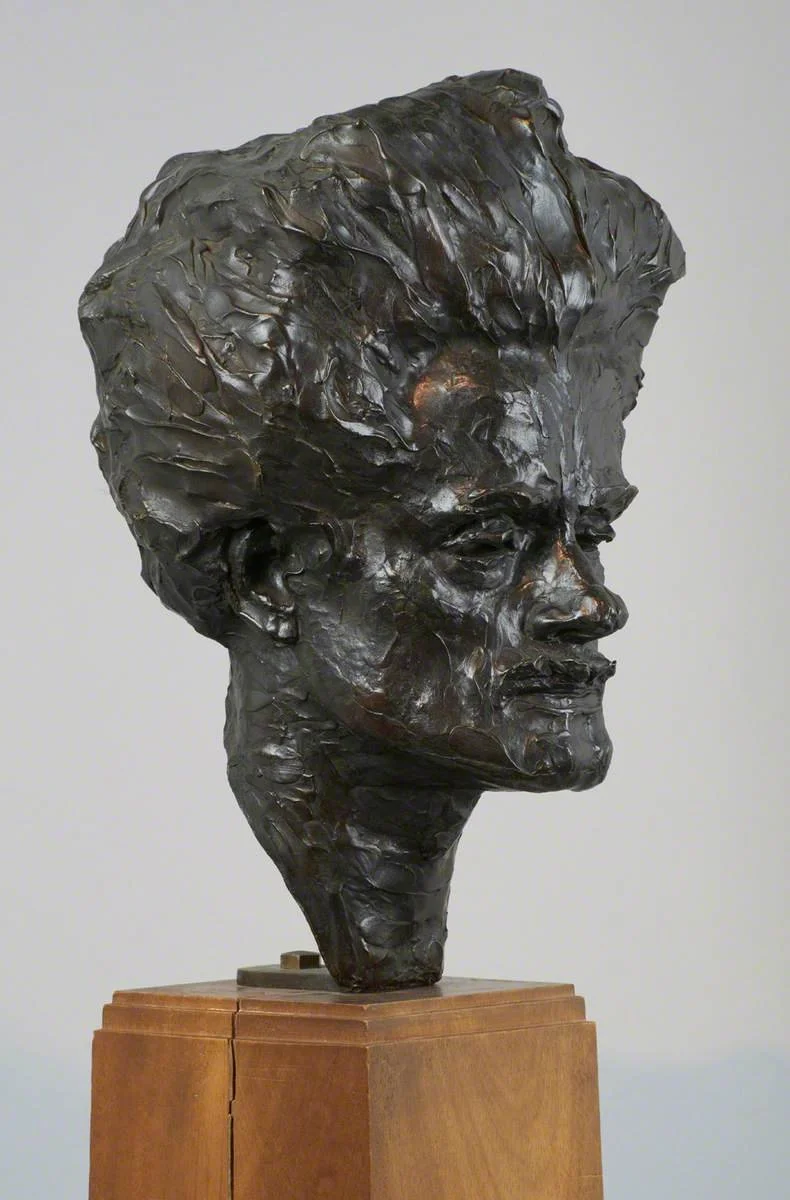
William Lamb, Hugh MacDiarmid. Bronze. 42 x 29 x 27cm. 1927.
So whatever happened to William Lamb ARSA, friend of royalty and fisherfolk alike? We have Angus Council, the author of a book and a group of modern day ‘Friends’ to thank for restoring this overlooked genius to his proper place in the canon of Scottish art.
The book is the work of the late John Stansfeld, director of a Montrose salmon fishing firm and a member of Montrose Heritage Society. In 2003 he decided to find out more about this elusive individual as a retirement project. It took him ten years of research. The resulting publication, The People’s Sculptor (Birlinn, 2013) is a revelation: readable and scholarly in equal measure, it recounts the artist’s life (which was by no means an easy one) and firmly reinstates William Lamb as a major player in the Scottish art scene in the first half of the twentieth century.
Meanwhile the Studio and its contents, gifted to the town on his death and opened in 1955, passed in the 1970s to Angus District Council’s Libraries and Museums Department and thence in 1996 to Angus Council’s Cultural Services. From 1977 until his retirement in 2013 (first as District Curator and later as Director of Cultural Services), the Studio has been incredibly fortunate to have been within the remit of the indefatigable Norman Atkinson, who oversaw its restoration and helped to bring order to the collections. He then went on, in his retirement, to become Chair of the ‘Friends’ and in 2027 will celebrate 50 years of involvement with William Lamb! Truly the Studio is a delight to visit, not only for the unique collection it contains (currently some 118 sculptures, representing around half of Lamb’s known output, in addition to the folios of drawings, prints and paintings) but also for its delightful ambience and the sense it imparts of a place well cared for and cherished. Norman Atkinson is fulsome in his praise for the role of the ‘Friends’ in this. The Friends (full name Friends of the William Lamb Studio, or FOWLS) were formed in 1977 and one of their earliest projects was to record the memories of Montrosians who had known him. Over the years their contribution has been invaluable: publicity, events, the website, sales and manning the Studio through a rota of informed volunteers are just some of their activities as they work to keep the artist’s memory alive and relevant to Montrose. They hope to ensure that the Studio is no longer what The Times in 2023 called ‘the hidden secret of the Scottish arts world’.
Friendships meant an enormous amount to William Lamb in his lifetime. Now, almost seventy-five years after his death, it’s a measure of the man that he has inspired that level of loyalty from both his biographer and his many present-day supporters. I hope what follows may go some way to illuminating this, and I fully acknowledge that without all this immense effort and commitment this article could not have been written.
In the Studio, alongside his many clients, you come face to face with the man himself. The set of his jaw and intense gaze give him a determined look. The 16-year-old who stares out of an earlier self-portrait – a dark drawing, skilfully handled in pastel – is wide-eyed with concentration and seems more guarded. But then Lamb had not had an auspicious start in life. Born in 1893, his ancestors were stonemasons but his father, like many in this seaward town, had felt the lure of the Baltic brigs. Sadly, alcohol got the better of him and he returned to shore life and a menial, low-paid job. It was inevitable that William, youngest of six and already an inveterate drawer on jotters, should leave school at the earliest opportunity to earn his keep. His oldest brother James had followed the family tradition and set up as a monumental mason; he took William on as apprentice. It was also James, apparently, who appreciated his need to draw and got him enrolled in the evening ‘Continuation classes’ at Montrose Academy.
These classes were taught by John Myles and Lena Gaudie (Lamb remembered her from school as an older contemporary whose skills he admired even then; the admiration soon became mutual). The stonemason-by-day spent his evenings learning drawing and painting, modelling, probably etching and woodwork, and crafts such as leather- and brass-work.
Through his love of football Lamb had made friends in Aberdeen, and, much to his brother’s chagrin, his newly-trained apprentice went off to join a firm in the Granite City. This gave him the opportunity to attend evening classes at Gray’s School of Art, where over the course of a year he studied life drawing and modelling. It must have been clear to him even then that this was where his life was heading.
In the Studio is a beautiful plaque bearing the profile of a young woman, entitled simply ‘Jess’. It was probably the last thing Lamb did – or at least, which has survived - before his world completely changed.
Lamb had no interest in politics but he abhorred injustice and when war in Europe became inevitable, he signed up. Photographs exist of him proudly wearing the kilt of the Queen’s Own Cameron Highlanders but he was soon exposed to the full horrors of trench warfare. Somehow he managed to sketch and to keep a diary, and somehow he survived, although he was wounded three times. The first wound was to his face, but superficial; the second, more serious, was to his leg, and involved a period of recuperation (the leg never fully recovered and this was the reason why, for the rest of his life, he preferred to go around by bicycle). The third, for an up-and-coming artist, was catastrophic: a shrapnel strike severed a nerve in his right arm and left a piece of metal lodged in his thumb. And in the confusion of evacuation his sketchbooks and diary were lost.
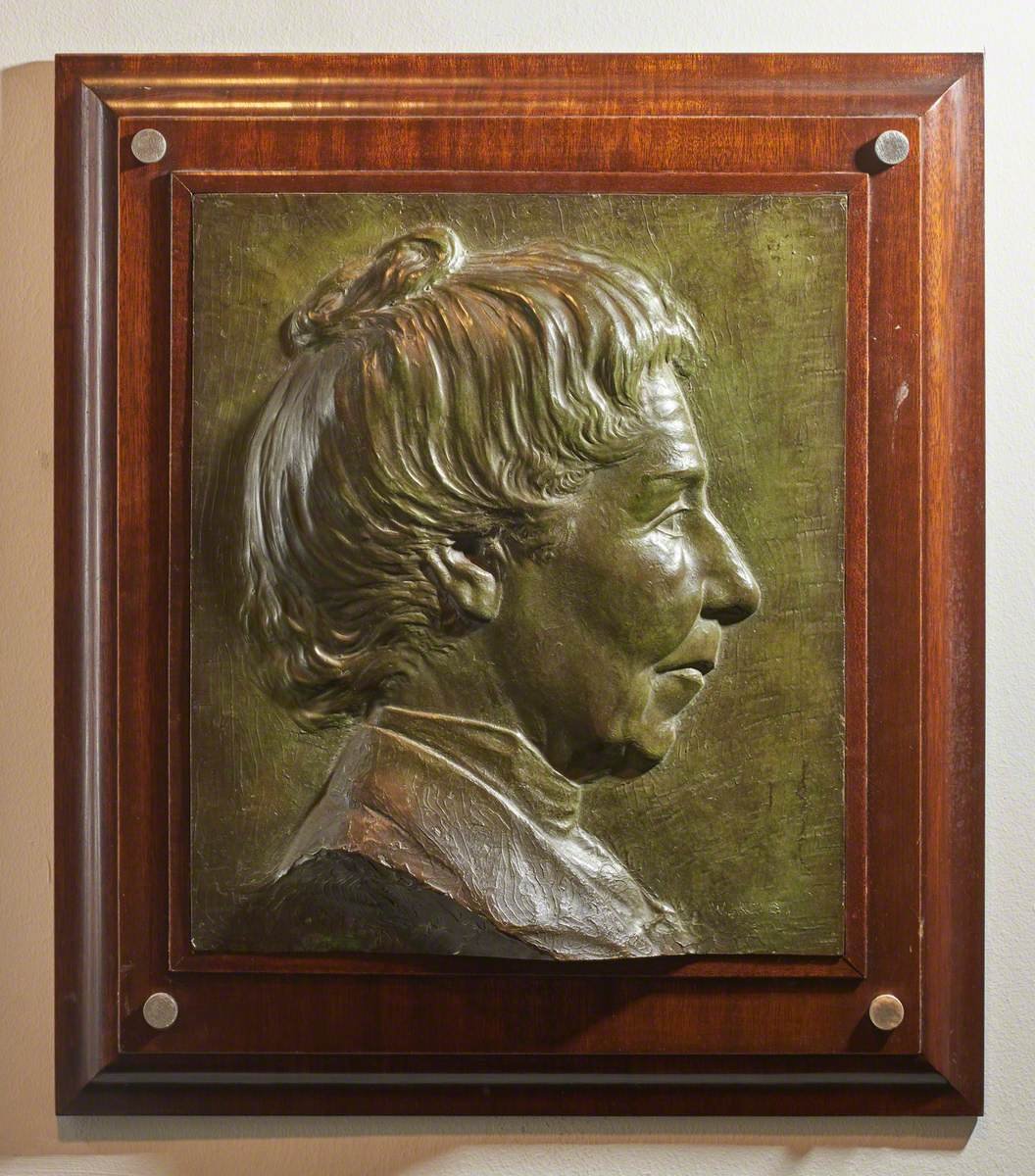
William Lamb, Mrs. Jessie Orkney. Bronze. 29 x 34 x 3cm. No date.
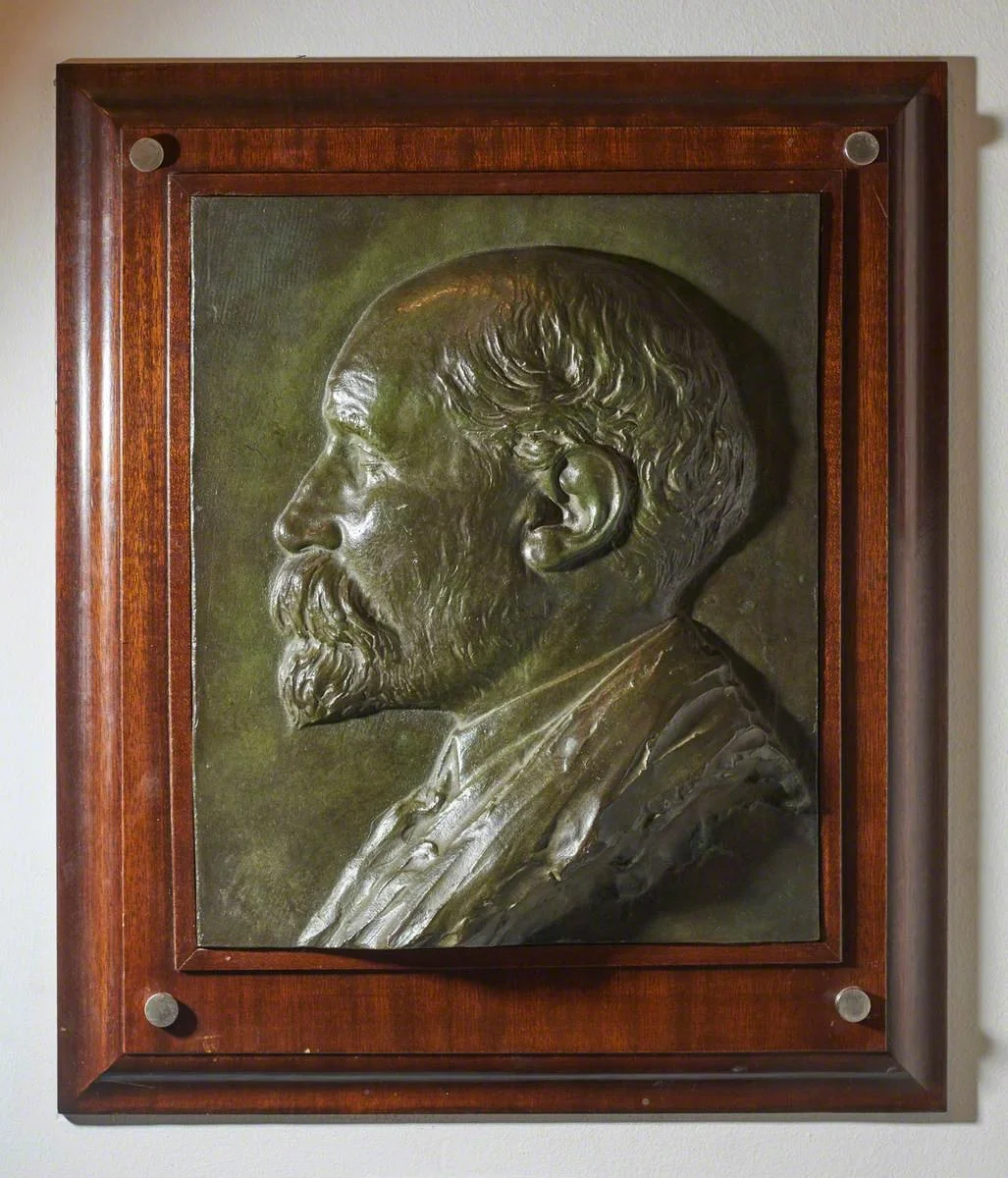
William Lamb, William Orkney. Bronze. 29 x 34 x 4cm. No date.
Lamb’s war was over, but he struggled to rebuild his life. At first he was unable to speak. It’s thought he may have sought help at Sunnyside, Montrose’s progressive psychiatric hospital, and that this may have been where he met William Orkney, the clerk of works, and his wife. This kind-hearted couple took the young man under their wing and for years treated him almost like one of their own. He repaid them with his unqualified friendship and by immortalising them in two beautiful reliefs.
But first he had to learn to draw and sculpt again, partly using his left hand, partly by strapping his tools onto his useless right and using the left for guidance. For this he had to thank Lena Gaudie, his teacher at the resumed continuation classes. The friendly face of Lena Gaudie, a braided band round her head, was Lamb’s first ‘left-handed’ portrait bust and it’s a delightful work, a worthy ‘thank you’ to someone who became a lifelong friend.
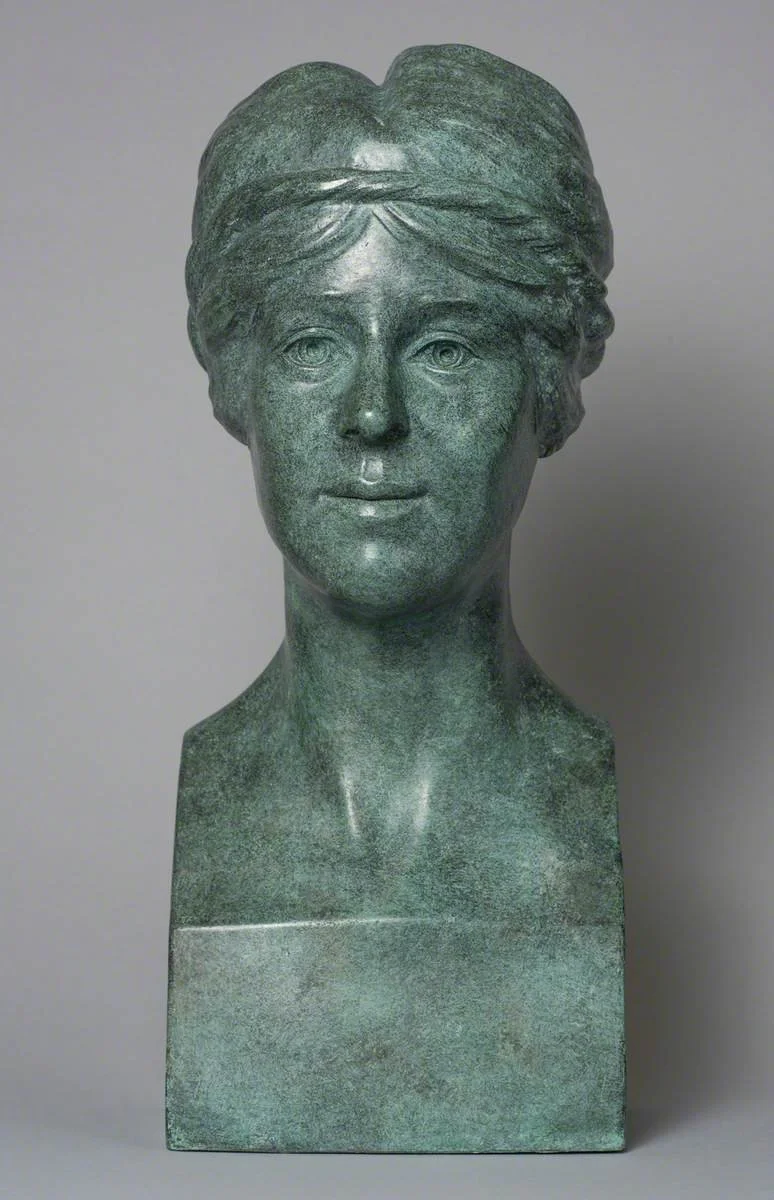
William Lamb, Lena Gaudie. Bronze. 46 x 25 x 25cm, 1921.
Lamb was not abandoned by the War Department, who awarded him a pension. He was also sent to Craigmillar Hospital in Edinburgh for treatment to his injured hand but a series of operations only succeeded in making things worse (the embedded shrapnel made shaking hands painful and this, together with a dislike of crowds induced by the war, his abhorrence of alcohol and his disregard for social niceties, may explain his avoidance of Academy events). The experience, however, had a silver lining: he enjoyed the cultural life of the capital, and, with the aid of bursaries from Forfarshire Education Authority and Montrose Educational Trust he was able to enrol at Edinburgh College of Art and study under the expert tutelage of David Foggie (life drawing and anatomy), sculptor Percy Portsmouth and E.S. Lumsden, author of The Art of Etching. David Foggie, long-time secretary of the RSA and known for his sympathetic portrayal of the working classes, became a particularly good friend. He and Lamb did each other’s portraits: Lamb figured a characterful bust while Foggie reciprocated with a fine pencil drawing.
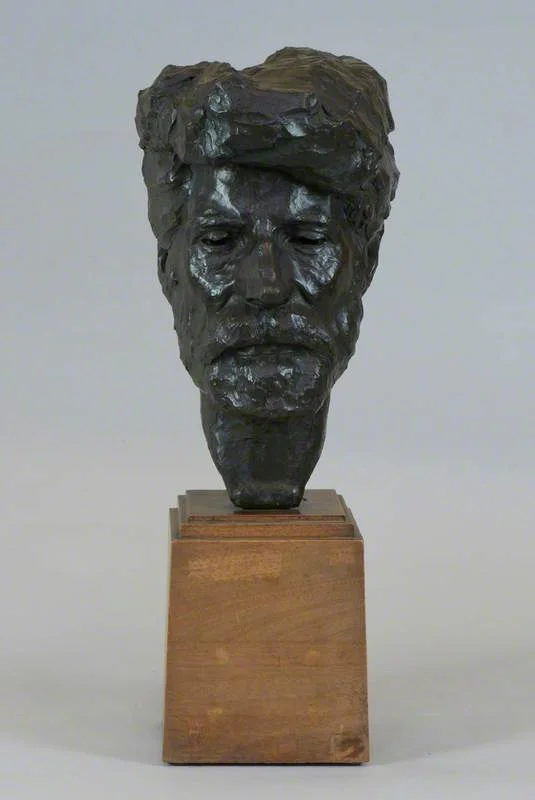
William Lamb, David Foggie. Bronze. 38 x 30 x 20cm. 1925.
This was not Lamb’s final link with the war. Many communities were erecting war memorials to honour the fallen. There were two schools of thought about this. The traditional ‘baroque’ route – which Montrose followed – featured a winged allegorical figure watching over the dead. There were no guardian angels in Lamb’s war. His designs, for Farnell and Hillside, are stark and unsentimental: the former a slim pillar with a gesture of Celtic knotwork, the latter a more massive piece of masonry topped with a trench mortar, reminder of the soulless mechanisms of war. The payment for these commissions gave him the funds he needed for a trip abroad and his first stop after crossing the channel, in September 1922, was to Ypres, where he witnessed the efforts being made to restore the ruined landscape. Then he headed for Paris, where his trusty bicycle, sent on by train, was waiting.
While John Stansfeld was researching his book, he succeeded in winning the trust of Renee (Ray) Simm, by then a centenarian, whose family had played a large part in Lamb’s life. This gave him unprecedented access not only to her own recollections but also to a quantity of Lamb’s diaries, sketchbooks and letters, kept in the family and which she eventually passed over to him. It was in Paris that Lamb first came across the Simms. W. Mellis Simm was the French agent for George Rowney & Co, the art suppliers, though this was not how they met: it seems that Lamb was introduced by Canon Wright, minister of the Scottish Presbyterian Church in the city and his wife, an Angus lass from Brechin. Their openness and generosity restored Lamb to his old self. With his sense of humour, fund of stories and his love of books and music, he was swept up into this social circle and friendships were quickly forged.
Through an acquaintance of Mr Simm, Lamb was admitted to the prestigious Ecole des Beaux Arts. Though he acknowledged the standard of teaching this was not an unqualified success: he found the noisy atmosphere trying; he struggled with his French and with unfamiliar types of clay. Finally he was accused of copying Rodin; it was meant as a reprimand, but he regarded it as the greatest compliment he had received in his life!
Rodin’s legacy – he had died in 1917 - was everywhere in Paris, and during the course of his stay Lamb spent many hours immersed in the works of the master and his followers. The question of Rodin’s influence on William Lamb is one that often arises. There are many parallels. Like Lamb, Rodin had started out as a monumental sculptor, and saw no distinction between art and crafts. They had a similar work ethic: total dedication. Rodin, brought up with the idealised forms of classical sculpture, had revolutionised the act of modelling by letting the material ‘show the way’ and by leaving his tool- and thumb-marks in the clay. Lamb had a similar respect for his raw materials and the marks and rough surfaces left by his hand-made wooden modelling tools undoubtedly add character and a lively vitality to portraits such as Old Salt (1926). Like Rodin, Lamb regarded the casting as part of the creative process, taking great pains over the colouration and finish of his bronzes. He entrusted this to George Mancini, an Italian working in Edinburgh, in a collaboration which turned into mutual admiration and friendship. Looking round the Studio, you can constantly see how the effect of each portrait is enhanced by the carefully considered contrasts of matt and finely polished surfaces.
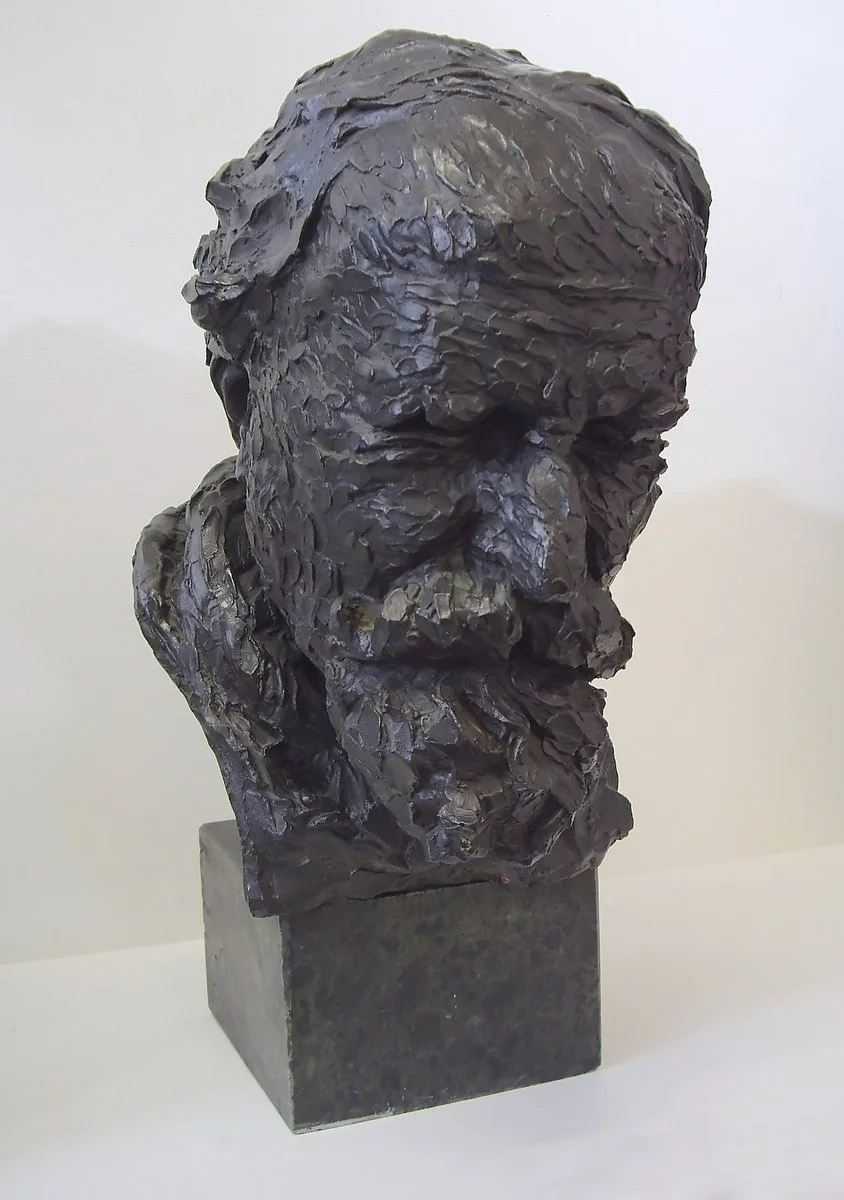
William Lamb, Old Salt. Bronze. 35 x 29 x 26cm. 1934.
Rodin’s Age of Bronze, a full-sized figure captured in arrested motion, would undoubtedly have appealed to Lamb. He was particularly drawn to figures in attitudes of tension and strain: they occur again and again in his sketches and paintings – launching boats, hauling nets – as well as in his sculptures. Looking at Torso (a male body in the act of lifting), you can almost feel the stretching of the muscles, while Boy with Catapult is an essay in tension and graceful poise. A series of small maquettes show working men and women in many different attitudes. Rodin’s influence? Maybe, but thanks to his own art school training (admirably classical: when he arrived in Rome he greeted the antique marbles like old friends) Lamb already had a strong foundation in anatomy and life drawing to build on.
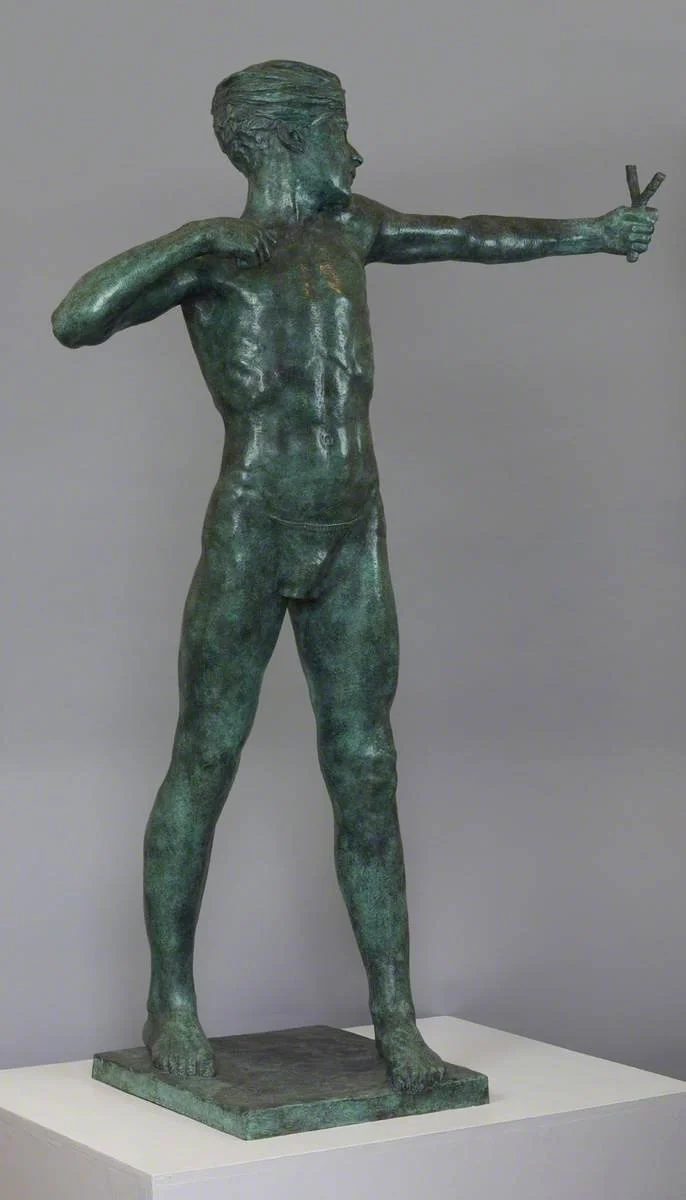
William Lamb, Boy with Catapult. Bronze. 169 x 112 x 48cm. 1928.
When the Simms were recalled to London Lamb filled their absence by beginning a series of letters. His correspondence is spontaneous, racy and full of observations and anecdotes. When he set off on his trusty bicycle to do a tour of France the flow of letters continued, as did the sketches.
Lamb was an extraordinarily talented draughtsman. The studio collection amounts to around a thousand drawings in pen and pencil, ranging from busy street scenes and architectural details to country life and ordinary folk in working clothes. Many of these were made on his travels, but he continued the practice at home. Montrose sits in a landscape of open views and wide, tousled skies; it lends itself to a minimalist approach and Lamb was adept at this, able to suggest land- and cloud-scapes with a few deft flicks of the pen. Seen across Montrose Basin, the South Esk’s tidal estuary, the town often appears as a dark line on the horizon punctuated by the vertical stroke of the steeple. The scene could almost be Dutch (in fact Dutch engineers were once brought in in a vain attempt to reclaim the Back Sands), but the similarities with Lamb’s drawings of the coast of Britanny are even more striking. Many of these sketches were turned into etchings, which he executed with equal skill. Lamb regarded a successful etching as expressing a story in miniature, and in many of his works there is a sense of something happening – a market in full swing, a boat setting out, a rainstorm approaching, horses taking the strain between the shafts of a heavy cart.
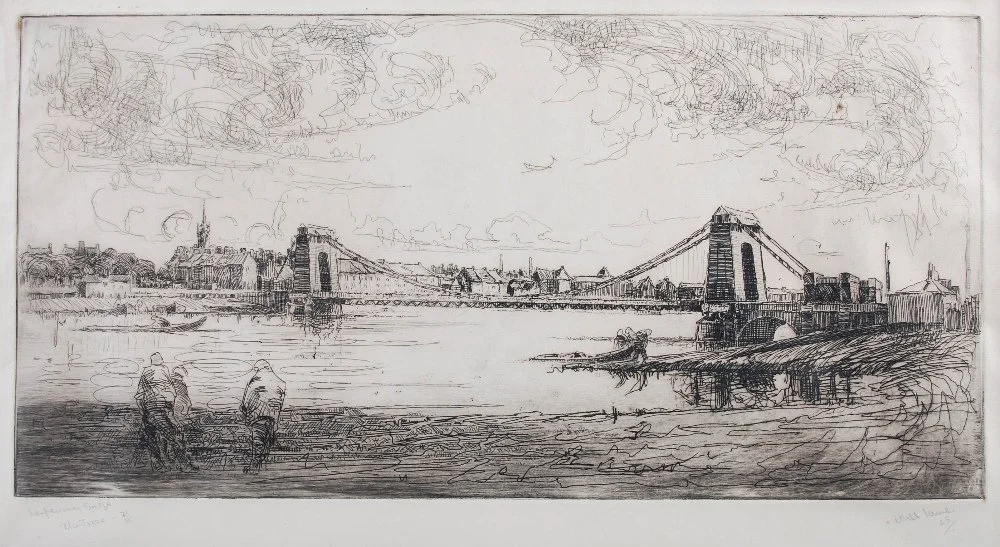
William Lamb, Montrose Suspension Bridge. Etching. 28 x 50.5cm. No date
Lamb seems to have produced around 100 etchings (and a few drypoints) of which the studio has nearly a full set. The most successful – from the business point of view - was undoubtedly Montrose Suspension Bridge, which Lamb drew shortly before it was demolished. Montrosians at home and abroad clamoured to purchase a record of this old familiar landmark. The artist realised, ruefully, that he had underestimated the demand, but having sold it as a limited edition he could do nothing about it. Business skills were not Lamb’s strong point. His friends complained that he regularly undersold his work and his record keeping left much to be desired, as those charged with cataloguing his studio contents found when faced with multiplicity of numbers and different titles.
After his immersion in the artistic and cultural life of Paris, Lamb packed his bags and embarked on a truly epic bike ride, which took him all round France and, briefly, into Switzerland. Happy to sleep rough, for which his army training stood him in good stead, he muddled along in his conversational French, delighting in the freedom of the open road while the changing countryside offered endless opportunities for observing, recording and sketching rural life. A visit to Italy followed, but this was cut short when he lost his wallet. He had enough funds to wind up his stay in Rome and to spend a week each in Florence (which he loved) and a foggy, damp Milan. But by this time anyway he was ready for home.
But where, for this newly-fledged artist with his bulging portfolio, was ‘home’ to be?
With his French connections, the Simms currently in London and colleagues in Edinburgh, Lamb had widened his possibilities. But when plans for an Edinburgh workshop fell through he returned – temporarily, he intended - to Montrose.
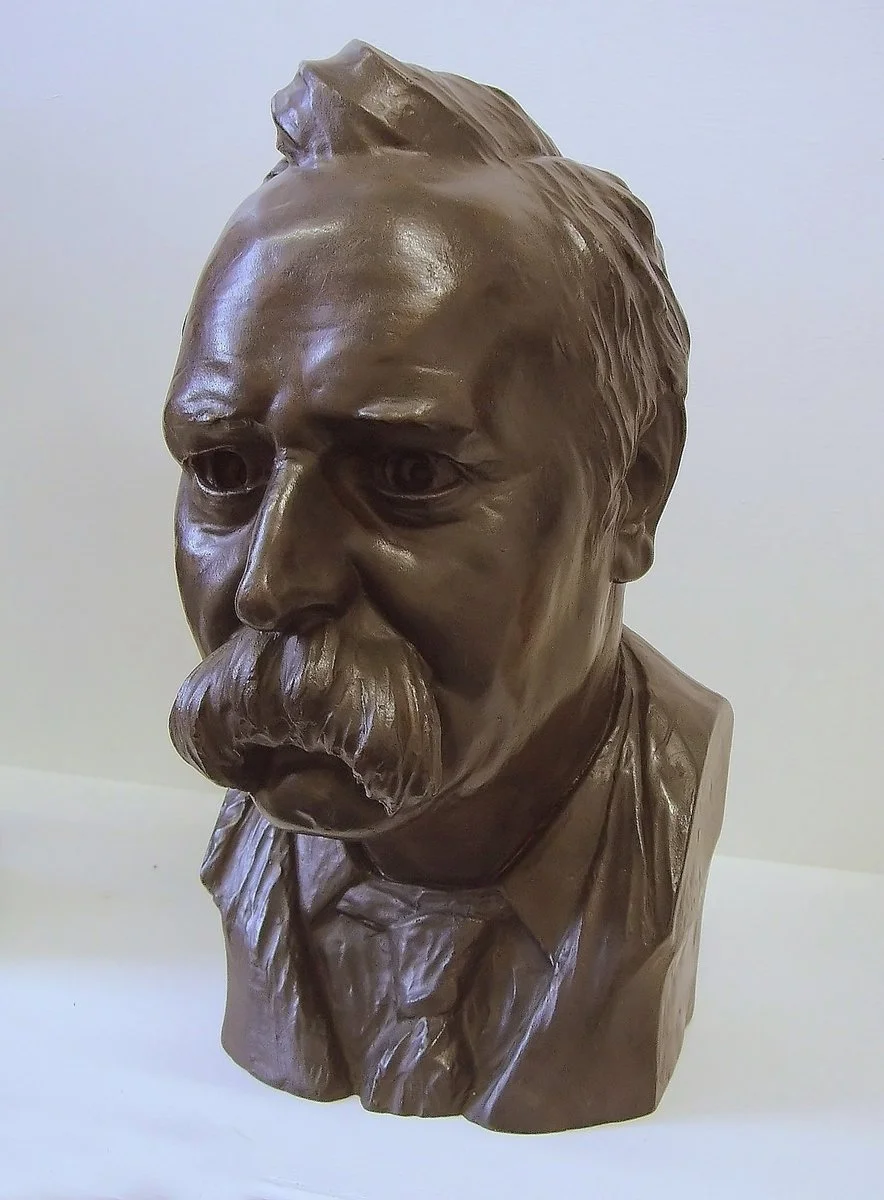
William Lamb, George Cathro. Bronze. 39cm high. 1925.
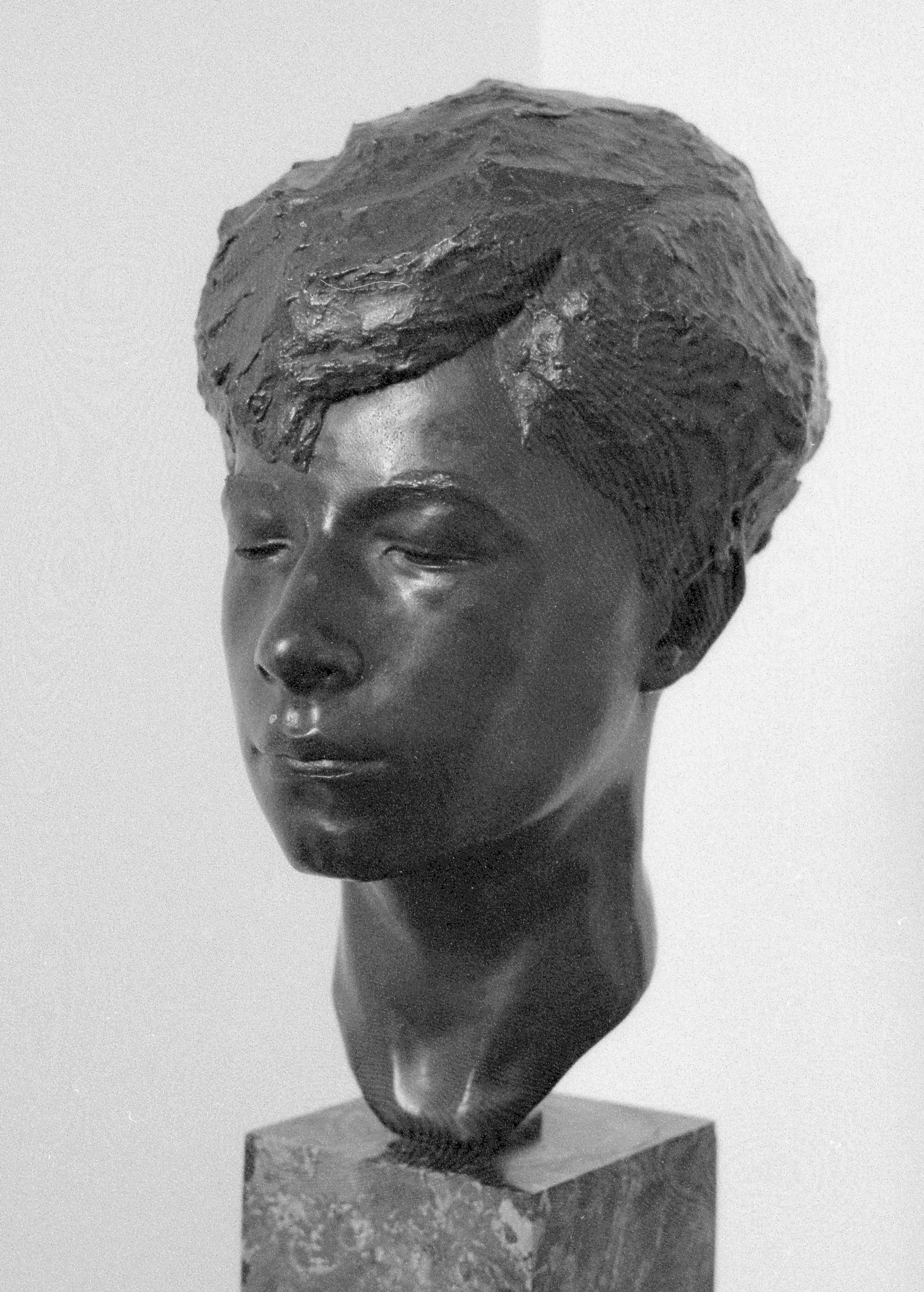
William Lamb, Tete de Garcon (The Cynic). Bronze. Dimensions unknown. 1924.
George Cathro, a painter and decorator, had premises in Bridge Street. Something of an amateur artist, he also framed pictures and organised art and craft exhibitions. One of his buildings had a large attic which Lamb was able to rent as a studio. Mellis Simm acquired a second-hand press for him and soon Lamb was in business, modelling in plaster while selling etchings to make ends meet and to provide funds – when sales permitted – to cast his bronzes.
Cathro did more than this – he also ensured one of Lamb’s earliest successes by lending him his apprentice as a model. The result was Tete de Garcon, accepted by the Paris Salon in 1925. It’s a measure of Lamb’s talents that in this, his first year of exhibiting, he also had work accepted at the Royal Academy and RSA. Today Tete de Garcon is better known as The Cynic, which suits the rather supercilious expression which Lamb has captured perfectly.
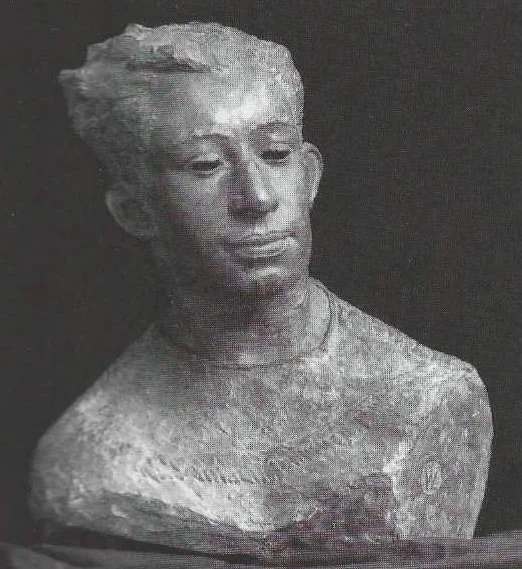
William Lamb, Young Fisherman. Bronze, 51.5 x 67 x 39cm. 1929.
The Royal Academy submission was The Young Fisherman. It portrays the head and shoulders of Isaac Wright, a 22-year-old salmon fisher, whose fine physique – honed by rowing heavy cobles and hauling nets - appealed to Lamb. He stands erect, his powerful neck and head tilted slightly and turned to show his strong features. This must be one of the earliest of the studies of Montrose fisherfolk with which Lamb will always be associated and which he made his own, imbuing these hard-working men and women with great dignity and bringing out their inner sense of worth.
But there was more to this than the attraction of fine features and a willingness to pose. Montrose in the 1920s was one of the well-springs of the Scottish Renaissance, the movement that set out to reinvigorate Scottish culture by taking it back to its roots. The driving force behind this was Hugh MacDiarmid, who happened to be chief reporter of The Montrose Review. Actually he wasn’t yet ‘MacDiarmid’ – just plain Christopher Grieve, though he was already editing The Scottish Chapbook (a showcase for new writing), working on A Drunk Man Looks at the Thistle and fizzing with the energy and crusading zeal captured so well in Lamb’s outstanding portrait.
One of George Cathro’s rooms became the focus of a group of intellectuals, writers, poets, artists and Scottish nationalists (with or without the capital N-). Besides MacDiarmid these included Edwin and Willa Muir, Violet Jacob, Neil Gunn, Neil Munro, Fionn MacColla and, later, the artist Edward Baird and architect George Fairweather. They discussed the merits of writing in Scots (Lamb’s friend Violet Jacob, despite her privileged upbringing, had a masterful ear for the Angus dialect) and of portraying the lives of ordinary working people in order to dispel the tired image of ‘Romantic Scotland’. Lamb’s sympathetic portrayal of the close-knit community of Ferryden has more than once been compared to that of the fictional Kinraddie in Lewis Grassic Gibbon’s classic novel Sunset Song. Lamb was not an active participant in these earnest discussions – he preferred to observe from the sidelines – but he must have been stirred by this apparent affirmation of where his instincts were already leading him – that his place was here among his own folk, not in Edinburgh or London.
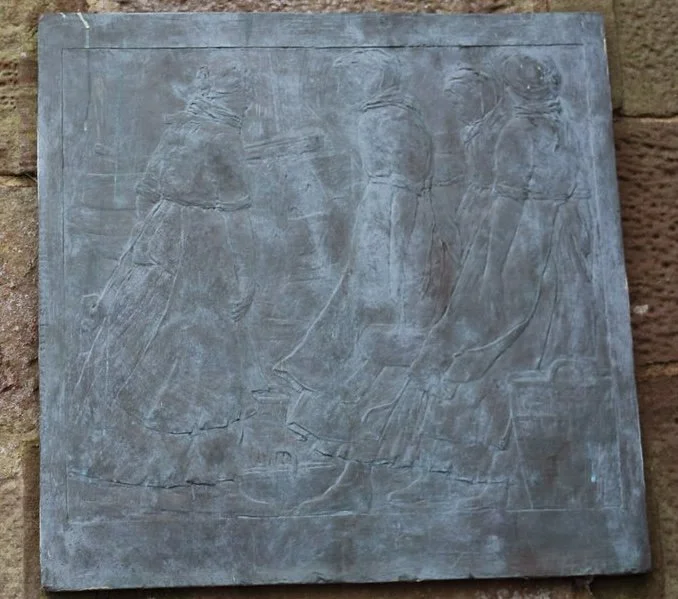
William Lamb, Ferryden Fishwives.
Not that Lamb’s clientele was exclusively local. Much of his work was done for academy exhibitions or sent out to galleries in many parts of Britain. The Simms, first in London and later in Edinburgh (where they ran Greyfriars Art Shop), had effectively taken on the role of agents and his work appeared in galleries both north and south of the Border. The French titles must have been the Simms’ idea: no provincial artist this, they imply his place is in the wider European tradition. Commissions too came in - they helped to boost both his growing reputation and his income, and they could come from, and lead to, some surprising places.
One early request, which illustrates Lamb’s capacity to fit seamlessly into any level of society, was for a plaque commemorating the Hon. David Carnegie of Kinnaird, an explorer who had met his death in Africa. This was to be installed in Brechin Cathedral and the gathering at the unveiling ceremony included many of the Angus gentry as well as the owners of shooting estates, up for the ‘season’. Lamb had gone to Brechin by his habitual means of transport, his bike, and after the formal proceedings he was swept up by Lady Forres and taken by Rolls to her shooting lodge in Glen Ogil for lunch.
Shortly after this Lady Forres turned up at the Studio with Sir Alfred Mond, a noted connoisseur of the London art scene. An exhibition was discussed, in a proposed new gallery in Chelsea. Sadly this didn’t happen as the gallery failed to prosper, but the fact that the only successful show in its short life was by Augustus John indicates the esteem in which Lamb’s work was held.
By the late 1930s etchings were going out of fashion. Lamb had to find a new source of regular income and he turned to watercolours. Whether working en plein air or from his sketchbooks he had a plentiful choice of scenes and subjects to hand; as with his drawings, the views across and around the Basin were favourite subjects. His painting was swift, loose and subtly atmospheric for the most part, though when he chose he would use intense, vibrant colours, and he particularly loved autumn shades. Some of these were sent to the Royal Scottish Society of Painters in Watercolour but they were really intended for the local market, where they did well.
It’s possible that some of Lamb’s autumnal themes were seen in Brechin by the Duchess of York (later the Queen Mother), as this was her usual time for visiting her family at Glamis Castle and she sometimes called into Dunn’s Art Shop, which displayed Lamb’s work. It’s not known exactly who brought Lamb and the Duchess together in 1935; possibly Canon Wright had a hand in it, but Lamb had been to Glamis and already knew the Duchess’s mother, Lady Strathmore, and it’s quite possible that he made the suggestion himself. The outcome – by whatever means it was arranged - was that the Montrose sculptor received the most important commission of his career.
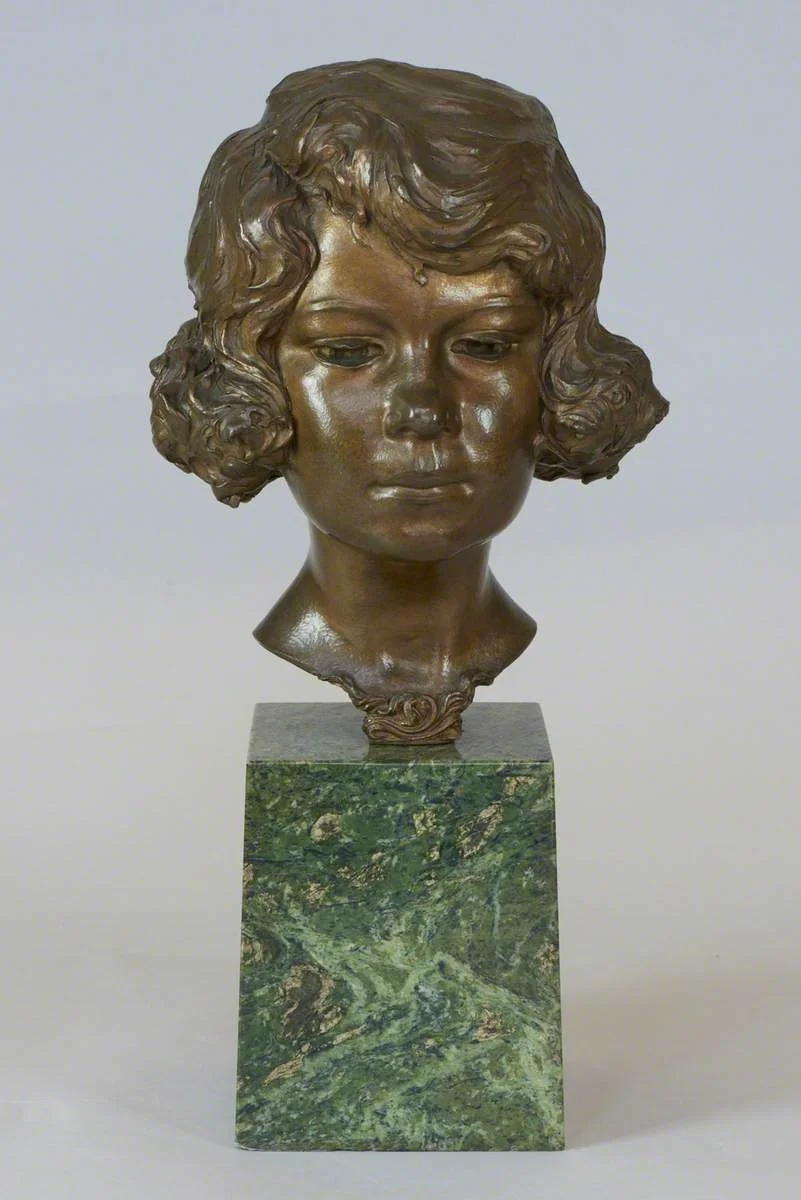
William Lamb, HRH The Princess Elizabeth. Bronze. 34 x 24 x 23cm. 1933.
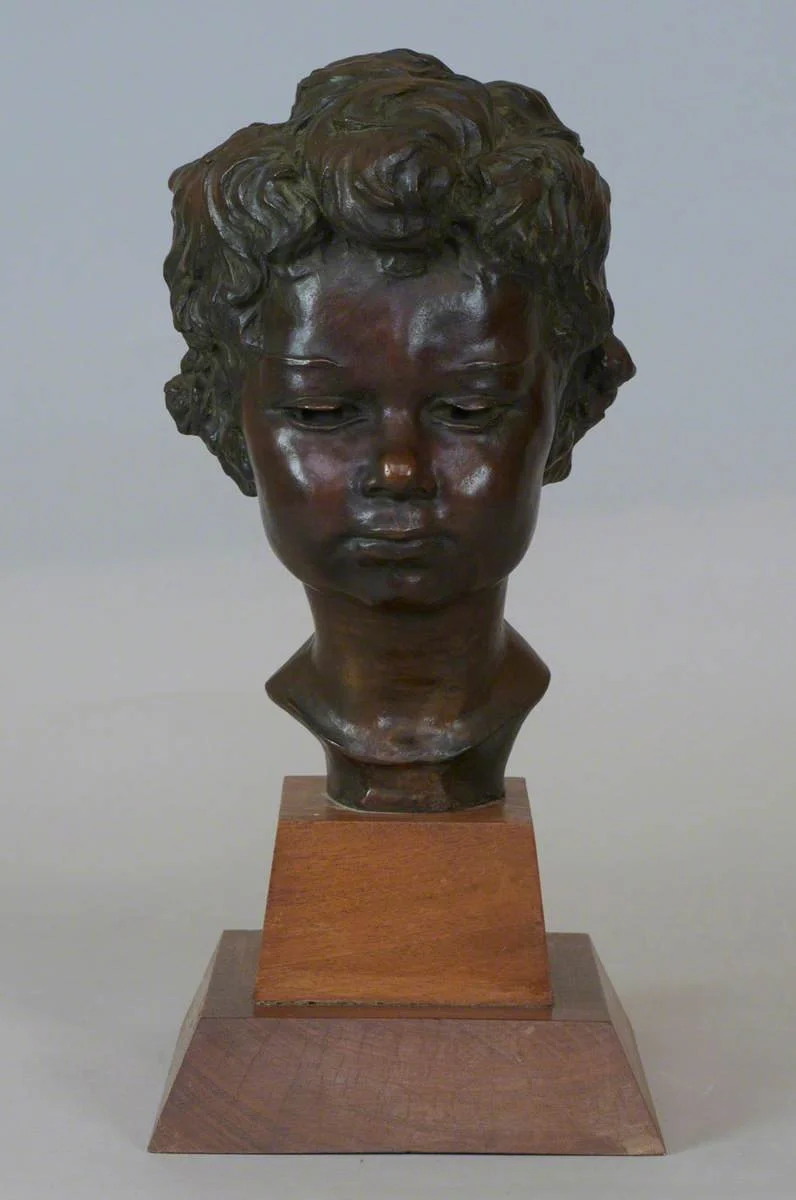
William Lamb, HRH The Princess Margaret Rose. Bronze. 29 x 18 x 21cm. 1932.
The Duchess’s requirement was for a bust of six-year-old Princess Elizabeth (later Queen Elizabeth II). For this Lamb would be given the use of the music room in the Yorks’ family home in Piccadilly, where he would be able to spend time with the princess and her two-year-old sister Margaret (whom, at his own suggestion, he also sculpted). Friends buckled to and supplied him with equipment and a new set of clothes, and he lodged, as he had before when visiting London, with cousins of Lena Gaudie. Lamb had a natural rapport with children and entered with spirit into their games while he observed their faces; ‘tea-parties’ with cups and cakes modelled from plasticine and ‘Glitter Wax’ were especially popular. Copies of the resulting busts sit proudly in the Studio. They are not only instantly recognisable but utterly delightful; that of Princess Elizabeth was praised by Duncan Macmillan as ‘more engaging than any of the countless portraits she has sat for since’. This commission was followed up (again at Lamb’s own suggestion) with a bust of the Duchess herself in a high regal collar. Obviously such a prestigious commission could have opened doors for Lamb among high society. This time he didn’t have to think twice: he returned to Montrose, but the monetary reward allowed him, for the first time, to consider the possibility of having a studio of his own.
Lamb’s training had included life classes and he would have been no stranger to the female nude. In prim Montrose however, this would have been unthinkable (it took his friend Edward Baird, half a generation later, to break through this barrier with The Birth of Venus). Fortunately the boys of Ferryden, with their lithe, youthful bodies, were happy to act as models and their parents had no qualms. Lamb kept them entertained with sweets and his fund of stories. His most successful partnership was with Jimmy Findlay (‘Yank’), who was the model for several of the life-sized studies in the Studio (he is both the taut and focussed Boy with Catapult and the picture of languid resignation of My Model Listens to a Tall Story). Lamb took a keen interest in these young people’s welfare and he launched Yank on a professional career by getting him apprenticed to his architect friend George Fairweather.
Life studies in the Bridge Street studio, however, were hampered by the fact that it had no heating: for much of the year it was simply too cold. This problem was solved by a friend, Nan Sim, who offered the use of her own studio while she went abroad, and these more congenial surroundings encouraged Lamb to produce some of his best work. Now, with the income from his royal commission, Lamb turned to George Fairweather and together they found the plot in Market Street and designed the studio which was to serve Lamb for the rest of his career.
One early product of the new studio, in 1936, was the fine bust of Robert Burns for the Sunderland Burns Club based on Nasmyth’s famous portrait – an unusual subject for Lamb as he always sculpted from life but an appropriate one given the poet’s ancestral connections with the Montrose area. With Betsy Baxter he is back on home ground: this outstanding portrait of an old fishwife, her lined face filled with composure and the sense of a life well lived, goes beyond the individual to project something universal about these fine, hard-working people. It was around this time, too, that Lamb embarked on the three larger than life plaster figures known collectively as the Titans. These worthy and pre-eminent occupants of the Studio are Lamb’s great tribute to the working man. When The Seafarer (also known as Trawl Hand), Minesweeper and Bill the Smith were exhibited at the RSA - ‘Bill’ in 1938, the others the year after - they were accepted with much acclaim and received unreserved congratulations from David Foggie.
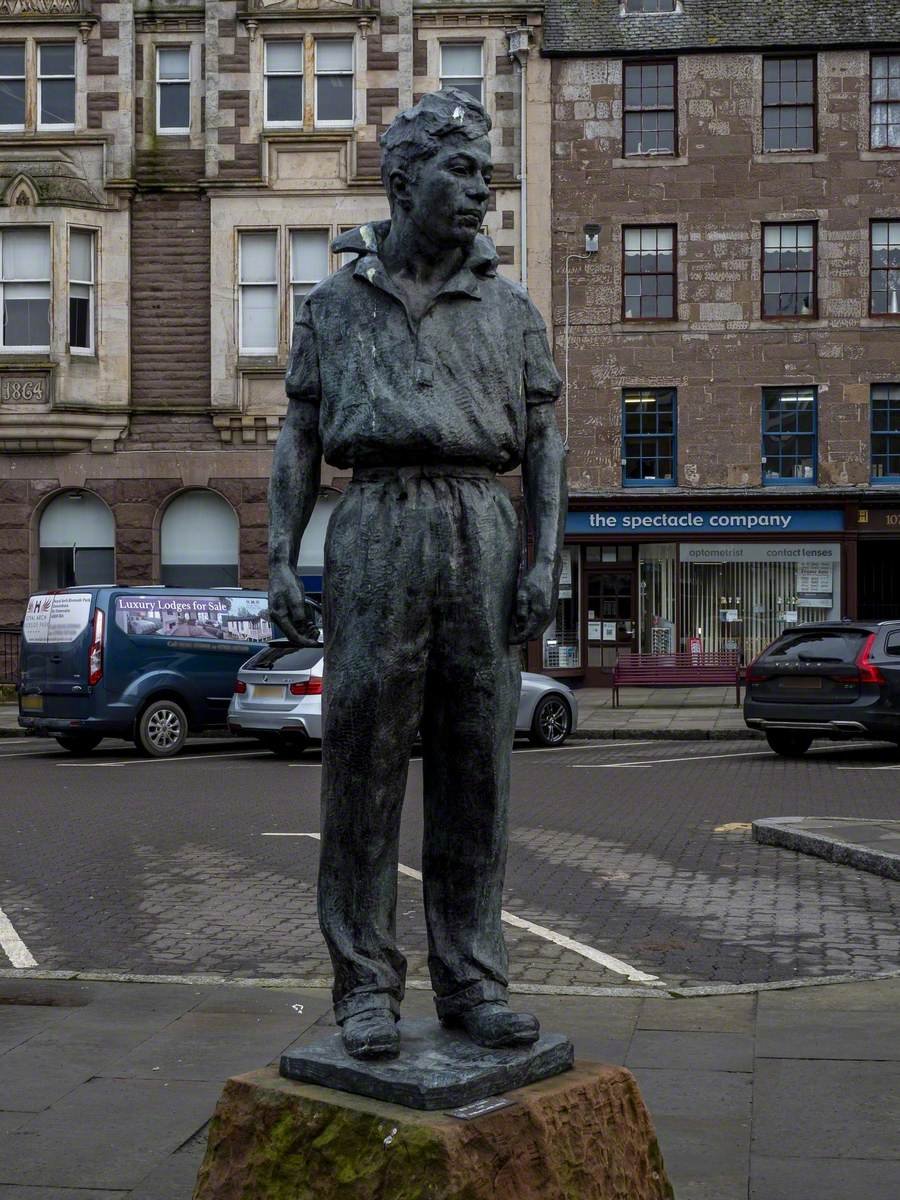
William Lamb, Bill the Smith. Bronze. 1937.
Lamb had another name for this commendable group of doughty men: he called them ‘The Future’.
At the opposite end of the scale, The Daily News, the small figurine of an old man reading a newspaper, is notable not just for its humanity but also for its portrayal of a well-known Montrose ‘character’, the artist Adam Christie. Christie – also known as the Gentle Shetlander – was a long-term patient at Sunnyside Royal Hospital who spent his days carving an extraordinary series of heads with a primitive ‘Celtic’ feel. Lamb took a kindly interest in Christie, though he spurned his offer of instruction and the loan of proper stonemason’s tools.
Edward Baird, on the other hand, was the son of a Montrose sea captain and had trained at Glasgow School of Art. When he returned to his home town to paint, Lamb helped to set him up, within his modest means, by obtaining some essential equipment. Both men inhabited the same landscape and, despite the twenty years’ difference in their ages, met regularly for coffee in the Corner House Hotel. Yet their styles and working methods are utterly different. Baird, after studying abroad, had become inspired by the European Renaissance. His work is painstakingly meticulous (he completed less than 40 paintings) and his portraits of the town have a still, almost otherworldly atmosphere; at the same time he was influenced by Surrealism, all of which was utterly alien to Lamb. Where their two worlds did intersect was in their portrayals of members of the Scottish Renaissance. Lamb sculpted MacDiarmid, his architect friend George Fairweather, Violet Jacob (looking quite modern with her gypsy earrings and cloche hat), his landlord George Cathro and a serious-looking Baird himself. The younger artist painted the novelist Fionn MacColla as well as George Fairweather and his sister Ann. It is she who poses naked among shells in Baird’s tribute to Botticcelli’s Birth of Venus and later she became Baird’s wife.
Two of Baird’s most striking paintings reflect something else which began to pervade Montrose life in the late 1930s: the Second World War. These are his unsettling Unidentified Aircraft and his portrait of the gamekeeper James Davidson. The latter, wearing his Home Guard insignia and pointing his gun skyward to see off any invaders, became a symbol of the war effort and led to Baird becoming an official War Artist. One can’t help feeling that Davidson (whom Baird also drew strikingly in white chalk, sporting his military cap) would have made a wonderful subject for William Lamb, but it was not to be. Lamb had had enough of uniforms and military authorities; his War took a completely different turn.
When one of his brothers died leaving a widow and young family, Lamb offered to train the oldest boy, David, in the family business of stonemasonry. By this time, sadly, there were signs of Lamb’s old depressive illness returning; he was going through a bad patch, his finances were at a low ebb and he was relying more and more on the support of others. His impetus to work was also tailing off, although, typically, when he wished to repay the kindness of a neighbour who was priest of St. Margaret’s Church, he did so by carving a new font. The arrival of David seems to have come at just the right time, and a very happy relationship emerged. In 1939, when war again threatened, Lamb was determined he was not going to let his nephew go through the experience that he’d had. His solution was to found a new business: David Lamb, Monumental Sculptor (Incorporating William Lamb ARSA). Thus Lamb found himself back at his old trade, fitting his artwork (which now included the important commission of a wooden crucifixion scene for a church in Newport, Fife) around the carving of gravestones and training his nephew.
Ironically when David, inevitably, was called up, he found that soldiering suited him. He came through the War with a DSO and the realisation that his skills lay in management rather than craft. Magnanimously he returned to stonemasonry until his uncle’s death in 1951 gave him the freedom to choose his own path. The pride and love that Lamb felt for his kinsman - no longer a youth but every inch a soldier - comes through in his portrait study in uniform, which, fittingly, is displayed in the upstairs room, the most intimate space in the building.
Meanwhile, for William Lamb ARSA, modelling materials were proving difficult to come by, and casting foundries had gone over to war work. What was available, though not always of the best quality, was wood.
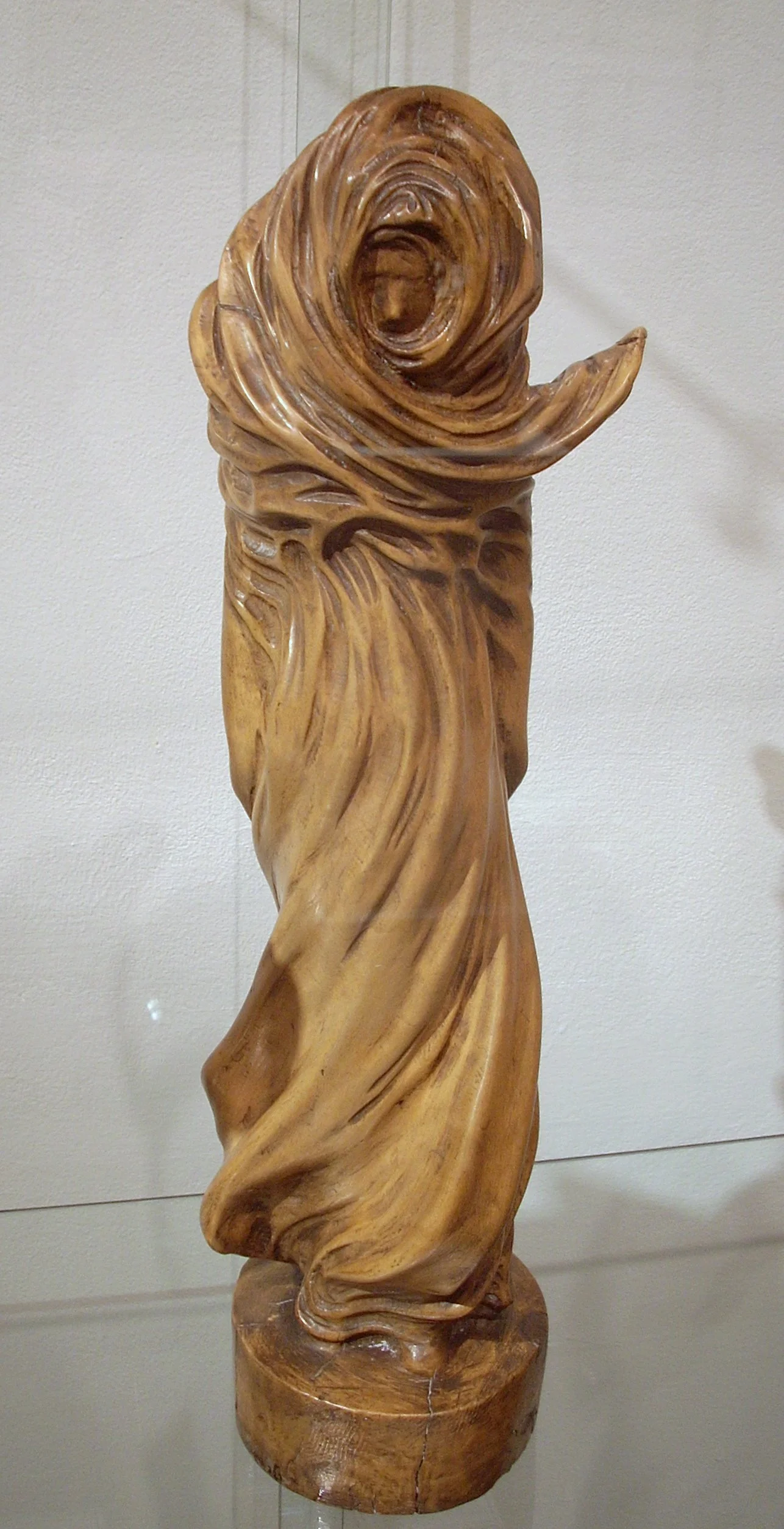
William Lamb, Gale Force. Wood. 47 x 13 x 13cm.
To embrace this new material, this classically-trained sculptor changed his style completely: the muscular limbs and facial features of his representational art dissolve into a sequence of almost abstract figures enveloped in swirling draperies, which twist, writhe and cling around their etiolated bodies, their bending, swaying forms seeming to echo the organic growth of the timber itself. Somewhere in the background there may be a memory of the caryatids and winged victories of ancient Greece but more immediately Lamb is back in Ferryden, with his steadfast fishwives (they’re almost all women) bracing themselves against the bitter wind off the North Sea. The Whisper, which many Montrosians would probably choose as their favourite William Lamb artwork, also belongs to this time. This is carved in Hopton Wood stone, a pale, fine-grained stone from Derbyshire, though the chip-carving technique echoes that of woodwork. It portrays two women muffled in shawls, heads together as if exchanging delicious and conspiratorial confidences.
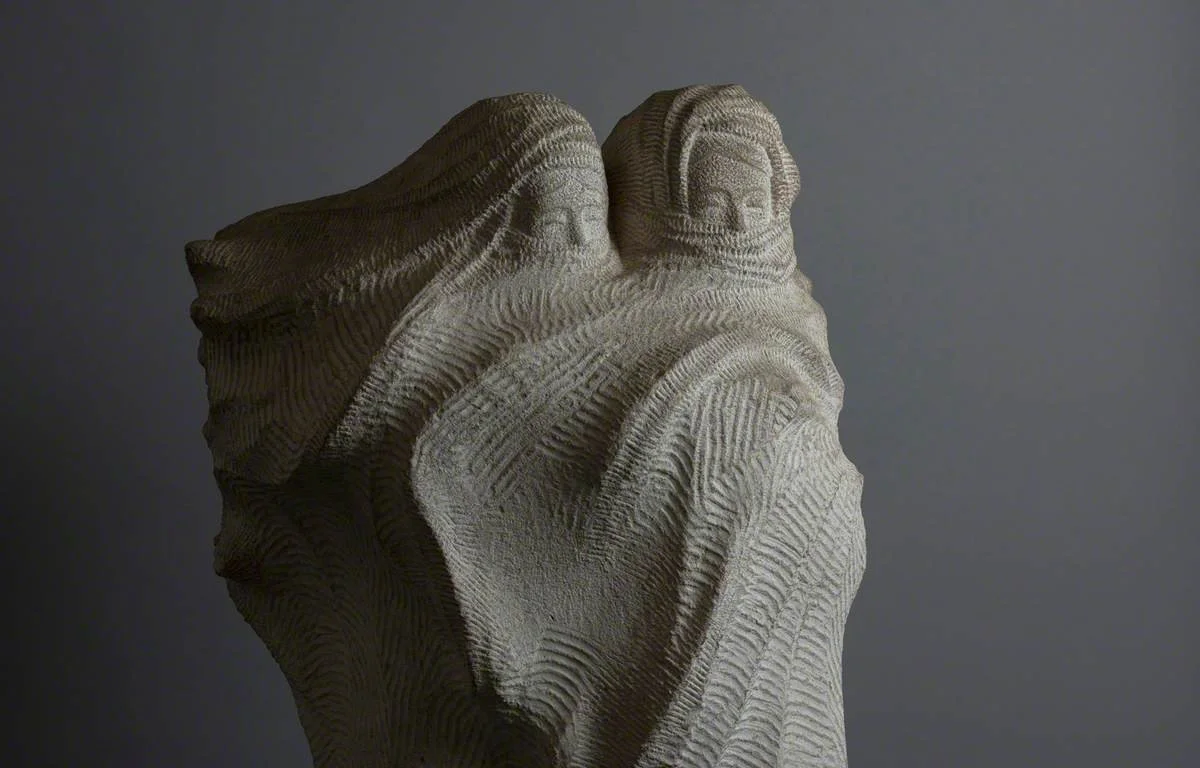
William Lamb, detail from The Whisper. wood and stone. 94 x 42 x 32cm. 1951
This is William Lamb’s most unique contribution to twentieth century Scottish art. It’s what Halliday and Bruce pick out in their 1946 overview, citing his ability to ‘suggest fluidity and evanescence, create an atmosphere rather than state a fact’. Many modern commentators also regard Lamb’s wood carvings as highly as anything else he did, his fellow Montrosian, the late painter James Morrison, among them. Given the renewed appreciation of all aspects of William Lamb’s work, that is praise indeed.
In his last years a long-standing kidney problem caused William Lamb to become increasingly isolated and depressed, more and more dependent on the goodwill and help of his loyal group of friends. What direction his art would have taken from here we will never know; the only clue is an unfinished figure roughed-out in a series of facets and planes. He worked almost to the end and died after a short illness in 1951.
This is not the end of William Lamb’s story. It’s not even the end of his output. On his death, a portion of his works remained only in plaster, funds never having permitted their casting. Many of the wonderful bronzes seen in the studio and around the town today are ‘posthumous’. In the 1970s George Mancini came out of retirement to clean and conserve the delightful series of figurines. The three Titans are no longer confined to the Studio: Montrose Harbour Board in 1977 had The Seafarer cast in London and he now stands at the harbour. From 1984 Bill the Smith (whom we’ve already met in the High Street) and the Minesweeper were two of the pieces cast at Powderhall Studio in Edinburgh with the aid of Montrose Common Good fund (the latter is back at the scene of his wartime posting, down by the beach esplanade). Ferryden Community Council commissioned the casting of Ferryden Fishwives, while, thanks to Glaxo Smith Kline, the two muffled confidants, in reconstituted stone, continue to whisper together in the small garden beside Montrose Library. A plan is afoot to commemorate Burns’s 1787 visit to the town with a replica of his bust at the site of the Turk’s Head Tavern. In prospect for next year is the studio’s involvement with the RSA’s 200th anniversary partnership scheme, which will see The Young Fisherman, which gained Lamb his Associateship, returned to the studio for the duration and The Daily News displayed in Edinburgh. William Lamb is very much visible again in the town which was the centre of his universe.
Gillian Zealand
Postscript.
George Bruce, who with T.S. Halliday co-wrote Scottish Sculpture, was also a poet and a major figure of the Scottish Renaissance. A native of Fraserburgh, his work, like Lamb’s, springs from the north-east coast. The following poem from his volume Sea Talk (Glasgow, 1944) seems to me to encapsulate in verse the same sense of rootedness that imbues Lamb’s art while the final line – in the way Lamb does through sculpture in the likes of Betsy Baxter - transports us out of the specific and into the universal.
The Fisherman
As he comes from one of those small houses
Set within the curve of the low cliff
For a moment he pauses
Foot on step at the low lintel
Before fronting wind and sun.
He carries out from within something of the dark
Concealed by heavy curtains,
Or held within the ship under hatches.
Yet with what assurance
The compact body moves,
Head pressed to wind,
His being at an angle
As to anticipate the lurch of earth.