
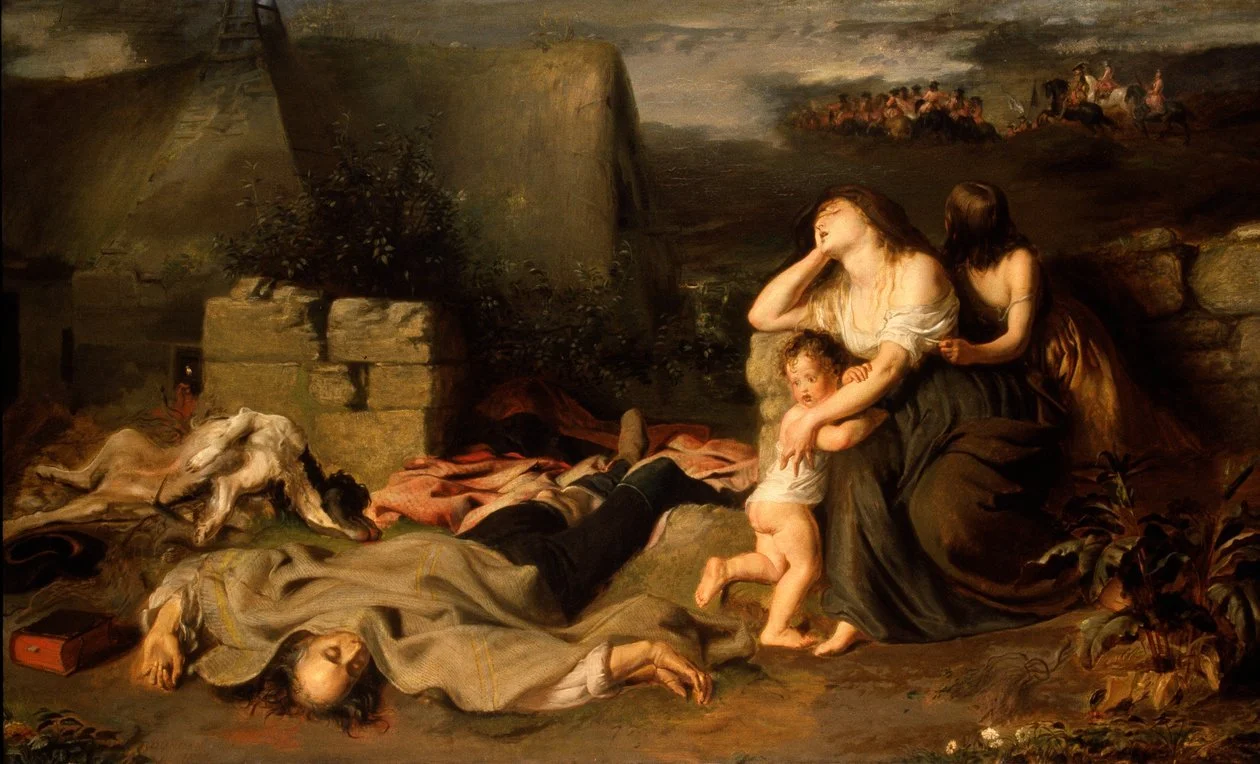
Thomas Duncan: John Brown’s Martyrdom
This article is about the sketch for The Martyrdom of John Brown of Priesthill 1685, painted in 1844 by Thomas Duncan (1807-45). Duncan was born in Perthshire and educated at Perth Academy. He initially trained for the law but in 1827, he entered the Trustees Academy in Edinburgh to study painting under Sir William Allan who had taken on the role of master the year previously. Duncan was early recognised as a major talent and went on to teach at the Academy himself from 1838. Celebrated as both a historical and a portrait painter his career was cut short by illness. He died of a brain tumour aged 38.
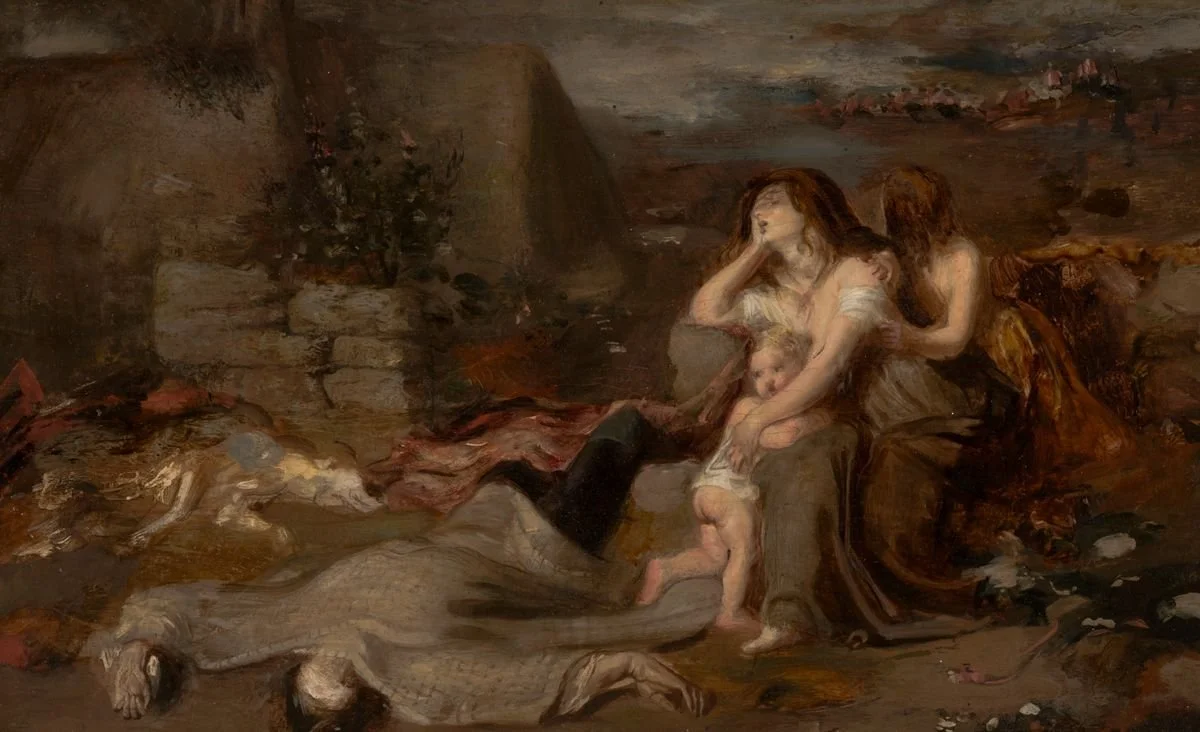
Thomas Duncan, Sketch for The Martyrdom of John Brown of Priesthill 1685. Oil on panel, 43.5 × 57cm. 1844.
The John Brown sketch is housed in the Raclin-Murphy Museum at the University of Notre Dame in South Bend, Indiana. The painting is a sketch for a large finished painting now in the St Mungo Museum of Religious Life in Glasgow. The sketch is interesting in a number of ways. It is significant in showing the development of the painter’s thoughts as he worked out the subject and we will consider what changed between the sketch and the completed composition later. It is interesting in its subject matter and in what that 17th century subject was trying to say to a Scottish audience in 1844 when it was painted. And it is interesting in both how it came to be in Indiana and in its position now in the collection of a major institution with a strong Catholic heritage and identity.
First of all let us consider where it came from and why it is at Notre Dame University.
Along with a great many other drawings and smaller oil paintings. It was donated to the Snite museum, the predecessor of the Raclin-Murphy Museum, by Muriel and Noah Butkin. Muriel (1915-2008) and her husband Noah (1918-1980) were pioneers in America in the collecting of French Realist painting, understood in the broadest sense. Often working with progressive museum curators, they brought together a genuinely important collection of figures such as Theodule Ribot, Leon Bonvin, Carolus-Duran, Gustave Brion and many others – all French Realists. The presence of a Scottish history painting in that collection therefore is apparently anomalous. Among other things the Butkins were interested in religious subjects. The Raclin-Murphy collection has significant examples of religious subjects by Henri Gervex, Leon Lhermitte and Alphonse Legros for example, all from the Butkin collection. The Butkins also has a lasting interest in preparatory oil – sketches and it has, not surprisingly, oil sketches of religious subjects, a work by Isidore Pils for example showing part of the composition of The Death of a sister of Charity from 1850, and a set of four studies by Hippolyte-Jean Flandrin for his paintings in the Chapel of St John the Evangelist in Saint-Severin in Paris.
The Thomas Duncan fits that model perfectly. It is an oil sketch of a religious subject and it appears that is why the Butkins bought it. In donating their collection the Butkins split their donation between two institutions, the Cleveland Museum of Art and Notre Dame University. The collection came to Indiana in stages from the late 1970s onwards but principally on the death of Noah Butkin in 1980 when a number of works arrived on long-term loan and then finally following the death of Muriel Butkin in 2009 when the works were formally donated. The presence of the Duncan painting in The Raclin-Murphy collection is therefore reasonably explicable.
To all but a relatively specialised Scottish audience, the Covenanting subject depicted is now rather obscure. In the mid-nineteenth century however its 17thth-century history and its topicality would have been immediately understood.
In 1707 the negotiated union between the Scotland and England united the two countries as equals, not as one conquering the other. But England was much larger than Scotland, about 10 times the population, which made the Scots anxious about being swamped by their bigger, richer, more powerful partner.
Following the Union Scots sought out new ways of defining their identity. Finding themselves from 1707 now part of the new composite state of Great Britain, they attempted either to resist the destruction of their ‘Ancient Mother Caledonia’, or to embrace the new possibilities of the Union. Lord Belhaven, observed in a speech in the Scottish parliament in November 1706 ‘But above all, My Lord, I think I see our Ancient Mother Caledonia, like Caesar sitting in the midst of our Senate, Ruefully looking round about her, Covering her self with her Royal Garment, attending the Fatal Blow, and breathing out her last with a Et tu quoque mi fili’. John Clerk of Penicuik on the other hand was one of the Commissioners who negotiated the Union and came to believe that the interests of Scotland and England were inseparable.
At first, and speaking very broadly, Scots tried rejecting the old violent past of war with England and looked to establish a new identity for Scotland, and a new name, that of ‘North Britain’. Interestingly, this was a wholly Scottish preoccupation. There seems to have been no corresponding rush south of the border to review their collective identity, or to construct ‘South Britain’ where once was England. The new United Kingdom did not threaten existing English self-image but for Scotland it generated insecurities and a desire to remodel and reaffirm a sense of identity.
As part of that later 18th and 19th centuries self-examination, Scottish painters produced a range of works investigating, exploring and celebrating identifiably Scottish subjects. There were paintings of Scottish customs, of Scottish history and, religious paintings not all doing or trying to do the same thing but all relating to concern for matters of identity shared by Scottish painters and their public. Large numbers of these works respond to the particular nature of their own times, often in a direct comment on major, controversial contemporary events.
By 1800 the effort made by Scots to reinvent themselves as North Britons was over largely because of widespread anti-Scottish prejudice from England and a sense that Scottish affairs were not well looked after by the British state. Indeed there was often outright hostility towards Scotland. For example John Wilkes, MP for various places in the south of England, founded a newspaper and led anti-Scottish sentiment. He attacked Scottish born John Stuart, the Earl of Bute and Prime Minister through his paper and generally characterised any Scottish involvement in government as a foreign takeover.
The demise of the North Britain identity led directly to the development of a new phenomenon - the dual identity of unionist-nationalism, that is the idea that Scotland was happy being both Scottish and British. This, in essence, proposed that Scotland was happily joined with England in the new state of Great Britain. However that did not mean that Scotland was now a part of England. Scotland was different. Scots saw themselves as having their own heritage and history and as bringing that distinctiveness to the collaborative project that was Britain. That meant that paintings celebrating Scottish ‘difference’ from England were not in any way anti-English, they were simply celebrations of Scotland’s distinct contribution to the new larger state. This understanding accounts for all the 19th century celebrations of figures such as William Wallace and Robert Bruce who spent large parts of their lives fighting England and killing Englishmen. These 19th century commemorations were using Wallace and Bruce as markers of Scottish ‘difference’ not as rallying points for an anti-English Scottish nationalism. That said, the painter David Scott’s 1836 rejected proposal to decorate the rebuilt houses of parliament in Westminster with a mural of Wallace in battle when he had been hung, castrated and disembowelled alive then beheaded by the English two miles away at Smithfield, was probably optimistic.
Within this general approach paintings of Scottish history became very significant and as a subset of this a body of work began to emerge which cast Scottish distinctiveness in terms of her religion. Both Scotland and England are Protestant countries but of very different characters with very different strands of Protestantism. In the 19th century historic religious subjects became popular and paintings depicting either events in the Scottish Reformation in the sixteenth century, or incidents during the Covenanting period of the seventeenth century, appeared in large numbers. Again this is all about Scotland’s ‘difference’ from England. Like all the other Scottish history subjects in the period it did not question the Union, or promote an independence oriented nationalism.
Religious history was a logical subject for any painter seeking to promote a distinctive Scottish character. Since the Middle Ages, when England sought to claim authority over the Scottish Church and the country had to appeal to the pope for support, religion had been one of the most common points of conflict between the two countries. In the medieval epic Wallace (c.1480), the poet Blind Harry portrayed the Scottish church resisting attempts by the English to control Scottish religion. Though intermittent allies in religious reform, the latter half of the 17thC was marked by ferocious conflict over the National Covenant. The church was explicitly left autonomous in the Union of 1707, a highly visible mark of Scotland’s individuality. This long history of contentious independence, and later acknowledged distinctiveness, made the church a natural focus for Scottish identity.
In addition throughout the first half of the nineteenth century the Kirk continued to have very considerable significance for the entire population. Presbyterian religious observance was integrated with the national life and the established church had a major impact on all aspects of everyday existence, with central roles in the law, education and economic matters as well as parishioners’ devotional life. There was a long held belief even that the nation had been shaped by Presbyterianism, not simply subsequent to the Reformation, but prior to that by a nascent form of the ideology present innately in all Scots. ‘The reality of history cannot, of course, sustain such a thesis; but that did not prevent the misconception from being one of very great power and influence.’ The status of the Kirk as Scotland incarnate was enhanced by the popular view that the annual gathering of church ministers in The General Assembly was virtually a devolved Scottish government. The Kirk was a clear focus for national identity.
All of the above issues were made still more pressing by a looming crisis in the Church of Scotland developing, with increasing pace, from 1810. The historic position outlined above began to break down under the pressure of social changes caused by industrialisation and urbanisation. The Kirk struggled to adapt its rural parish system to the demands of a rapidly developing urban environment, adding edge to the split between the church’s two camps, the ‘Evangelicals’ and the ‘Moderates’. Lay patronage, that is, the right of local landowners to appoint the parish minister, appeared as a powerful bone of contention with evangelicals insisting on the right of every congregation to select their own cleric. This division, increasingly bitter from the early 1830s onwards, led ultimately to ‘The Disruption’ in 1843, a major split in the Church, and the secession from the established church of over a third of all ministers. With these developments increasing exponentially throughout the first half of the nineteenth century, any painting of a religious subject was highly topical and potentially controversial.
In this environment there are major paintings depicting the fathers of the Scottish Reformation. David Wilkie painted John Knox Preaching, William Allan in 1823, painted Knox Admonishing Mary, Queen of Scots on the Day her Intention to Marry Darnley was Made Public. Allan sought to evoke the tradition of Mary the Catholic queen and Knox the architect of Scottish Presbyterianism and to tell a story full of known characters and romantic drama. Allan’s intention was to promote the Reformation as a keystone in the creation of Scotland’s identity and the blending of Knox, Mary and Darnley made for a dramatic story. The other major popular period for paintings of religious history was the Covenanting era of the 17th century.
A covenant is a relationship between two partners who make binding promises to each other and work together to reach a common goal. The idea comes from the Old Testament and the covenants made between the Israelites and their God. 17th century Scots longed for a direct, relationship with God like the Israelites and had the sanction of Calvin who had discussed the idea of the ‘Covenant of Grace’, extensively. In the Bible there are many covenants, for example the so-called Mosaic (ie Moses related|) covenant where God instructed Israel to obey all the laws given at Mount Sinai, promising to bring blessings if they followed his commands and curses if they ignored them (Deut.28). So this is much more than just an oath. A Covenant is a contract with God.
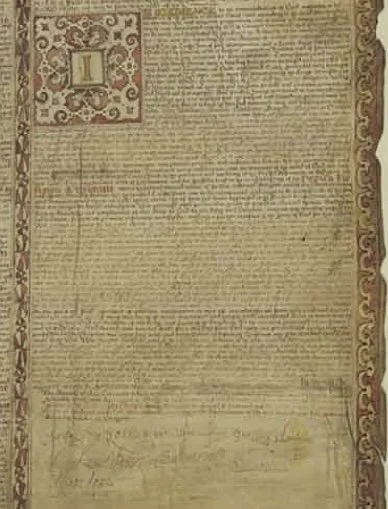
National Covenant 1638
The people who supported the Covenants (There were two. The Solemn League and Covenant dates from 1643. It does not directly concern us here) were called ‘Covenanters’ and the era of Scottish history, the 17th century from 1640 onwards, often referred to as the ‘Covenanting period’. As explained above there are many paintings from the 19th century showing events from this period in the 17th century. These paintings of Covenanting subjects, produced by among others Thomas Duncan, George Harvey (1806-76) and Alexander Johnston (1816-91), even more so than the Reformation subjects discussed, were intended to be read as both history and commentary on contemporary issues.
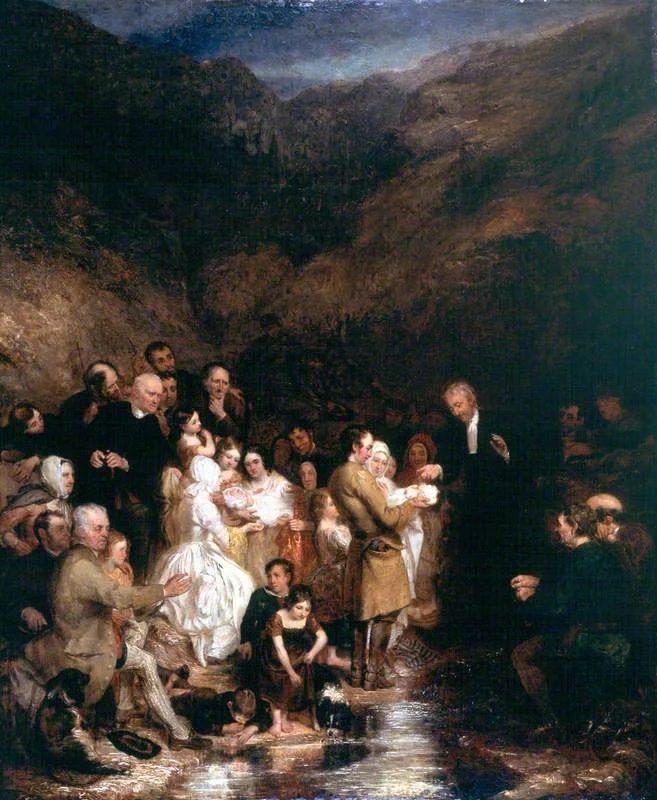
George Harvey, The Covenanter’s Baptism. oil on panel, 109.5 × 91cm. 1831 Courtesy of Aberdeen Art Galleries
Covenanters, particularly laterally were very often deeply intransigent, fanatical and violent, but that did not stop them being widely perceived as national patriots. That is because the crisis in the Kirk mentioned earlier where there was a dispute between the ‘Evangelicals’ on one hand and the ‘Moderates’ on the other, culminating in The Disruption, had echoes of some of the things which were at the root of the Covenants. In certain ways the ethos of the Evangelicals and that of the Covenanters were similar. Both were fervent and rather puritanical. Both sought a sphere of influence beyond religious life and both wanted to transform society according to their principles. Crucially though, both insisted on the rights of individual congregations to choose their own church minister. ‘Many of the Scottish Evangelicals looked back to the seventeenth century Covenanters for their spiritual predecessors’.
Popularly too the Covenanters were a potent symbol of Scottish virtue. In 1815 a demonstration of 10 000 ‘democratic people’ marched to Drumclog, the scene of the victory won by a Covenanting army over a government force. For all its fanaticism and intransigence, the movement was thus sanctioned both as analogous to the new spirit emerging in the Church of Scotland and as an important part of Scotland’s historic Presbyterian identity. That gave the Covenanters a particular place in the Scottish psyche in the first half of the nineteenth century.
The period was given further topicality in 1816 by Walter Scott’s publication of Old Mortality, a novel with the Covenanting era as the backdrop. Walter Scott was enormously important and influential. So when he portrayed the Covenanters in highly unsympathetic terms it provoked a storm of controversy. In the book he made his central advocate of Presbyterianism perverse, inspired by hate, isolated and guilt ridden. He also provided a supporting cast of church ministers who were largely preposterous figures, chief among them Habbakuk Mucklewrath, whose incoherent and confusing intervention at an inappropriate time ensured the Covenanters’ complete rout at the crucial battle with government forces at Bothwell Bridge in 1679. In short Scott ridiculed the movement. His reputation and influence was truly enormous but even so there was a lot of anger about his treatment of the Covenanters. Opposition to Scott’s characterisation came in a variety of forms. The biographer of John Knox, Thomas McCrie, criticised his representation of the Covenanters as violent bloodthirsty fanatics. He accused the author of historical bias and inaccuracy. The writer James Hogg joined the debate with a pro-Covenanting novel in 1817, The Brownie of Bodsbeck which vividly described the wanton cruelty of the government’s forces in trying to suppress the movement. John Galt’s 1823 novel Ringan Gilhaize was conceived specifically as a response to Scott’s treatment of the Covenanters. Galt saw the Covenanters as Scottish patriots, engaged in defending Presbyterianism. He articulated the view more explicitly than his contemporaries but in presenting the Covenanters as national heroes and not simply religious zealots, he expressed a widely held view. With the rise of the Evangelical party and the ‘ten years conflict’ in the Church of Scotland in the run up to the Disruption, the question of the heroism or otherwise of the Covenanters remained topical until well after 1843.
The Covenanters, particularly later in the 17th century were often hard, unyielding ideological extremists who brooked no challenge to their views, To cite just a couple of examples among many, a hardline Covenanter minister, Walter Smith (c.1650-81), drew up a list of some 22 failings he saw on the part of fellow Scots to live up to the ideals of the Covenant. Number 13 stated that following on from a military victory of the Covenanters at the Battle of Drumclog in 1679 the failure of the Covenanters to slaughter all those they had taken prisoner, was a dereliction of their duty to God. The enemies of the Covenant deserved no mercy.
Secondly, by 1680, one of the leaders of the Covenanters was Richard Cameron (1648?-80). In his final sermon he closed saying ‘The Lord is to set up a standard ….When it is set up it shall be carried through the nations, and it shall go to Rome, and the gates of Rome shall be burned with fire. … Blood shall be their sign and “No Quarter” their word.’
These were not erudite, gentle men of God who sought only the right to worship their God as they chose. These were Presbyterian fanatics, virtually terrorists.
That is not what is being praised in the paintings though. In painting Covenanting pictures in the 1820s thirties and forties these artists offered a very selective view of history. They lauded Covenanters and drew parallels with the problems of the Scottish church in their own time. These works are not to be seen simply as commemoration or celebration of aspects of Protestant worship and its turbulent history. Rather they embody nineteenth century understanding of two key aspects of Scotland’s historically evolved Presbyterian identity. For the painters, the character of the Scottish church was moulded first in the Reformation, but powerfully reanimated in the Covenanting period. It was at that time that the reliance on the Bible as ‘the word’ of God, and the insistence on its elucidation through preaching, was defended by any and all means. In Scotland the struggle to establish the right of people to elect their own preachers, gave Scottish Presbyterianism its unique cast and that was one of the principle demands of the Covenanters. The issue was again central in the 19th century when the tradition of wealthy and powerful figures appointing individual ministers had once again become common. The parallels between the seventeenth century disputes and contemporary controversies would have been very apparent to 19th century Scots. So, the complex issues at stake for the Covenanters were, in popular terms, reduced to the question splitting the Church of Scotland in the 19th century, patronage – who got to appoint ministers. But, from that question developed an entire ideology of national identity embodied in the resistance to oppression. The seventeenth century was made to prefigure the nineteenth as a just struggle for the right of a people to determine their own mode of worship.
All the anxiety regarding church and state which stimulated the religious history paintings of the 1820s to 1840s culminated with the Disruption. The fears regarding the erosion of Scottish difference, the assertions of the individuality of the Scottish religious tradition and the conceptualisation of the nation in Presbyterian terms were all reflections of the debates raging in Scotland in the twenty years prior to 1843.
So paintings of this period are not just little anecdotal pieces of Scottish history.
They are part of Scotland’s whole struggle in the 19th century to find its identity after Union.
Thomas Duncan, the creator of the painting in the Raclin-Murphy collection, is an important person in this context. He was in the process of painting another major religious history painting when he died, aged 38 in 1845, reportedly from a brain tumour the size of an orange. The completed John Brown painting is certainly his most important work. It was painted in 1844. The year before he died and just one year after the Disruption.
It is a painting set in 1685, in the midst of the ‘Killing Times’ – a period when licensed government agents could legally kill anyone they found who refused to take an oath of loyalty to the King and to forswear support for the Covenants. This ‘Abjuration’ oath designed by the Scottish Privy Council to be particularly repellent to Covenanters was intended to function as a "sieve, the mesh of which would winnow the loyal from the disloyal’. The most well known and hated government agent was John Graham, Laird of Claverhouse He was responsible for various summary executions which led to the Covenanters referring to him as ‘Bluidy Clavers’.
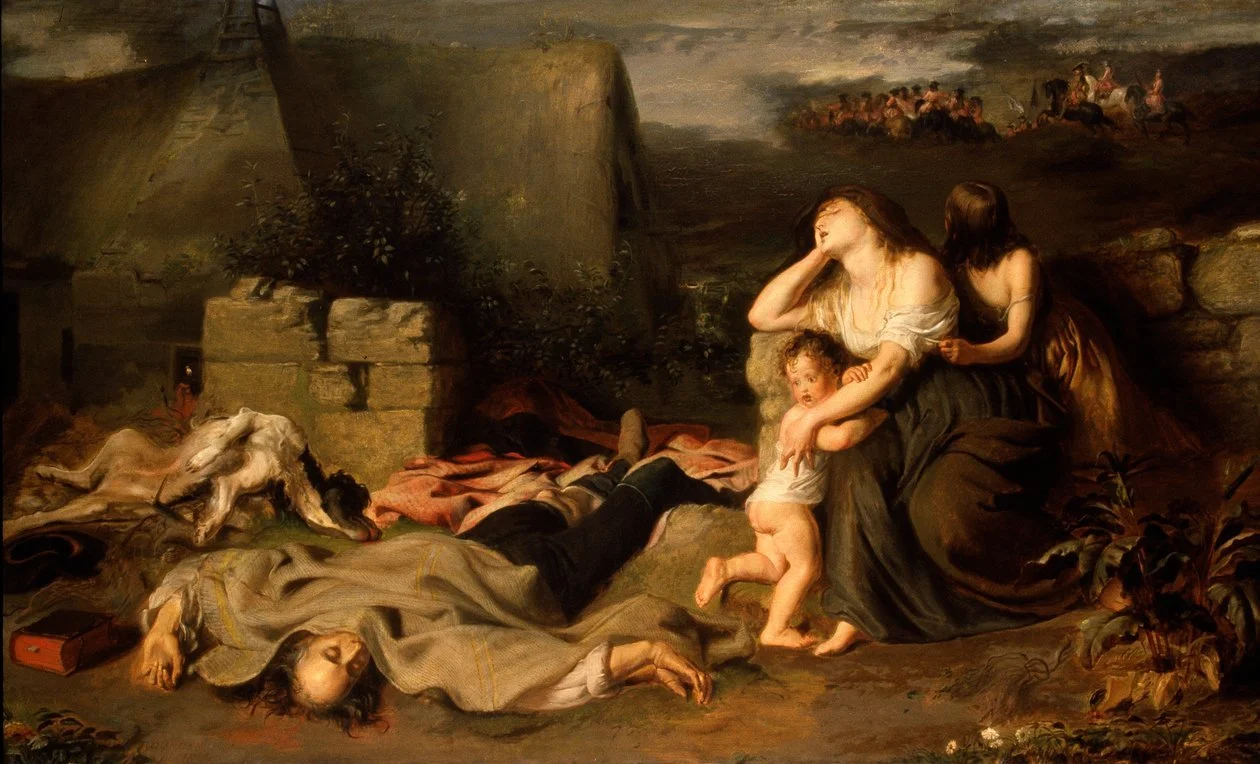
Thomas Duncan, The Martyrdom of John Brown of Priesthill 1685. Oil on canvas. 132×208cm. 1844
In the painting we see one such Covenanter, John Brown. He lived in a remote farm, Priesthill, in the upland parish of Muirkirk in Kyle, Ayrshire, where he cultivated a small piece of ground and acted as a carrier, popularly ‘the Christian Carrier’. His death made him a martyr and in the nineteenth century and in some circumstances, still today, he was/is venerated as a hero. An 18th century apologist, Robert Wodrow (1679-1734) described him as 'of shining piety'. He had fought with the Covenanters at the battle of Bothwell Bridge (1679), and was on intimate terms with the leaders of the movement. Brown was captured by a troop of cavalry under the command of Graham of Claverhouse. His house was searched where 'bullets and treasonable documents' were found. The document was James Renwick’s Apologetical Declaration against Intelligencers which denied the authority of King Charles II and called for resistance against the government. Brown was offered the chance to take the Oath of loyalty to the King (Abjuration). He refused to swear and was summarily shot.
Patrick Walker, writing five years after Brown’s death, states that the victim’s head was ‘shattered’, having been shot by six troopers. He also mentions that the killing took place in the presence of Brown’s wife and his infant son, while Wodrow claims that the dead man’s wife was pregnant and that his daughter by his first wife was also present. The killing was carried out by Graham of Claverhouse, one of the licensed agents. (This is the same man about whom the song ‘Bonnie Dundee’ was later written.) Walker based his account on an interview with Brown’s second wife, Isobel Weir whom he met at some point after 1702. His text reads
‘Claverhouse said, Take Goodnight of your Wife and Children; his Wife standing by, with her Child in her Arms, that she had brought forth to him [i.e., the child was under three], and another Child of his first Wife’s [Janet Brown], he came to her, and said, Now Isabel, the Day is come, that I told you would come, when I spake first to you of marrying me; she said, Indeed, John, I can willingly part with you; then he said. That’s all I desire, I have no more to do but die, I have been in Case to meet with Death for so many Years.
He kissed his wife and bairns, and wished purchased and promised blessings to be multiplied upon them, and his Blessing. Claverhouse ordered six soldiers to shoot him; the most part of the bullets came upon his head, which scattered his brains upon the ground.
Claverhouse said to his wife, what thinkest thou of thy husband now; woman?
She said, I thought ever much good of him, and as much now as ever:
…..
Claverhouse mounted his horse, and marched, and left her with the corps of her dead husband lying there; she set the bairn upon the ground, and gathered his brains, and tied up his head, and straightened his body, and covered him with her plaid, and sat down and wept over him.’
John Claverhouse is the villain of the piece. Various accounts describe his cruelty and implacable pursuit of Covenanters. The poem inscribed on Brown’s headstone, erected and still in position on moorland three miles north-east of Muirkirk in Ayrshire, states
‘In deaths cold bed the dusty part here lies
Of one who did the earth as dust despise
Here in this place from earth he took departure
Now he has got the garland of the martyr.
Butchered by clavers and his bloody band
Raging most ravenously over all the land
Only for owning Christ's supremacy,
Wickedly wronged by encroaching tyranny
Nothing now near soever he to good
Esteemed, nor dear for any truth his blood.’
In the sketch we see John Brown lying dead in an almost crucified pose. He is covered in a plaid which partially obscures his face - a reference to the damage to his head. His pregnant wife, daughter by his first marriage and infant son are seen to the right and his dog lies, also killed, behind him.
The painting is dark and dramatically lit. We see Brown’s dead body, head towards us, painted at an angle and receding into the space between two low walls. Extending the line of Brown’s body up through the forearm of Isabel we find that it points directly towards the troop of soldiers who have killed him, seen riding off into the distance. More specifically it points at the only lit figure among the soldiers, John Graham of Claverhouse on a white horse. Much of the criticism for the cruelty and savagery of the government response to the Covenanters was laid at his door and text after text portrays him as vicious and sadistic. Duncan ramps up the tragedy and drama and clearly apportions blame in the composition pointing to Claverhouse. The theme is further developed by the pose of Brown’s eldest child. She turns away from her father’s body and looks directly at the departing soldiers. Part of the reason Walter Scott’s covenanting novel was so criticised was his relatively sympathetic portrayal of Claverhouse.
Duncan made the event highly dramatic and intensely emotional. He tried to impress on us as viewers the horror and drama and the importance of what is seen. Part of that is in the visual sources Duncan very clearly drew upon. At first glance the work reveals its Baroque influence. Perhaps Spanish painting as the source. Jusepe de Ribera’s (1591-1652) St Bartholomew from 1644 is visually close. There is also reference probably to Michelangelo’s Pieta from 1555 in the intertwined poses of the family group. In using these such obvious and renowned works as sources Duncan makes a claim for the importance and significance of Scottish history and of this subject in particular. It is a tale of heroism, loyalty and tragedy of the very first significance.
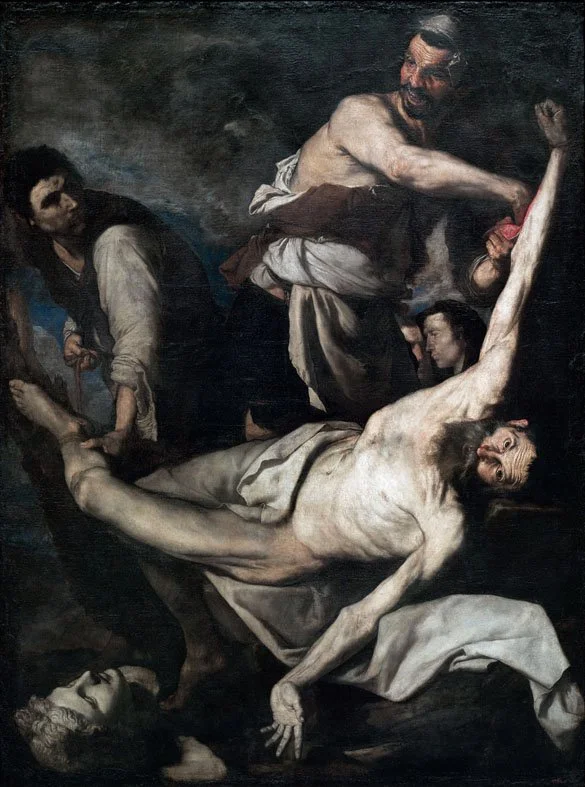
Jusepe Ribera, Martyrdom of St Bartholomew. Oil on Canvas. 202 × 153cm. 1644
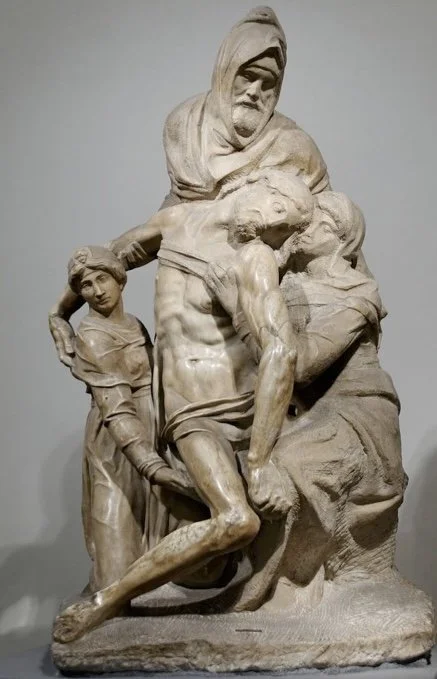
Michaelangelo, The Deposition (The Florentine Pieta). c.1547-1555
Consider the finished painting in comparison to the sketch. There are significant changes. The painter has uncovered more of John Brown’s head. He appears to have felt the need to remove the relative anonymity of the figure and to humanise Brown so he took away the obvious reference to the head being badly damaged. He changed the pose of the dead dog – making it much more overtly repeat the pose of his master. Dogs are often symbols of faithfulness and loyalty and the dog’s fate serves to enhance the cruelty of Brown’s killers. His youngest child is made to look much more directly at his dead father, the incomprehension clear on the face. The boy’s innocence and incomprehension serves to further enhance the cruelty and horror of the murder.
There’s a bible close to Browns outstretched left hand. The importance of the bible as ‘the word’ of God is the central truth of presbyterian worship. The implication is that this pious man was reading the word of God to his family when he was killed. The changes made by Duncan demonstrate clearly what the artist sought and how he tried to draw out those elements he felt most important. The relative subtlety of the Bible in both sketch and finished work is, I think because at the time the primacy of the Bible as direct access to the word of God is so central to Scottish religion that it needed no heightening. It is unquestionable so the reference to it can be quite understated and still be understood.
These similarities and differences help in reading the painting and reading the artists intentions. This is not a slight unimportant work. In terms of Scottish art at this central point in the history of the country when it is evolving and solidifying the Unionist-nationalist identity that came to dominate conceptions of the nation, this is an important document.
It is curious however that as a leading catholic institution in America The University of Notre Dame owns a painting showing in a very sympathetic light, a man who might be characterised as a virtual Presbyterian terrorist, willing to fight and die to get rid of any trace of catholic ritual from his country.
Finally, in the context of this work it is instructive to offer one further comparison. One of the artists collected by the Butkins was Theodule Ribot. This is a painting of St Vincent by Ribot. Ribot was working heavily under the influence of Ribera here. This painting is more than 20 years later than the Duncan painting but it further suggests why the Butkins might have been interested in buying their small sketch of a piece of Scottish history, now rather obscure outside its country of origin, and ultimately how it came, slightly incongruously, to be in Indiana.
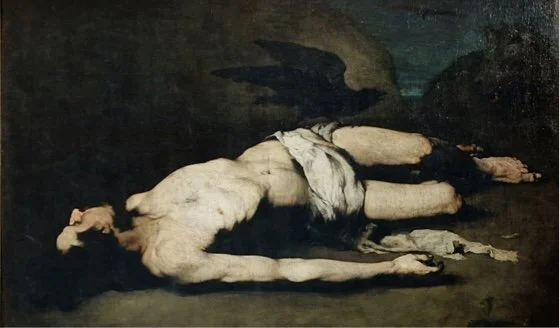
Theodule Ribot, St Vincent. Oil on Canvas. 98 × 133cm. 1867
[1] See Gabriel P. Weisberg, Breaking the Mold. The Legacy of the Noah L. and Muriel S Butkin Collection of Nineteenth-Century French Art, University of Washington Press 2012.
[2] Speech in the Scottish Parliament against the Act of Union (2 November 1706), quoted in ‘Appendix to Vol. VI. No. I’, The Parliamentary History of England from the Earliest Period to the Year 1803, Vol. VI. A.D. 1702–1714 (1806), column 143.
[3] John M Gray, (ed.) Memoirs of thr Life of Sir John Clerk of Penicuik, Baronet, Baron of the exchequer, extracted by himself from his own journals1676-1755 Edinburgh 1892, p.142.
[4] When the Scottish John Stuart, 3rd Earl of Bute, came to head the government in 1762, Wilkes started a radical weekly publication, The North Briton, to attack him, using an anti-Scots tone.
[5] C.G. Brown, Religion and Society in Scotland since 1707, Edinburgh 1997, pp.42-66.
[6] W. Ferguson, The Identity of the Scottish Nation. An Historic Quest, Edinburgh 1998, p.2
[7] This is where God saves sinners through grace alone, faith in Christ alone. Not for any other reason.
[8]. https://www.truecovenanter.com/natcov.htm
Above has the text of the National Covenant including:-
therefore we abhor and detest all contrary religion and doctrine; but chiefly all kind of Papistry in general and particular heads, even as they are now damned and confuted by the word of God and Kirk of Scotland. But, in special, we detest and refuse the usurped authority of that Roman Antichrist upon the scriptures of God, upon the kirk, the civil magistrate, and consciences of men; all his tyrannous laws made upon indifferent things against our Christian liberty; his erroneous doctrine against the sufficiency of the written word, the perfection of the law, the office of Christ, and his blessed evangel; his corrupted doctrine concerning original sin, our natural inability and rebellion to God’s law, our justification by faith only, our imperfect sanctification and obedience to the law; the nature, number, and use of the holy sacraments; his five bastard sacraments, with all his rites, ceremonies, and false doctrine, added to the ministration of the true sacraments without the word of God; his cruel judgment against infants departing without the sacrament; his absolute necessity of baptism; his blasphemous opinion of transubstantiation, or real presence of Christ’s body in the elements, and receiving of the same by the wicked, or bodies of men; his dispensations with solemn oaths, perjuries, and degrees of marriage forbidden in the word; his cruelty against the innocent divorced.
[9] Alexander Carse, Covenanters in a Thunderstorm, 1810, Private Collection; Alexander Johnston Marriage of the Covenanter, 1842, GAGMA; Thomas Duncan, The Death of John Brown of Priesthill, 1844, GAGMA.
[10] T.C. Smout, A Century of the Scottish People. 1830-1950, Glasgow 1986, p.185.
[11] McCrie’s comments appeared originally over three articles in the Christian Instructor, for January, February and March 1817. They were reprinted in The Works of Thomas McCrie DD. Edinburgh 1855-7, 4 vols.
[12] John Galt, The Autobiography of John Galt, 2 vols, London 1833, vol. 1, p.254.
[13] John Howie, Biographia Scoticana. A Brief Account of the Lives, Characters and Memorable Transactions of the Most Eminent Scots Woethies, Glasgow 1781, p.409.
[14] Charles Sanford Terry, John Graham of Claverhouse, viscount of Dundee, 1648-1689. London: 1905. p. 194.
[15] Robert Wodrow, The history of the sufferings of the church of Scotland from the restoration to the revolution, with an original memoir of the author, extracts from his correspondence, and preliminary dissertation and notes, in four volumes. Vol. 4 Edinburgh 1722.
[16] James Renwick, The Apologetick Declaration, & Admonitory Vindication of the True Presbyterians of the Church of Scotland: Especially anent Intelligencers & Informers. Written by James Renwick at Glengaber on 28 October 1684 and posted on the night of Saturday 8 November on selected church doors.
[17] P. Walker, The Life and prophecies of Alexander Peden: Minister of the Gospel at New Glenluce, in Galloway, Scotland, Edinburgh 1724.
[18] P. Walker, The Life and prophecies of Alexander Peden: Minister of the Gospel at New Glenluce, in Galloway, Scotland, Edinburgh 1724.