
Sandy Wood:
Origin Stories
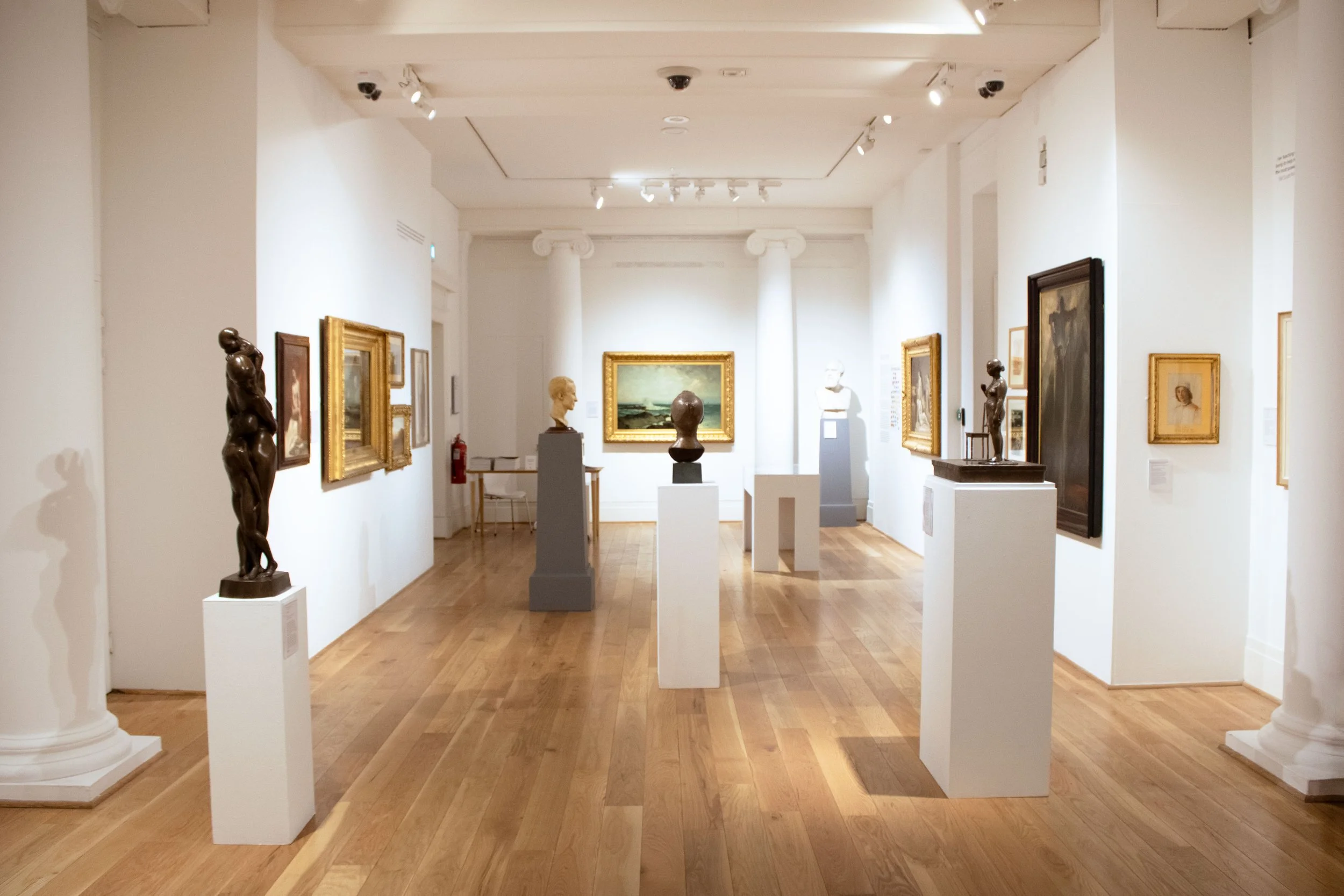
This year the Royal Scottish Academy celebrates its 200th year of being an institution driven by artists! The celebrations kick off with the exhibition Origin Stories, created and curated by their very own Head of Collections, Sandy Wood. Rosie Shackleton had the pleasure of sitting down with Sandy at the start of this busy year to hear about his own origin story, the threads running through the exhibition, and why he’s stayed at the RSA for 22 years.
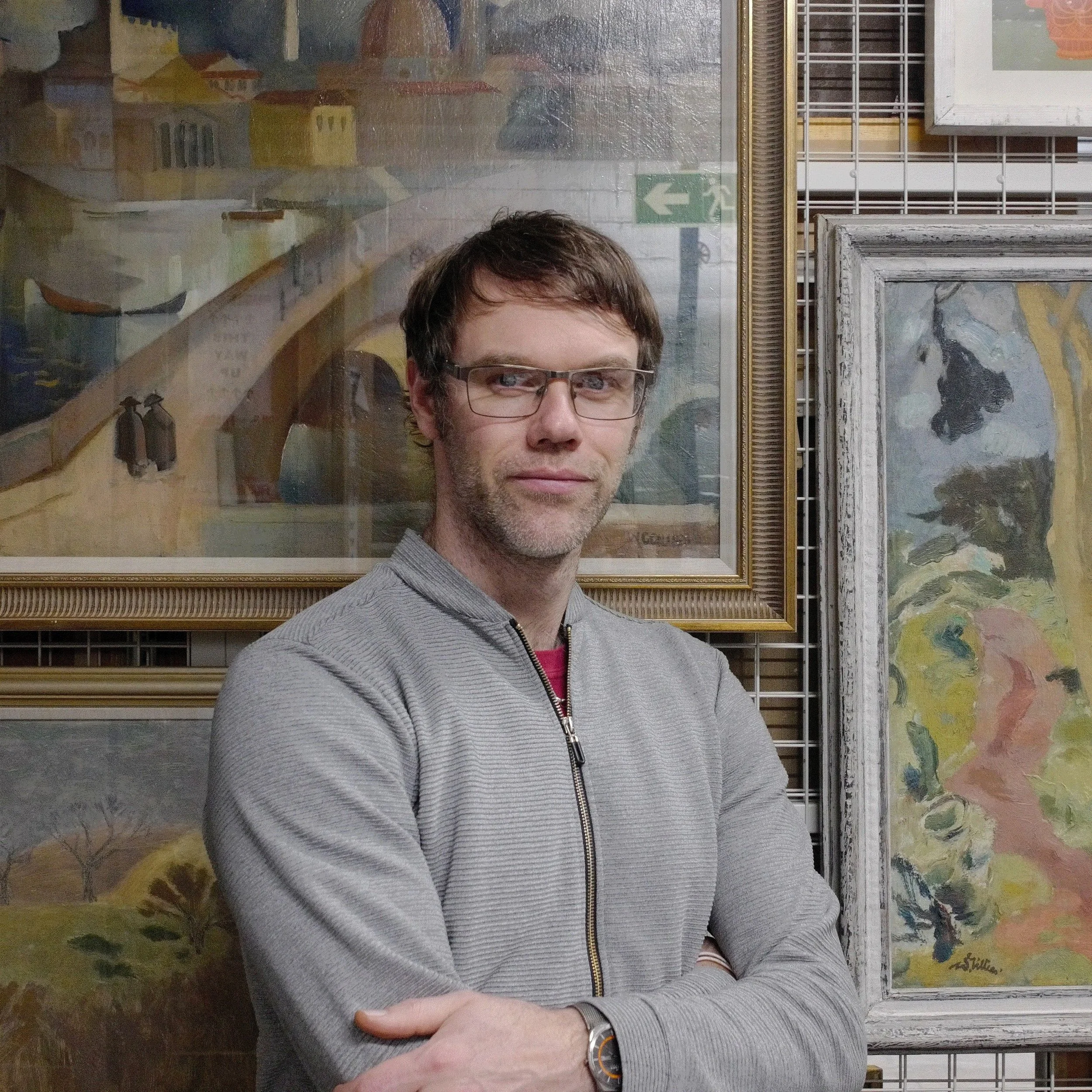
Sandy Wood, photographed at the RSA archive, 2024.
Starting as a student of sculpture at Gray’s Art School, Aberdeen (1998-2002), Sandy began at the RSA as a technician in 2003. The skills learnt in the sculpture workshop made technician a great first step into the museum sector, where he continued working with his hands; building and hanging.
The RSA proved to be an environment in which Sandy could thrive. Encouraged by his boss and mentor Dr Joanna Soden, now an honorary RSA Academician, he soon did his Masters in Museum Studies at the University of Leicester, pushed to learn more about the museum sector. The opportunity to distance-learn, combined with on-site technician work meant Wood continued to get the hands-on experience of building exhibitions, combined with curatorial practice. This approach to exhibitions from both a technician’s and museum professional’s viewpoint, means Wood’s work has a strong foundation; it is solidly built, and solidly curated.
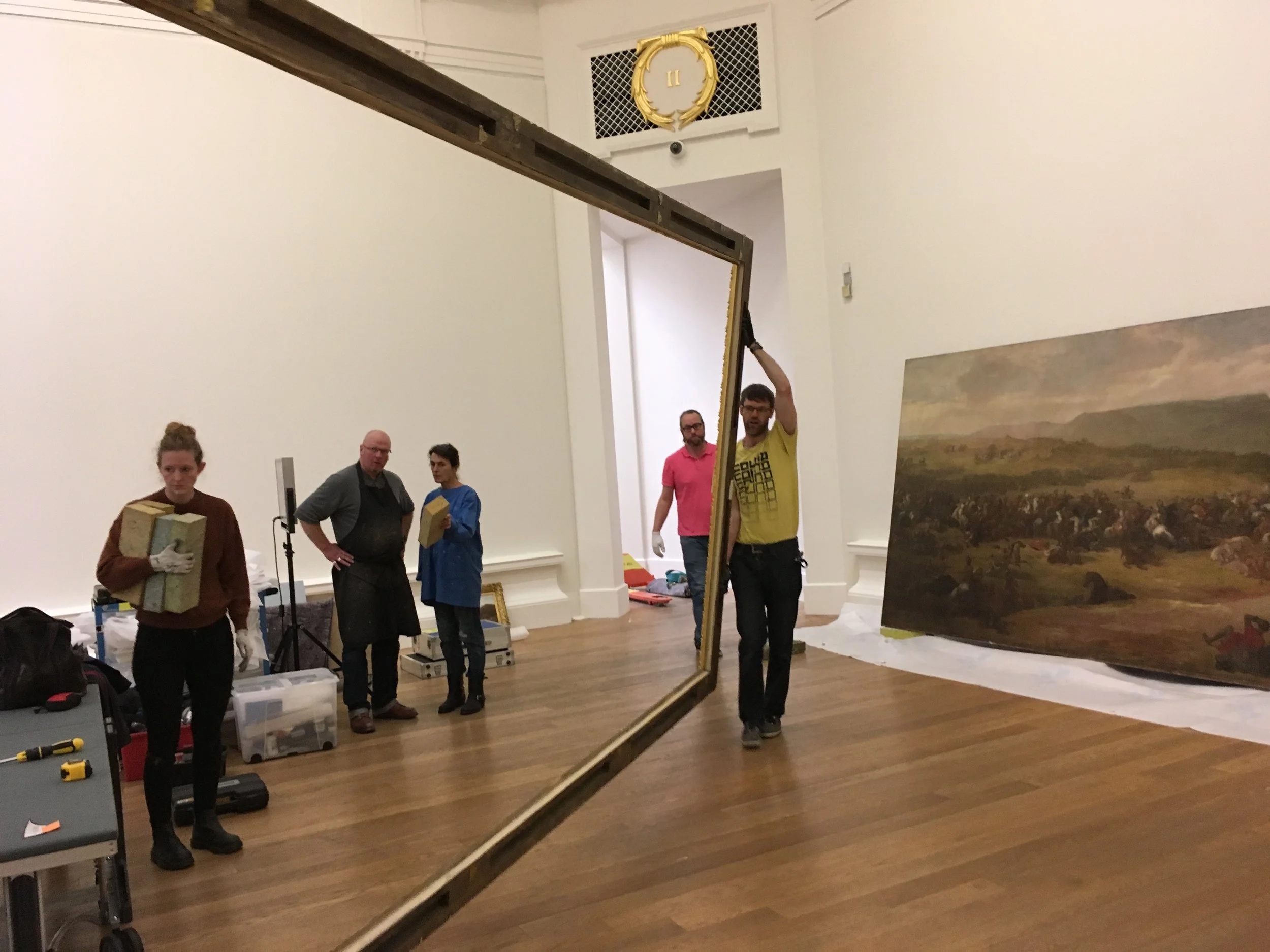
Sandy Wood installing the Age of Wonder exhibition, 2017. At this time, he was Collections Curator.
With one foot in museum practice and one foot in gallery and technician work, Sandy rose through the ranks of the organisation. He became Assistant Curator in 2010, and Collections Curator in 2013. This continual learning, a proactive approach to building on his skills, meant Soden felt safe in the knowledge that the collection was in experienced hands. In 2023, Sandy became Head of Collections, a role in which he helped drive the RSA200 celebrations. A natural next step in the continual development of his skills in the sector.
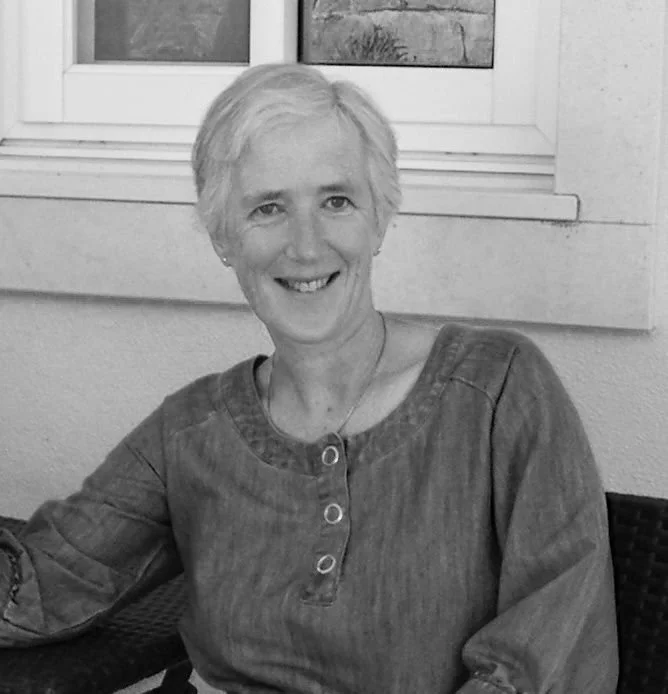
Dr. Joanna Soden HRSA, former Collections curator, Royal Scottish Academy.
The initial encouragement to learn, to upskill, and be supported in this learning is definitely a sign of a good mentor. Indeed, Dr Joanna Soden’s own interest in the RSA was rooted in its ability to support and teach artists; writing her PhD on the RSA’s history of training Scotland’s artists from its inception in 1826. Her own curatorial practice was therefore rooted in creating an environment in which others could learn, and it was in this setting that Wood was able to thrive.
It is no surprise then, that the Origin Stories exhibition focuses on these teacher-to-artist relationships throughout the RSA’s history, and beyond to Scotland’s leading art institutions. Indeed, the show highlights something the RSA represents at its core; the support and betterment of Scotland’s artists, and where better to start than at home? Wood emphasised that this exhibition is just scratching the surface of tracking the web of connections between Academicians, and work is being done to capture these connections for posterity.
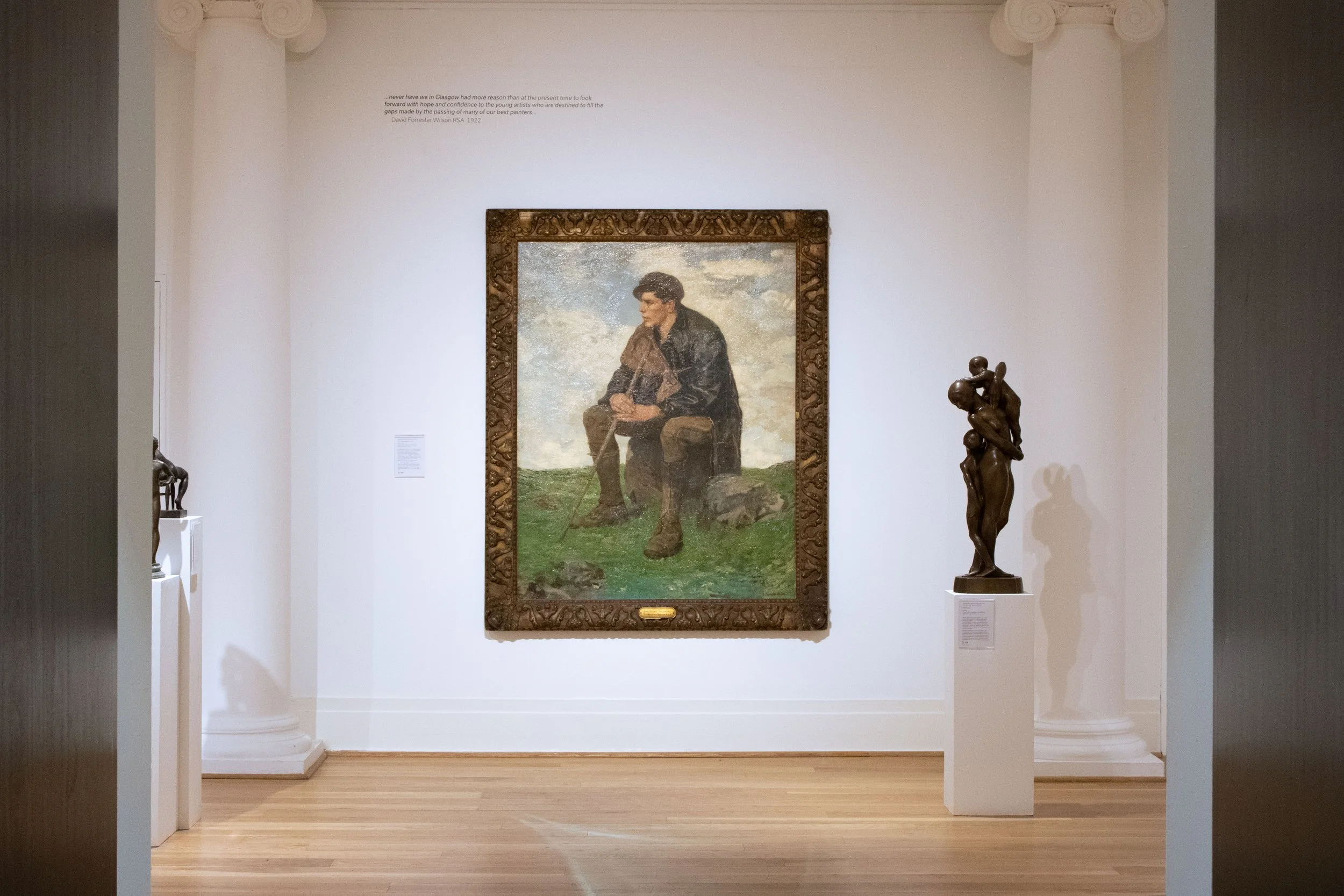
Installation photograph for Origin Stories, 2026, Royal Scottish Academy, featuring David Forrester Wilson, The Young Shepherd. Oil on canvas. 156 × 120.5cm. c.1928.
Curating a collections-driven exhibition at the RSA offers an interesting challenge to curators. As opposed to other institutions where curatorial staff drive the development of the collection, the RSA’s holdings are shaped decidedly by the Academicians. They decide their Diploma works and build their own portfolio. Indeed, this type of hands-off curatorial relationship is rarely seen outside of the RSA. It is here that Sandy’s foundation as an artist and maker come into play. Being one of the artistic cohort, he can curate like an artist, and has an ease in working with such an artist-led collection.
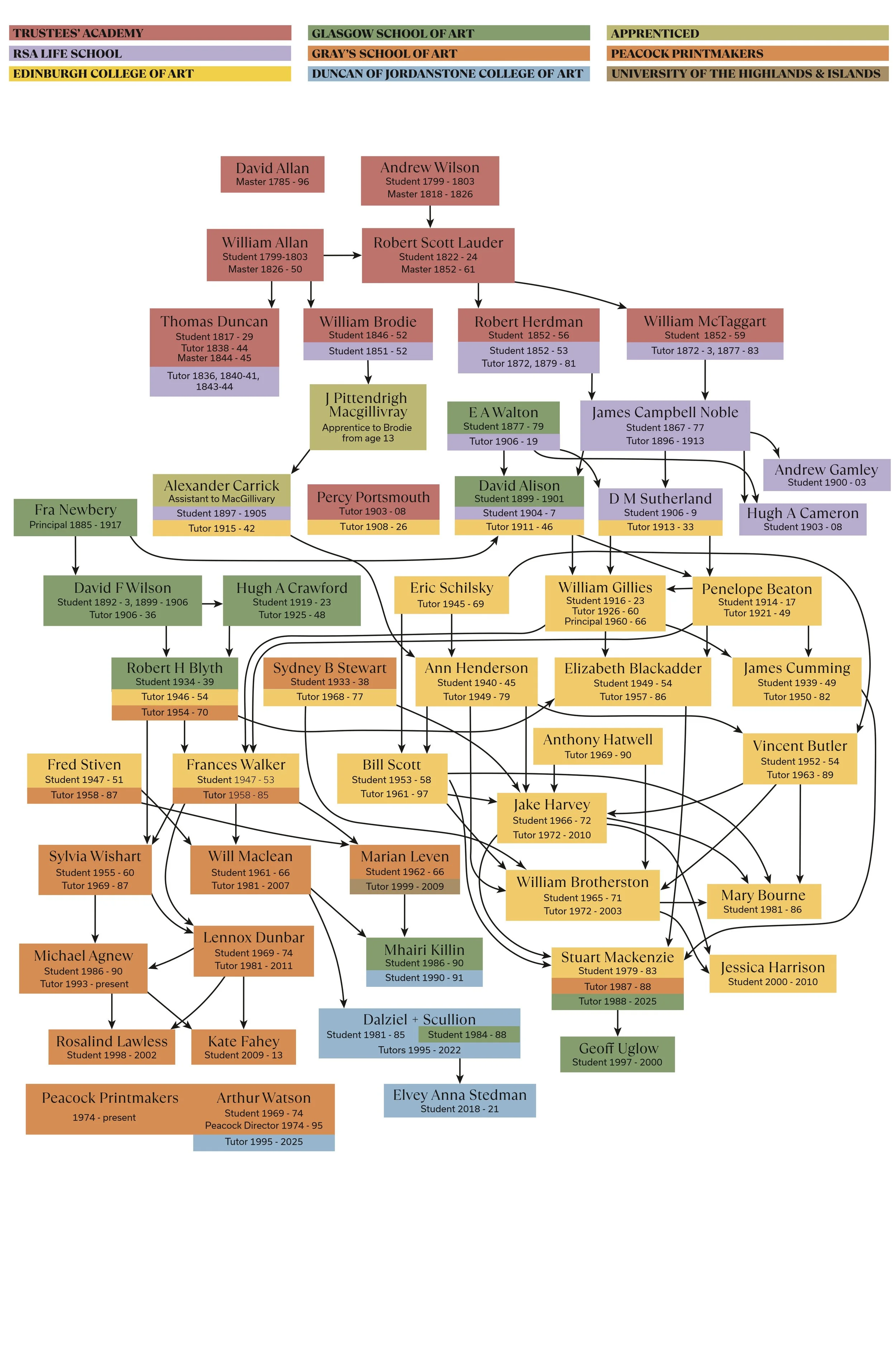
Origin Stories: Academician family tree, 2026, Royal Scottish Academy.
The family tree at the start of Origin Stories demonstrates the tangled web of connections between Academicians. I asked Wood about how Scotland creates an environment for its artists to learn from each other. It is Scotland’s particularity, claims Sandy. He talked about how the art scene here operates on a smaller scale, allowing artists to hop between institutions and travel more freely, and has allowed artists to be unruly and learn in different and unique ways. Ultimately the Scottish scene has been encouraged to change and develop in its own way, taking inspiration and ideas internationally, but applying them in their unique local contexts, bouncing ideas between institutions, with the RSA being at the core of this exchange; encouraging artists to be better.
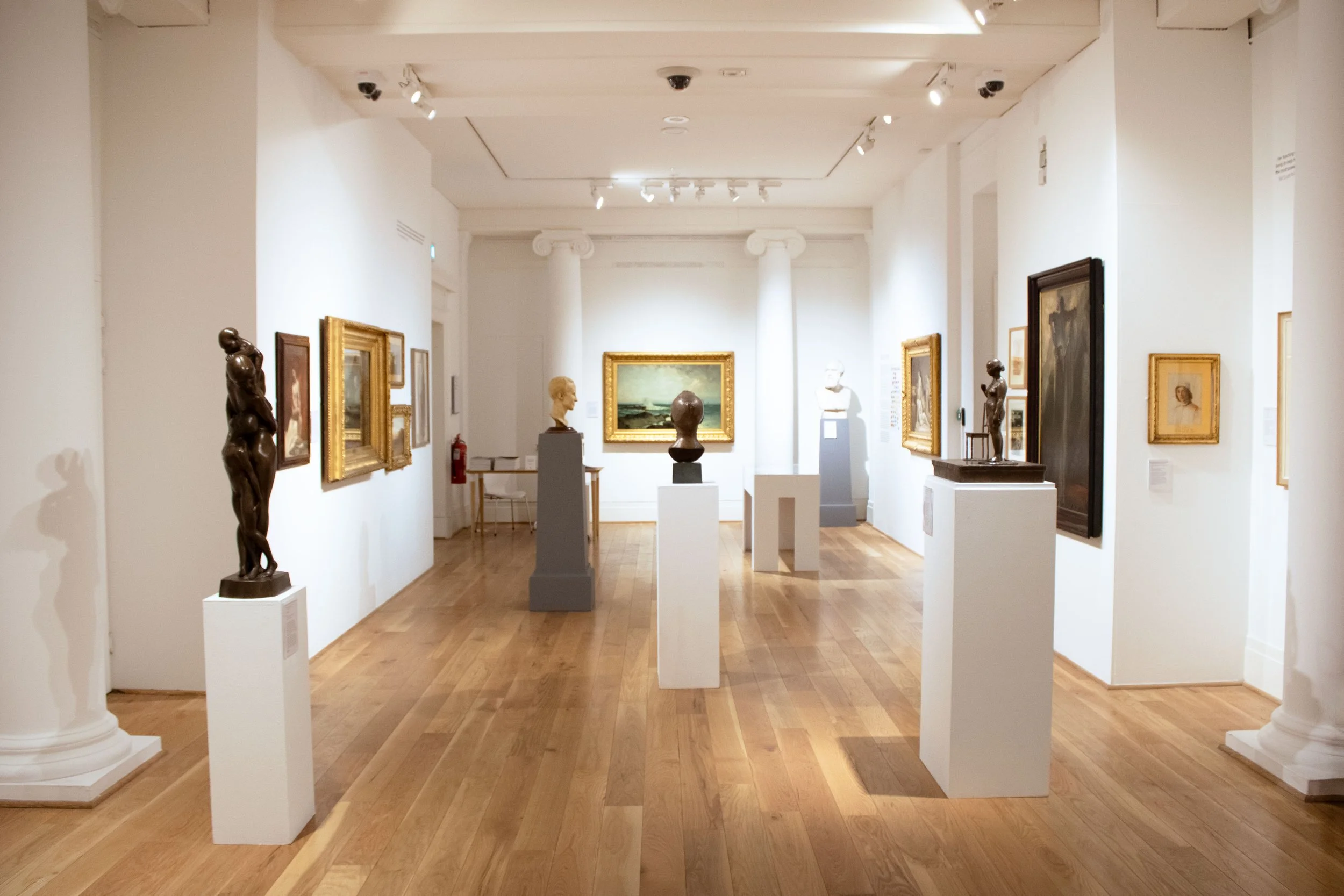
Installation photograph for Origin Stories, 2026, Members’ lobby, Royal Scottish Academy.
Learning, inspiration and connections between artists is often non-linear; evolving in different periods of an artist’s life and sphere of influence. To add an extra layer, visitors expect chronology from the archive, but there is potential for the art gallery space to free the curator from the burden of this chronology. I asked Sandy about the challenge of curating threads of influence that don’t follow a straight line, especially in a collections-driven exhibition. Again, it was Sandy’s artistic background that unburdens him from this challenge. He says he ultimately makes aesthetic choices for where to place artworks, rather than being solely driven by date or decade. Of course, historic timeline plays a part in the exhibition, but it is not the sole influence that drives the show. Indeed, it is the art itself that drives the show: where can it sit logistically? Where can it sit in the flow of the space? And where can it sit in relation to its neighbours?
Grounded in the teaching of the art schools as a way to make these connections tangible, Origin Stories also alludes to more intangible connections; influence, inspiration and what Wood calls the “distinct affinity” between artworks. For an example of the potential between works, I want to zoom in on two works that I found affinity between: Mary Bourne’s Dava Targe (1994) and Mhairi Killin's Constellation, Not Sequencing Carries Truth, after Olga Tokarczuk (2020).
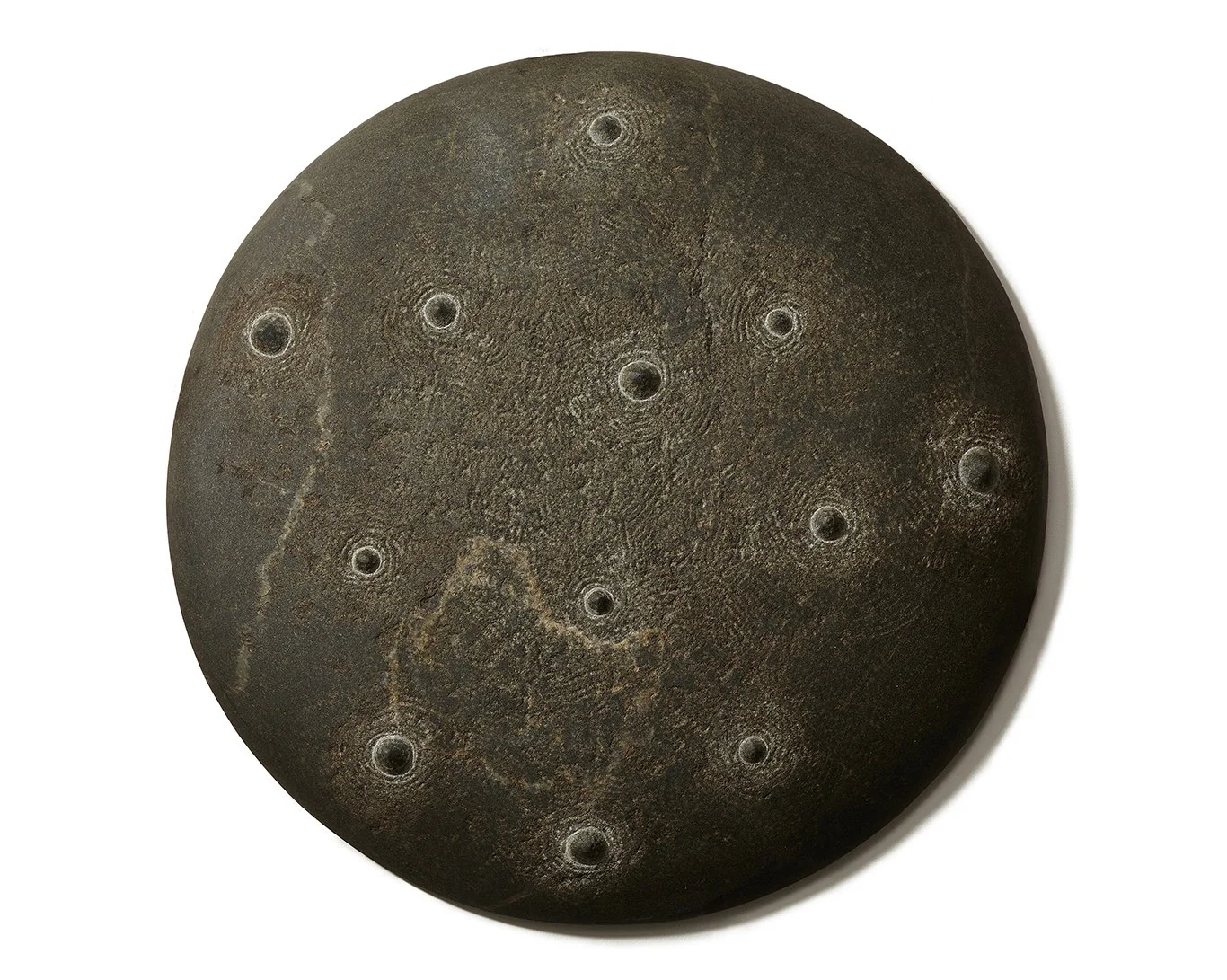
Mary Bourne, Dava Targe. Kilmartin slate. 70 x 70 x 6 cm. 1994. Collection of the Royal Scottish Academy.
Dava Targe drew me into the room. A shield-like sculpture made from Kilmartin slate, it has its own gravitational pull and soon, I was across the threshold and hovering above it. From this perspective, the shield took on the identity of a moon at my feet. Pulling me into its centre and Bourne’s intuitive mark making. The worked quality of the slate feels ancient; a cup and ring stone at the start of its life, not yet worn down by Scottish weather. I orbited it a few times pondering why the work wasn’t made to be hung on the wall, and whether it would still have the same effect if it was.
It was this pondering of hanging the piece that drew my attention to Mhairi Killin's Constellation, not Sequencing Carries Truth hung a few meters away. A giclée print with additional charcoal drawing, Killin’s work grapples with a so-called “islandness”, centring her experiences on Iona at the forefront her practice. Again, this piece drew me in to its centre. The work is dark and brooding, but the mark-making comforts us; reminding the viewer of human touch and the tactility of stone. Like Bourne’s work, I pondered the hanging of the piece. The subject matter is heavy, only made light and able to be hung by the medium of print. I asked myself whether Bourne’s and Killin’s work could swap places? Stone on the ground, shield on the wall?
In both works there is a wildness, a celebration of rock, and Scottish history, a playfulness of medium, and ritualistic form. But on reading the labels, I was surprised that these two artists, both sitting within this web of connections and in the same gallery, did not actually have a direct link to each other. Inspired by their own tutors, and own experiences of Scotland, it was only their curation as neighbours that had led me to find a “distinct affinity” between the two works. This is what Origin Stories offers visitors, the opportunity to see connections throughout time, but also to find their own and follow their curiosity.
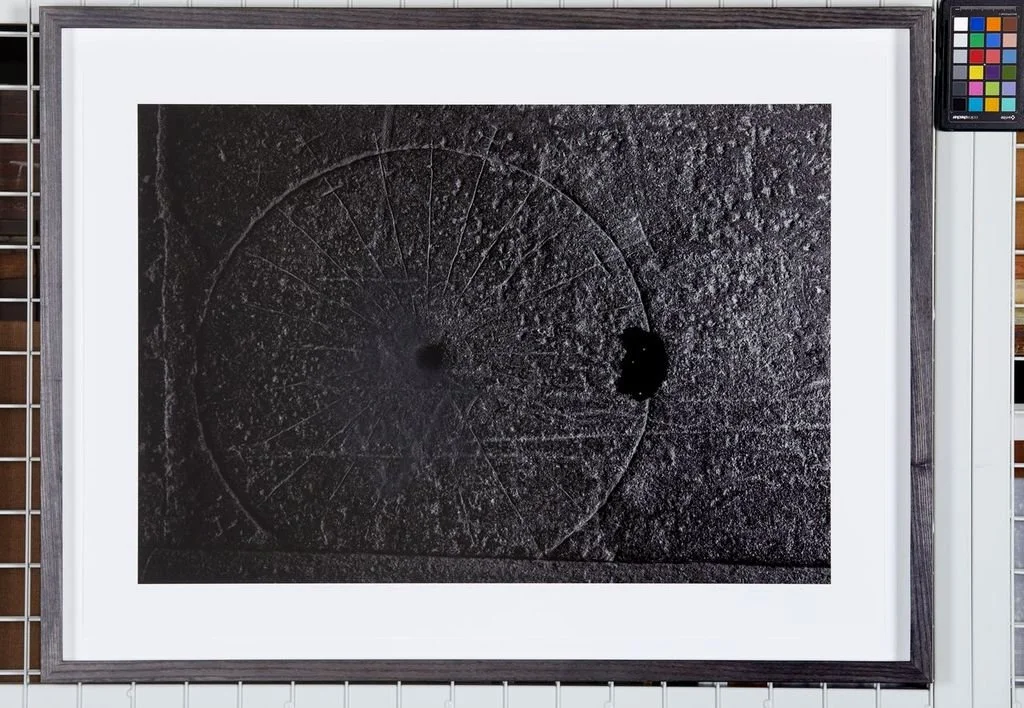
Mhairi Killin Constellation, Not Sequencing Carries Truth after Olga Tokarczuk. Giclee print with charcoal drawing, burnt Finnish birch element with silver. 63 x 83 cm. 2020. Collection of the Royal Scottish Academy.
The focus on human mark-making in Bourne’s and Killin’s pieces, and indeed the wide range of mediums on display in Origin Stories, demonstrates another important thread running through the show; technical ability. Indeed, Wood confirmed that in conducting artist interviews for the exhibition, there appeared what he called a “seam of tradition” throughout all their practices; traditional skills and traditional crafts. Wood understands the importance of skills like joinery, weaving and stonemasonry to allow artists to fully realise ideas. RSA Academicians have mastered a craft, and it is the relationship between idea and outcome that establishes their prowess. For many of the artists, particularly those who call themselves sculptors, he spoke to during the research for Origin Stories, if this foundation of skills acquisition is lacking then it is detrimental to the creative process. Sandy described it as similar to a “wheel missing in the machine.” Interestingly Sandy himself describes his time and development in the RSA as akin to a modern apprenticeship, becoming trained under expert supervision. It is perhaps not surprising then that he has thrived in the RSA environment having come first from a sculptural and then a technician’s background. His own practice is rooted in making and building, allowing him to realise his own curatorial ideas.
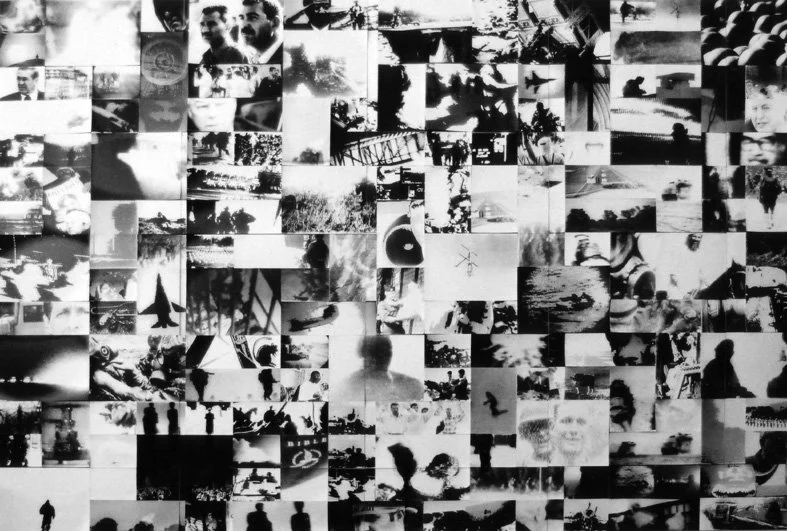
Sandy Wood, Ordered Chaos. Photographic collage. 200 × 300cm. 2003/4. Courtesy of Sandy Wood.
I cheekily asked if I could include one of Wood’s own works in this article and he sent through options for me to choose from. I was drawn to his piece Ordered Chaos, 2003/2004, a collage of photographic prints taken from news coverage of the second Iraq War. The piece, much like Killin’s print, has a weightiness. Not only of subject matter, but of feel. The haunting figures appear to us out of smoke and stand in front of us, demanding us to bear witness. Knowing, however, the work was collaged by hand, adds a lightness and human touch. Again, Sandy works with his hands here to bring together a web of haunting images from war. It is this bringing together of multiple sources, multiple ideas, images and influences that Wood has deployed again for Origin Stories.
To end our chat, I asked Sandy why he has stayed at the RSA for 22 years. After having grown into his career here, it is that family feel that still appeals to him; the safe environment to explore new ideas, learn more, engage with new collections and take risks. The RSA allows its staff to be “nimble”, as Sandy says; to respond to new challenges regularly. It is this environment that has meant Sandy Wood’s own origin story is firmly rooted in the RSA, and will continue to develop over his career and work.
Rosie Shackleton