
The Royal Scottish Academy: A History
From rebellious beginnings to a keystone position in Scotland’s art ecosystem, Duncan Macmillan plots the history of the Royal Scottish Academy in its bicentenary year.
The story of the Scottish Academy, which in 1838 became the RSA, began on 26 May 1826. The initiative came from the artists themselves, but not because of their cosy relationship with the establishment as had been the case with the RA in London. On the contrary, the new Academy was a secession, a rebellious move by the artists to claim their independence from the establishment. The Institution for the Promotion of the Fine Arts, later the Royal Institution, had been founded in 1821. Run by those who thought themselves gentlemen and connoisseurs, it showed their collections of old masters, but as that resource ran out pretty quickly, increasingly the Institution’s exhibitions depended on the work of living artists. The artists themselves had little say in the running however and reckoned, not unreasonably, that the Institution was at once both exploiting them and patronising them. There was perhaps a sense among those who ran the Institution that artists - although they had successfully established themselves as a profession throughout the eighteenth century - were still “trade” in the eyes of the establishment.
As their discontent grew, the idea of an independent academy was born and so a meeting was called. 24 artists signed up to it. A draft constitution for the new academy was prepared, but it was a bold move defying an establishment that seemed to control patronage. Some got cold feet and in the end only 15 joined the meeting, but they agreed the constitution, elected George Watson President, William Nicholson secretary, and Thomas Hamilton treasurer.
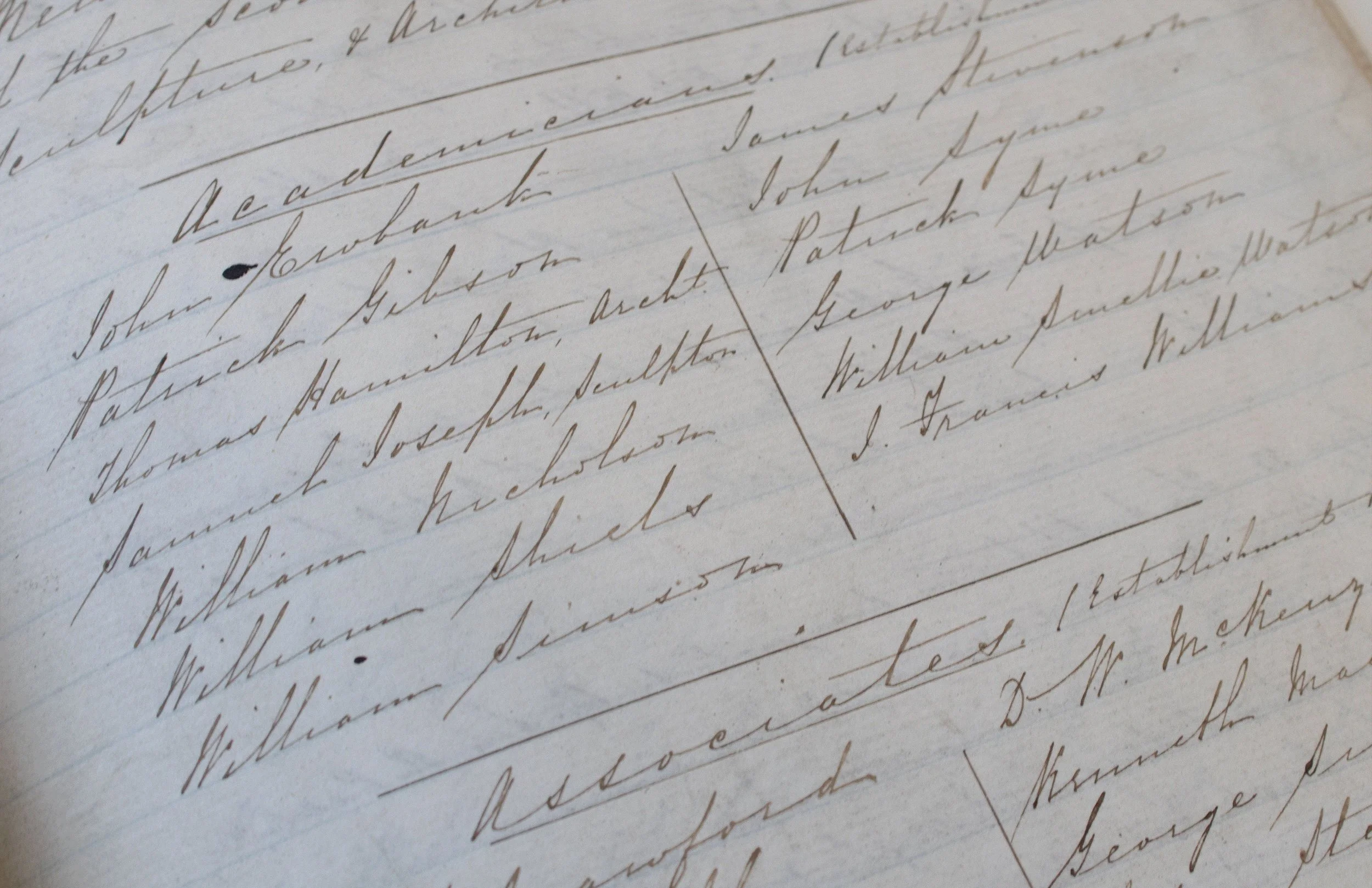
Minutes of the inaugural meeting of the Scottish Academy of Painting, Sculpture and Architecture. 1826. Courtesy of the Royal Scottish Academy.
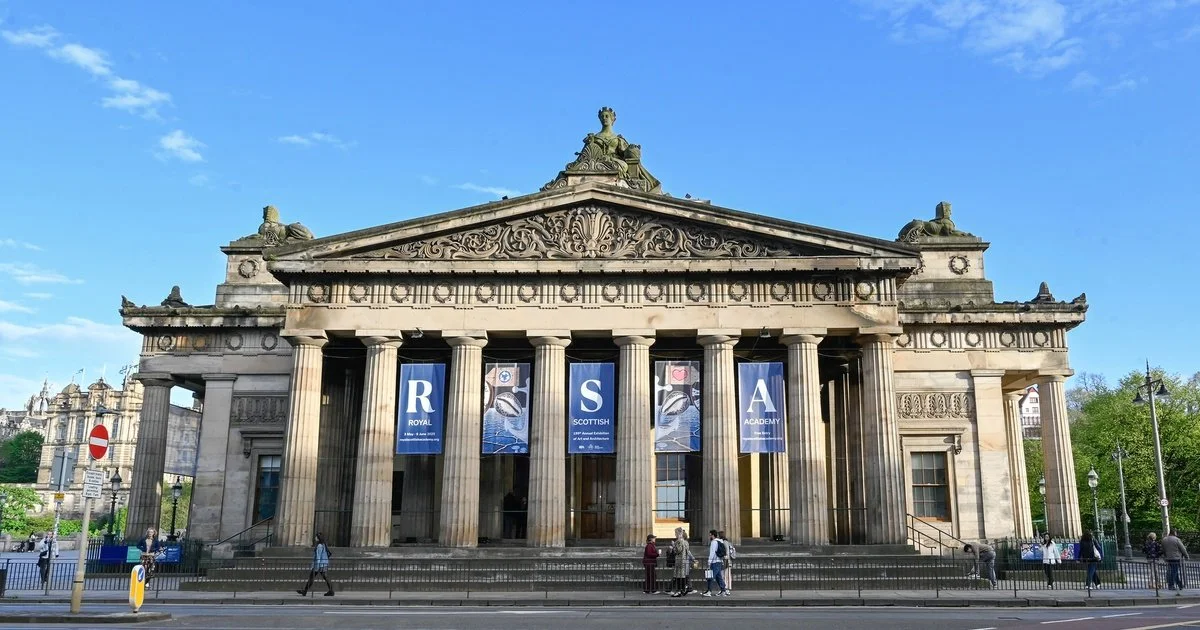
Meanwhile the Institution had moved into the building that for much of the nineteenth century bore its name, but which we now call the RSA. Begun in 1822 and funded by the Trustees for the Board of Manufactures, this was originally known as the Building for the Societies and hosted the Antiquaries, the RSE and the Trustees Academy as well as the Institution which shortly thereafter became the Royal Institution. Designed by William Playfair, it was built by the Trustees for the Board of Manufactures. Originally it had a simple rectangular plan, but was enlarged, again by Playfair, to its present size a few years later. The new building had a central suite of exhibition rooms. Its footprint is still visible in the lower floor galleries.
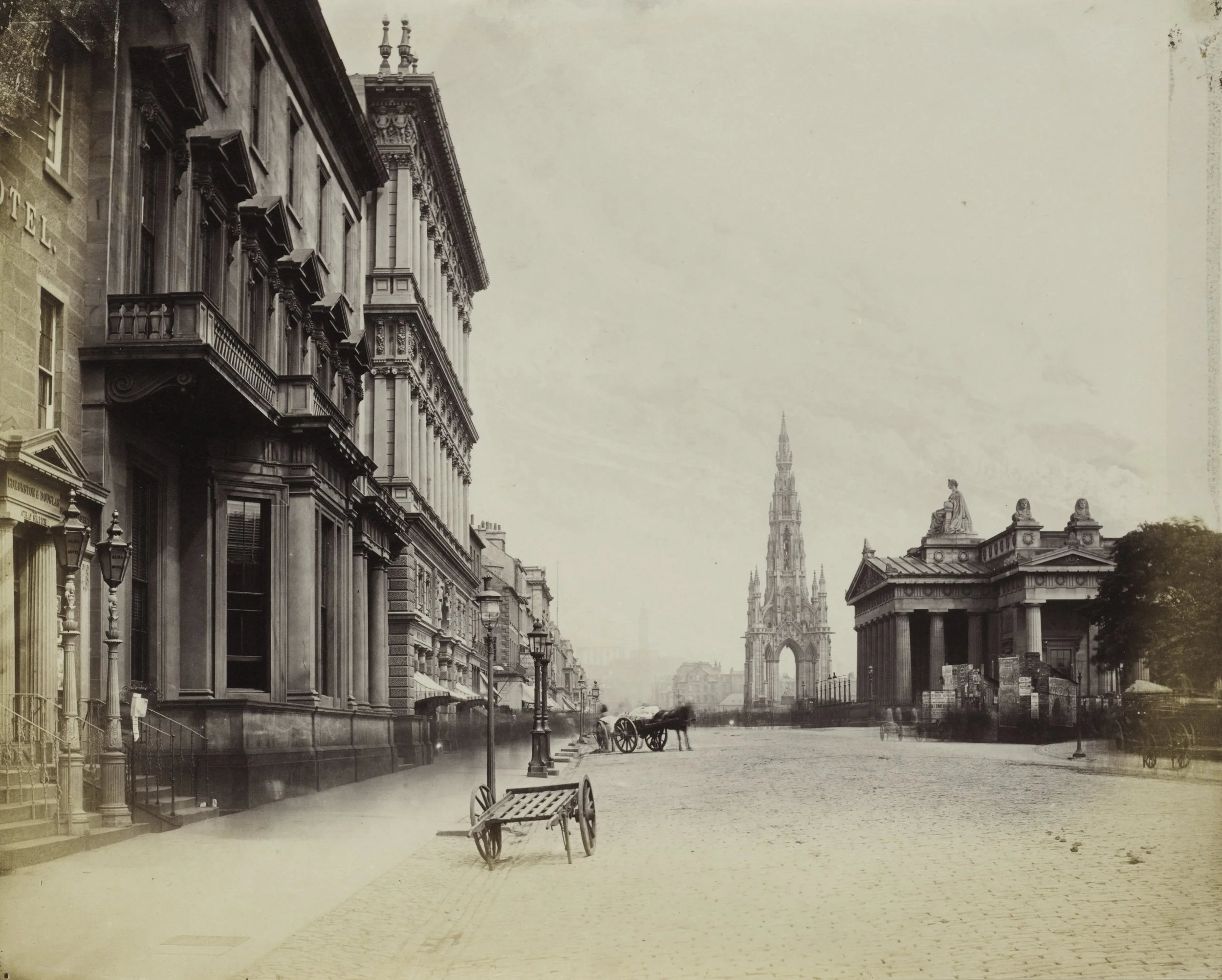
William Donaldson Clark, Princes Street, The Scott Monument and the Royal Institution. Glass negative, albumen print. c.1858. Courtesy of the National Galleries of Scotland.
The Board of Manufactures, which figures largely in this story, was an early “quango”, administering a fund set up to compensate for some of the financial losses Scotland suffered with the Act of Union. In 1707, Scotland, which had no debt, had to take a share of England’s debt, while Scots also had to be compensated for the lesser value of English money: two aspects of the Union that are not so often discussed. The Board had become involved in the arts when it set up the Trustees Academy with the specific intention of improving design in the linen industry, but as direct heir to the St Luke’s Academy, begun by the artists in 1729, the Trustees Academy fulfilled wider ambitions from the start. Under John Graham at the beginning of the century, too, the Trustees Academy had become a modern art school.
Modelled on the London Academy, the new Scottish Academy reasonably enough sought its own royal charter, but the gentlemen of the establishment rallied round to make sure it was blocked, while at the same time (rather dishonorably) moving to secure a charter themselves for what now became the Royal Institution.
The Academy held its first exhibition in February 1827. Opening on the same day as the Institution’s first show in its new building, its takings substantially outdid its rival’s. Consequently, some of those who had had cold feet now sought to join. It was a delicate situation. The fledgling Academy had already sorted itself into seniors and juniors, Academicians and Associates, and now a new and considerable body of artists wanted to become members. After careful negotiation, the matter was resolved and the Academy was greatly strengthened in consequence. Eleven years later it also finally won its own Royal Charter. David Wilkie, knighted and close to the centre of power, no doubt helped. His close friend William Allan, the second PSA, now became the first PRSA.
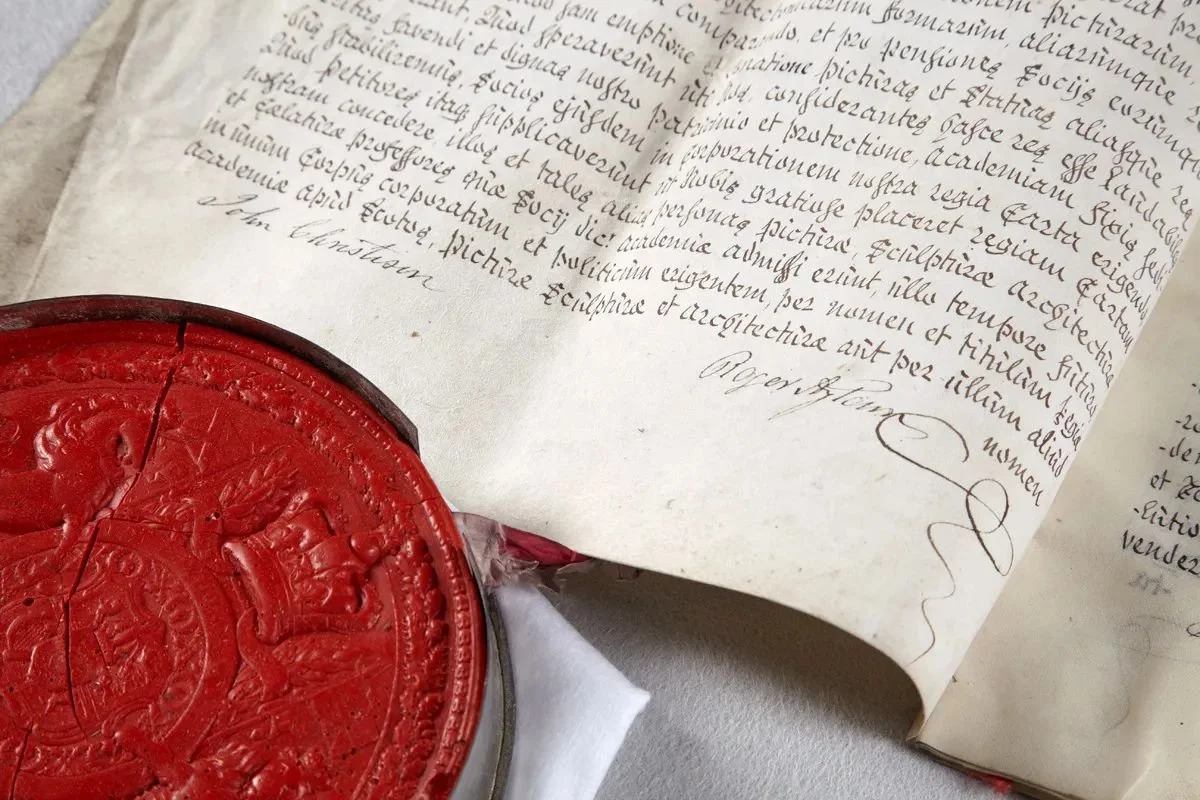
Charter of the Royal Scottish Academy of Painting, Sculpture and Architecture. 1838. Courtesy of the Royal Scottish Academy.
At the outset the Academy had declared four ambitions:
to be an exhibiting society.
to be an Academy: an art teaching organisation like the RA which had run its school since its foundation.
to create a national gallery for Scotland; the National Gallery in London had opened in 1824.
To establish a benevolent fund for artists.
This last objective was established pretty quickly and the fund still exists. The main purpose of the Academy however was the first on the list: to be an exhibiting society. If the Institution thought the artists couldn’t manage on their own, they soon found they couldn’t manage without the artists and it was not long before the Academy was renting the rooms in the new building that the Institution had previously occupied. This was however only during the annual exhibition. The Academy had no permanent home and this hampered the fulfilment of its other ambitions.
The big change came in 1855 when the Academy was given the eastern half of the building that is now the National Gallery of Scotland, a move that finally gave it permanent premises. This new building had been begun in 1850 and in 1859 the new NGS moved into the western half. The building was again built by the Board of Manufactures and was also still owned by them. The architect was also again Playfair and he gave the north facade two matching porticos to reflect the division of the building between the two institutions.
In the following decades, there was a rising art market. It meant big sales and prosperity for the Academy and the artists but, led by popular taste, this boom also had consequences for art that are so amply visible in much late Victorian painting. It also meant serious pressure on the exhibition space. Numbers of works shown grew from an annual average of 400 to 500 till on occasions in the 1870s and ‘80s it reached over 1100, all still in the eastern rooms of the NGS. (Currently there are just 88 pictures hanging in those rooms). Inevitably, many were left out, not because of quality but simply from lack of space.
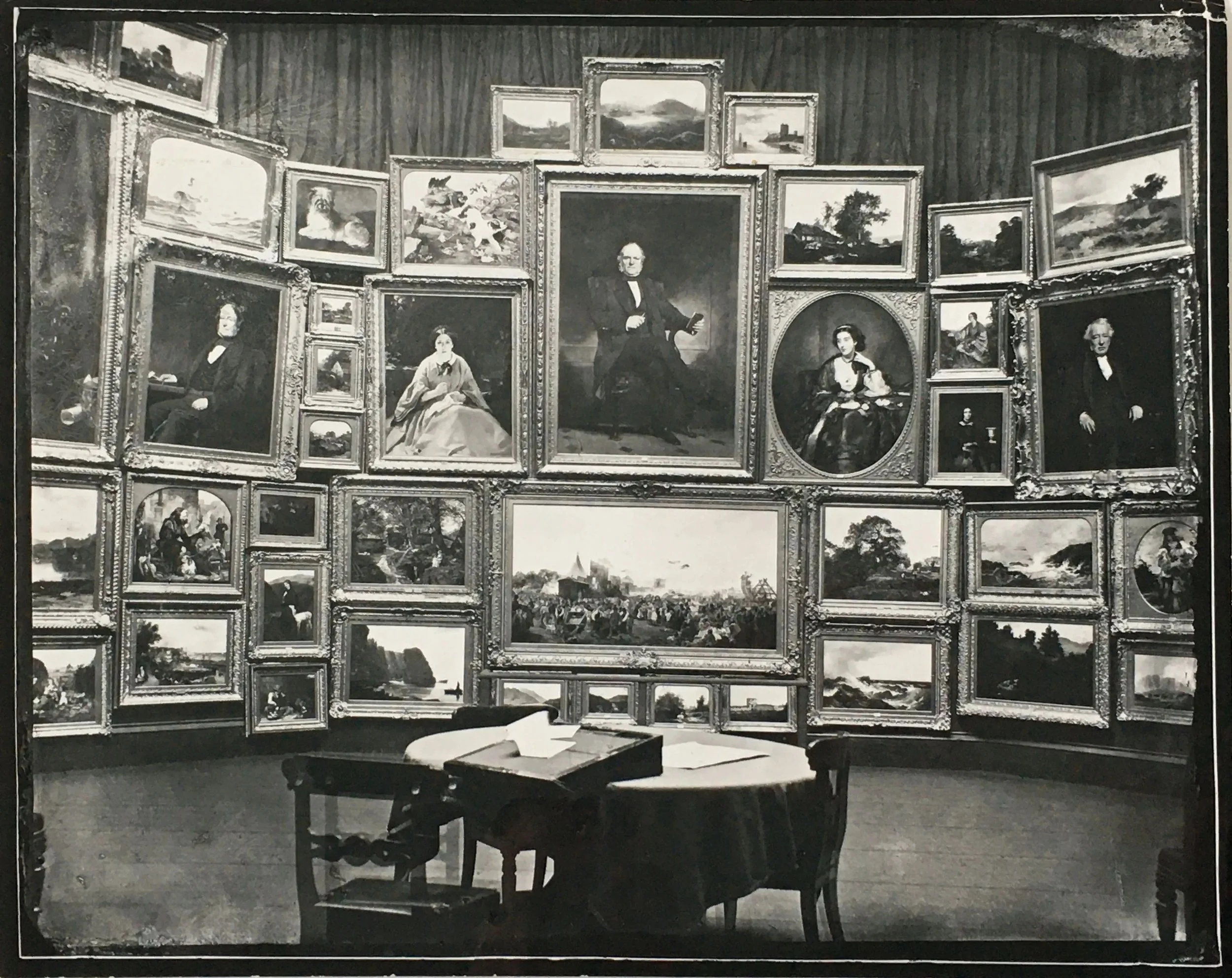
James Good Tunny, Interior of the Great (Octagon) Room in the shared National Gallery, RSA Annual Exhibition 1860. Courtesy of the Royal Scottish Academy.
In 1877 this pressure led to the creation of a new gallery in Shandwick Place. A private enterprise and thereafter known as the New Galleries, these premises continued to function into the following century and provided the opportunity for other new exhibition societies like the Edinburgh Group, for instance. The pressure on space in the annual exhibition, however, was only finally resolved when the Academy was given exclusive use of the Royal Institution building.
The move into new premises in 1855 finally allowed the Academy to fulfil its second ambition and teach. Though several attempts had been made previously to set up regular teaching, this was hardly possible with no permanent premises. To the chagrin of the Academicians, too, the Trustees Academy filled that role with great success. From 1858, however, after a group of academicians moved to have the Trustees Academy’s teaching downgraded to something like a foundation year, for the next fifty years or so its own life school became central to Scottish art. Think, for example, of an artist like Arthur Melville being taught by William McTaggart and George Paul Chalmers. It was a happy conjunction. Melville became a great watercolour painter and McTaggart, first president of the RSW, was increasingly turning to watercolour. In 1909, however, with the foundation of Edinburgh College of Art, in which the city effectively reinstated the teaching of the Trustees Academy that they had supported since its foundation, and though efforts were made to carry on in the new premises, the RSA life school lost importance and was finally abandoned in 1931.
With its new premises the Academy was also able to show its growing collection, which was separate from its Diploma collection. With its declared ambition to establish a national collection, one of the first things the new academicians had done was borrow and then purchase in 1829 William Etty’s enormous Judith and Holofernes, with an undertaking to buy two pendants, making a triptych. In 1831 they then bought his painting The Combat and later, too, his copy of the Venus of Urbino (Etty was supposed to be the new Titian). They are unseen now and in Blake’s immortal words mostly “laboured into a superabundant blackness”, but in 1855 being able to show all five of them together in their new premises was a proud moment for the Academy.
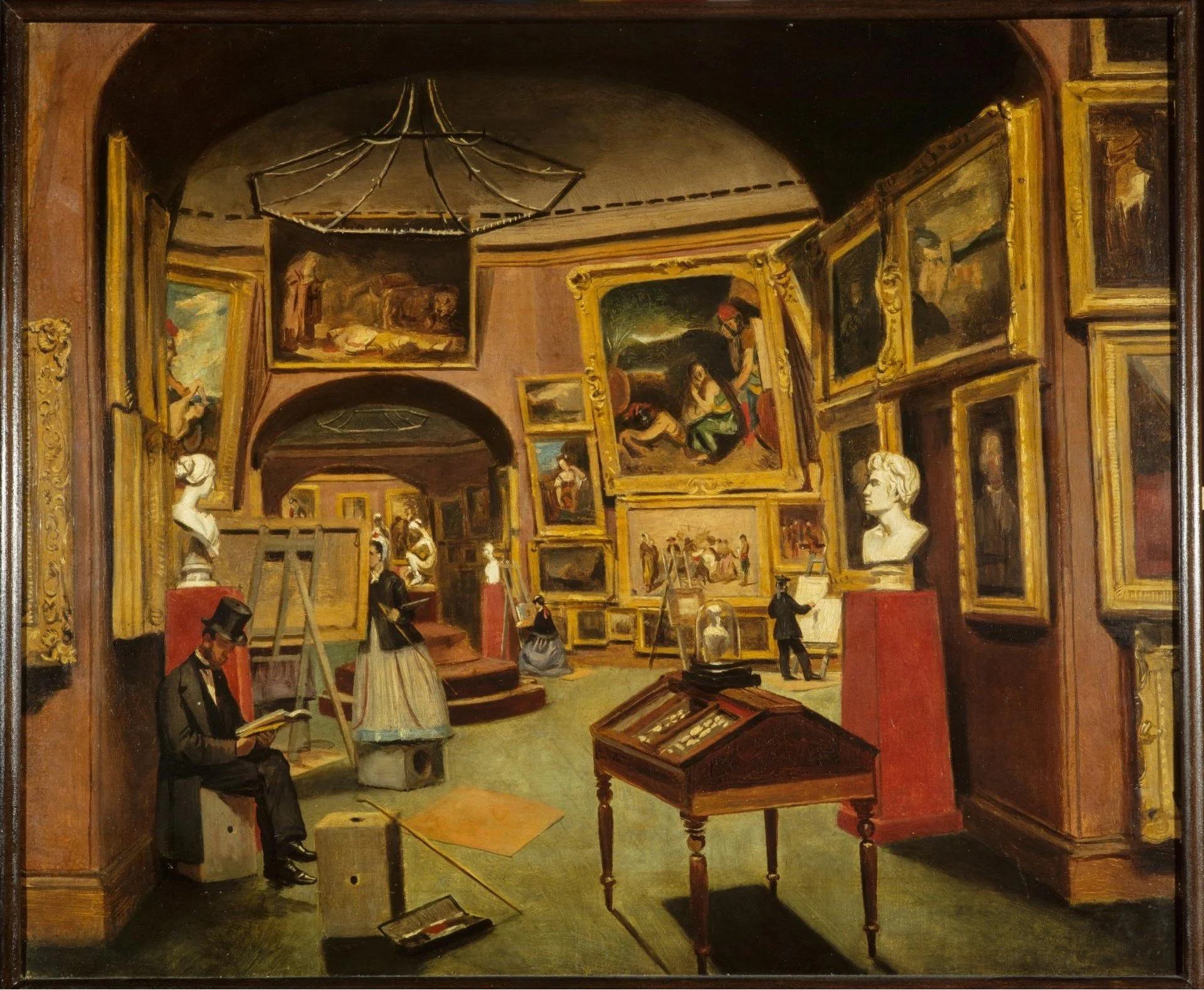
Scottish School, Interior of the National Gallery of Scotland. Oil on canvas. 50 x 61cm. c.1869-70. Courtesy of the National Galleries of Scotland.
In this Victorian image of the National Gallery, we find a depiction of Etty’s Judith and Holofernes.
Initially these bold purchases may have set them back, however. Wilkie, the Academy’s most distinguished contemporary and potentially its most important ally, had not been thrilled. He scoffed at the idea that Etty was remotely like Titian. (Nor indeed was he pleased by the Academy choosing to support Etty who had just pipped his friend William Allan in election to the Royal Academy). Etty’s pictures were his manifesto for the importance of history painting. That was evidently how the new Academy saw them too, but that idea was already out of date and it was Wilkie who had definitively disposed of it with his own work.
Nevertheless, as well as the growing diploma collection, the Academy had continued collecting. It was heir to the antiquarian David Laing’s magnificent drawing collection, for instance.
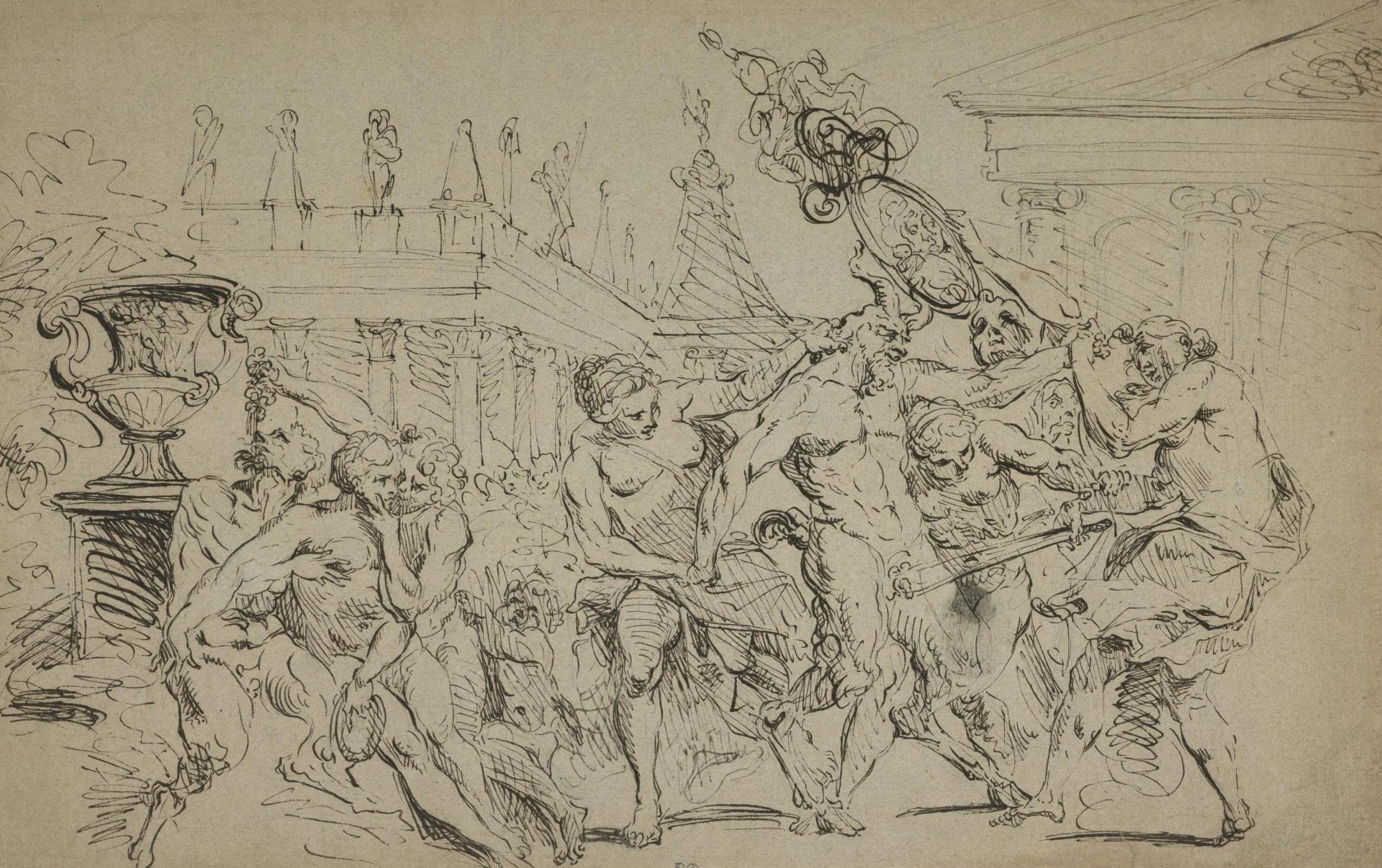
Nicolas Raymond de la Fage, Bacchanalia. Pen and black ink on paper. 28 x 43cm. Courtesy of National Galleries of Scotland.
A drawing from the David Laing Bequest to the Royal Scottish Academy, 1966.
At the beginning of the new century, moves were set afoot to give the RSA sole use of the building that still bears its name and this happened in 1911 after the extensive alterations which gave the building its present form. These developments were also the trigger for the creation Edinburgh College of Art. In its new building on a site provided by the city, effectively the Trustees Academy continued under a new name, but the newly created College of Art also incorporated elements of art and craft teaching carried on elsewhere in the city. (Night school for apprentices in the crafts, including architecture, was the largest part of the new College’s teaching till after the Second World War). A significant part of the deal that gave the RSA its building was that it would hand over its collection to the National Gallery. It is I think, too, often forgotten that this was a major founding benefaction of the national collection.
By end of the nineteenth century, the Academy had in effect fulfilled its four original ambitions. It was also established and prosperous, but the last decades of the nineteenth century were not such a glorious period in its history. Art was changing, but the Academy was not so keen to keep up. Notoriously under PRSA Sir George Reid, it was hostile to the Glasgow Boys. This kind of attitude helped to prompt a new secession and the creation of the SSA in 1881, although pressure on the exhibition space was also certainly part of this.
Even worse than the Academy’s artistic conservatism, however, was its attitude to women. It was never men-only by its constitution. Indeed, Christina Robertson had been an honorary member of the Academy at the start; “honorary” probably because she worked in St Petersburg, not because she was a woman. In 1901, however, when Phoebe Anna Traquair, Mary Cameron, and Christina Paterson Ross were put up for election, they failed to be elected. The latter was a successful watercolour painter and so was perhaps no threat, but Traquair and Cameron were real heavyweights with international standing. Cameron, too, tried three more times with no success. Perhaps these powerful women frightened the bearded, pipe-smoking misogynists in their gentlemen’s club (rather shabbily, they did elect Phoebe Anna Traquair an HRSA a little later). It was not till 1944 that Phyllis Bone became the first woman to be elected a full academician.
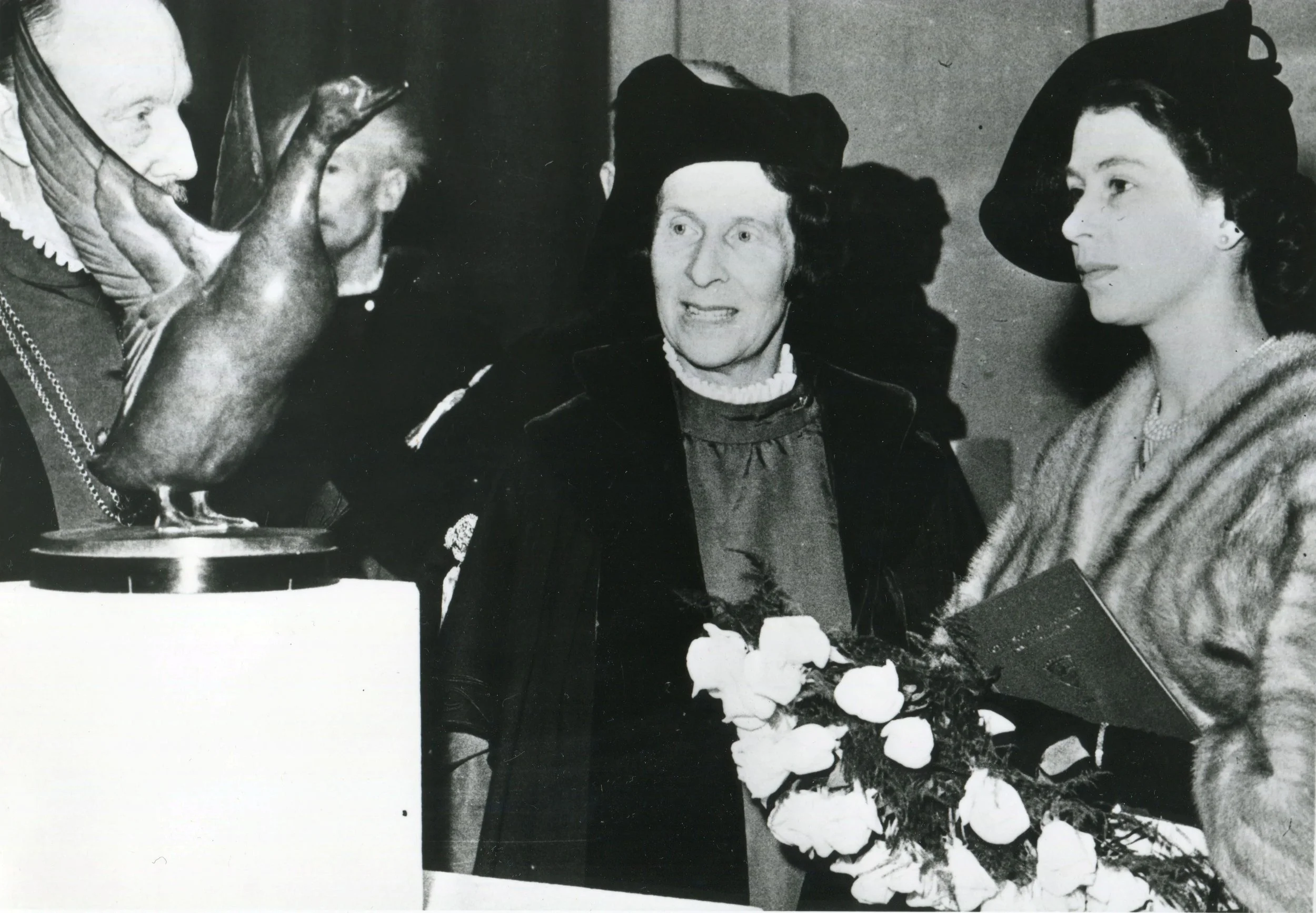
Phyllis Bone with HM Queen Elizabeth II at the 126th Royal Scottish Academy Annual Exhibition, 1952. Photographer unknown. Courtesy of the Royal Scottish Academy.
If the interwar years were uneventful and unexciting for the RSA, when the SSA meanwhile was responsible for exhibiting artists like Paul Klee and Edvard Munch, after the war the RSA did take an important initiative. In collaboration with the Edinburgh Festival, it mounted a series of major exhibitions, including Monet, Gauguin, Braque, Cézanne and abstract painting of the School of Paris in the Moltzau Collection in 1958. (To add a personal note, as a teenager, I was quite bowled out by seeing a gallery full of Cézannes. Things like that didn’t happen in the fifties).
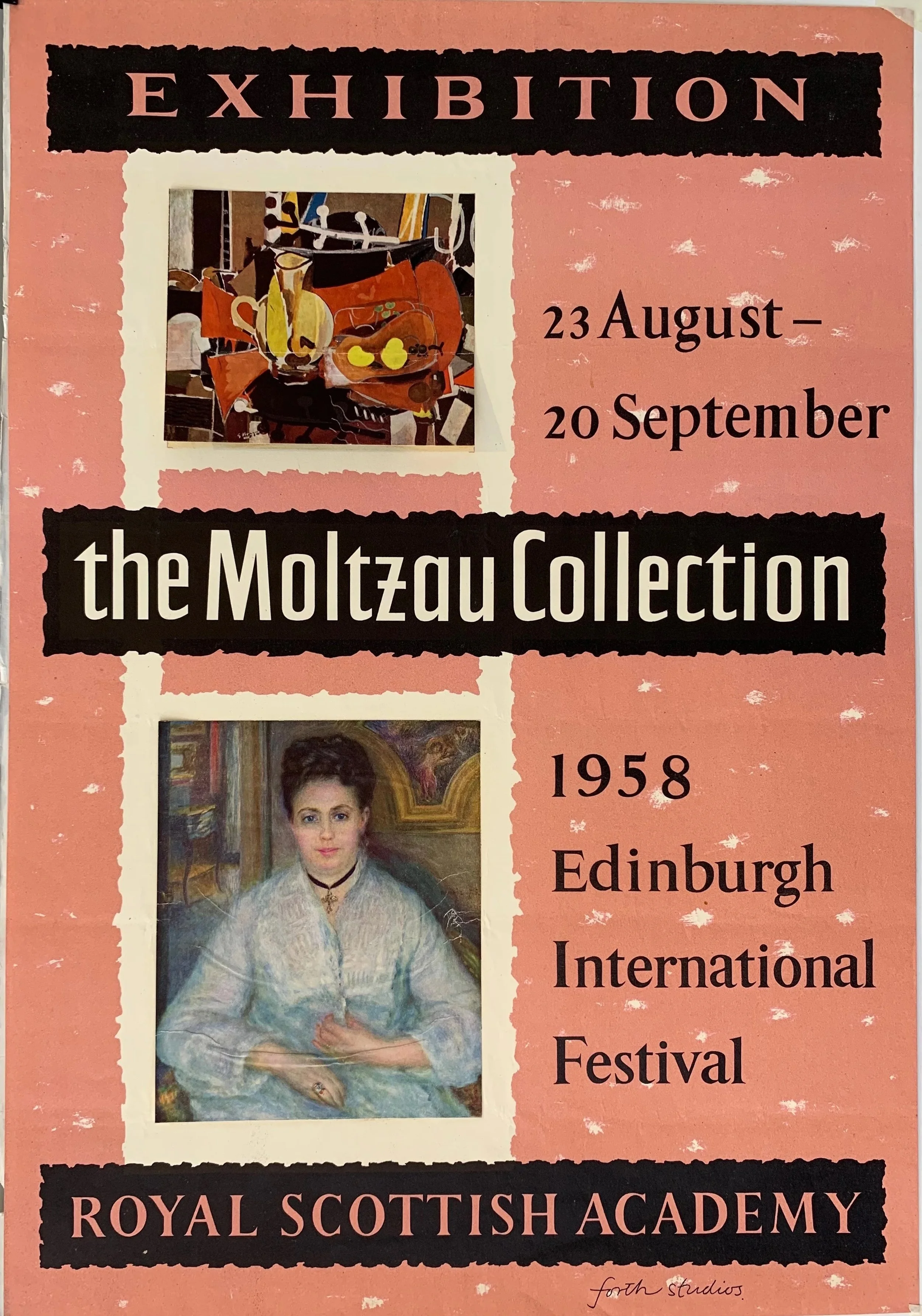
Cover of the catalogue for the Moltzau Collection exhibition, mounted at the Royal Scottish Academy in 1958.
But the biggest change came at the end of the last century when the RSA surrendered most of its building to the NGS. The argument was that as heir to the Board of Manufactures, the NGS was owner of the RSA building. Curiously, the RSA put up no significant resistance to this doubtful grab. (The fact that the National Gallery, much as it would like to, has proved unable to change the name of the building does rather cast doubt on the given justification of this development). Ironically, too, PRSA William Baillie, under whose presidency this all began, was the first president not to be knighted since William Allan, first president of the newly Royal Scottish Academy. That was perhaps not altogether a bad thing, however. It made the RSA look and perhaps feel less “establishment” and indeed that is how it has evolved. One unfortunate consequence of the National Gallery’s takeover of the RSA building was, however, that the other exhibiting societies which had in previous years used it regularly for their annual exhibitions were rendered homeless, or were only allowed to use the RSA rooms on payment of a hefty rental and on dates that suited the NGS’s own programme.
But it is an ill wind that blows no good. The consequent rethinking of the Academy’s role has given us the vital organisation we have today, as active as those brave secessionists 200 years ago might ever have wished.
Duncan Macmillan
Acknowledgements
With many thanks to the Royal Scottish Academy and the National Galleries of Scotland for their permission to reproduce images.