
John Mackechnie: Creating An Impression, Leaving A Mark.
This is a short introduction section that I’m hoping Joe might write. Maybe Duncan could do it? Perhaps it says something like: John Mackechnie has been a mainstay of the Glasgow art world for nearly half a century, and for xx years was Director of Glasgow Print Studio. His own creative work took a back seat. About time for a look. Joe Boyd met him in sunny Glasgow in June.
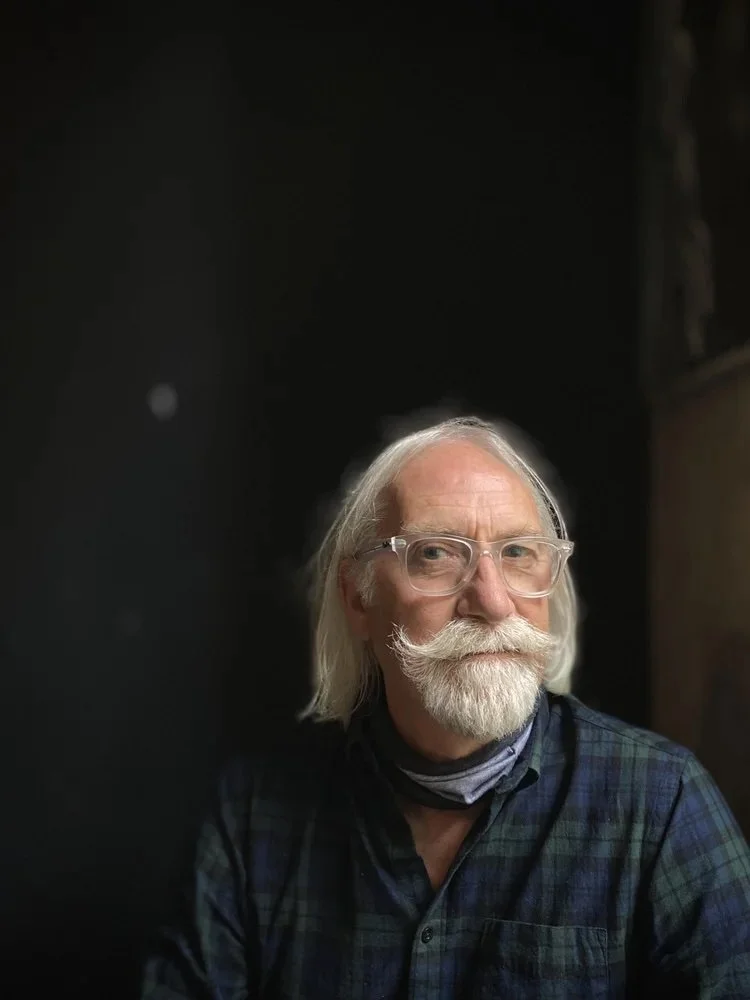
John Mackechnie, phone snap by David Eustace
The first line of John Mackechnie’s statement for the Print in the Blood exhibition catalogue in 2021 states that “there’s no doubt that I am besotted with the magical world of printmaking in all its guises”. I met the artist on a very sunny morning to hear more about the magic. The hot Glasgow weather was the first of my many learning experiences that day. John is a quietly spoken man who is an engaging and thoughtful companion. Very modest about his own art, it was clear to me after hours of quality discussion that here was a master printer with exceptional skills in creating archival-quality work, mentoring other artists and developing innovative technical processes to further Scotland’s celebrated expertise in printing. I learned a great deal from John Mackechnie. Let’s begin with the art.
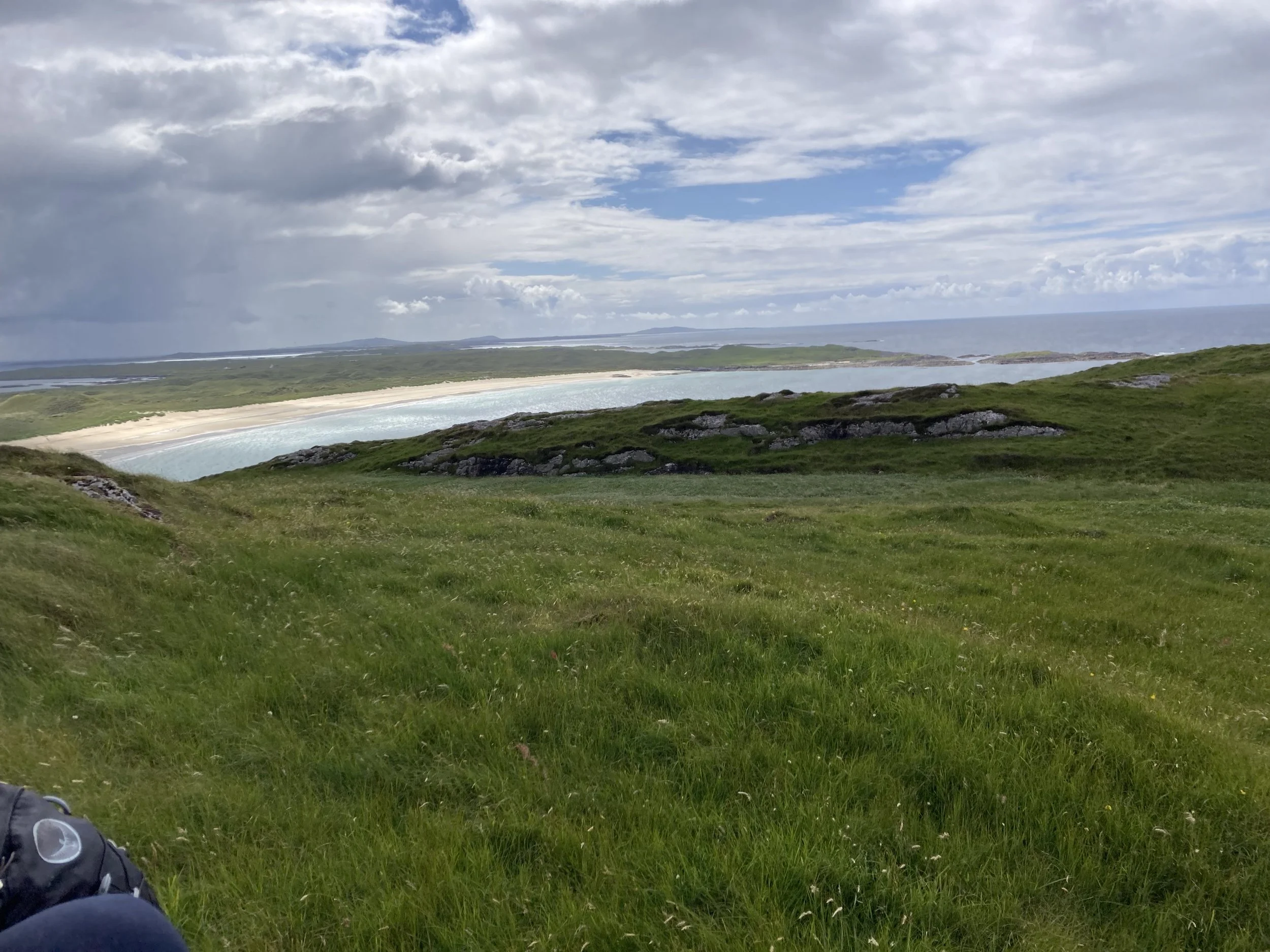
John Mackechnie, Calgary Bay, Isle of Mull. Pigment print with screen overlay. 78 × 124cm. 2020s.© John Mackechnie
This painterly work, Calgary Bay, Isle of Mull, is currently REMOVE (July 2026) on show at the Royal Scottish Academy in Edinburgh. It is a luxuriant pigment print with screenprint overlay of Calgary Bay on the northwest coast of the Isle of Mull, and it’s big - 78 x 124 cm! Compare his image with the colours and geography of my own mapping of the bay. Mackechnie’s print is granular, a distinctive feature of the real beach and of the exposed geology that confines and protects it. He has accentuated the colour differentials and tide lines at the edge of the sand, visible in the map, and included significant surface texture to enliven the water and encourage the wavelets to lap into the viewer’s consciousness. The foreshore is much warmer looking than the beaches I visited in Mull in June. The deeper bay is finely rendered in many resplendent blues. This is an image of a calm, natural place, lacking any sign of human presence.
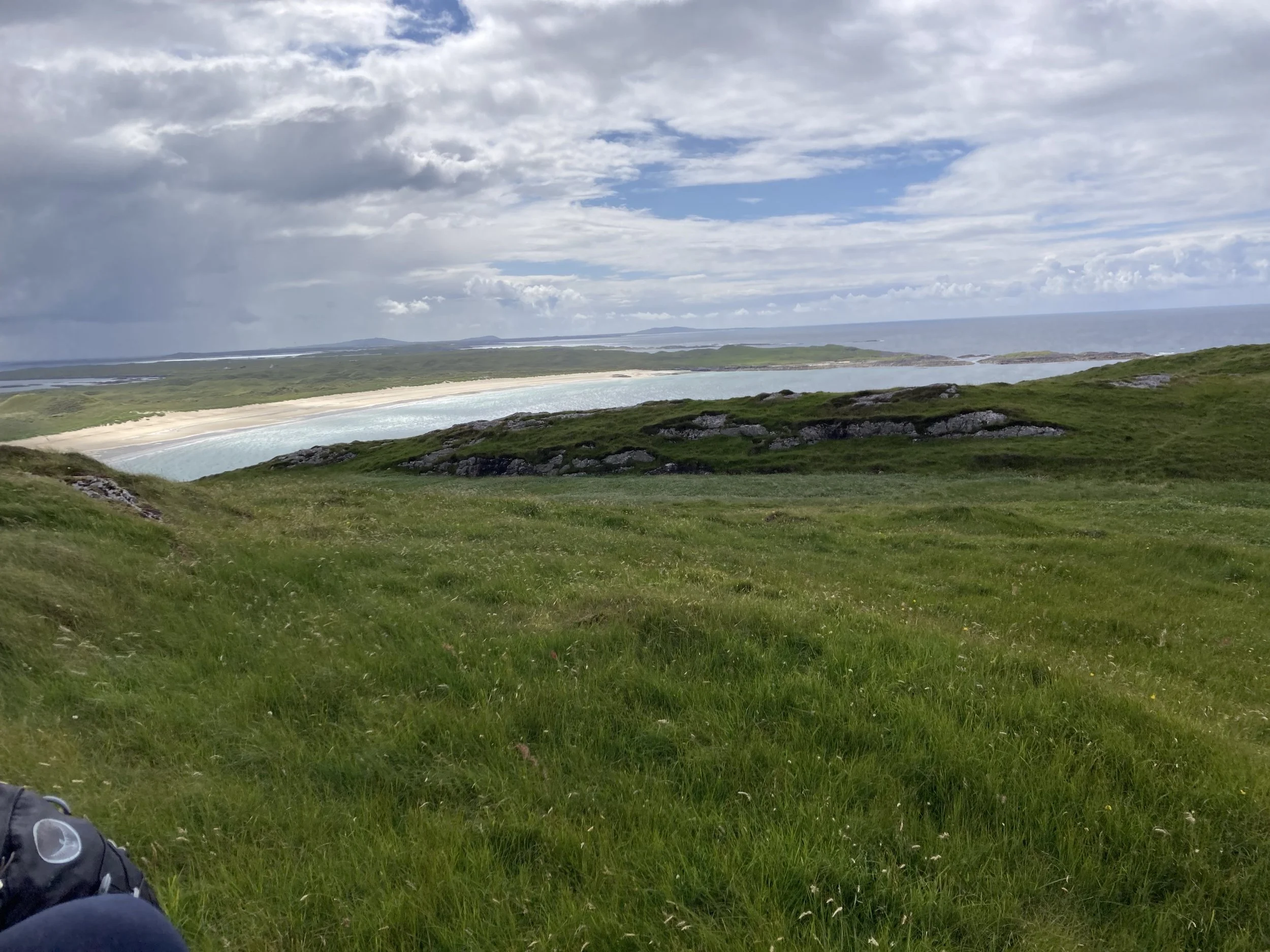
Calgary Bay mapping (Joe Boyd with QIS software)
John Mackechnie, Candy Stripe Democracy. Screenprint. Dimensions unknown. 1970s © John Mackechnie
His early work is very different, distinctly pop-art. He has depicted the ubiquitous Disney cartoon favourites, grinning and gesturing with open-arms (or open-ears) from inside the brightly coloured bars of what might be their very own individual cages. By trapping these American icons, still in celebratory saccharine mood, inside a box, he presents a jagged, satirical view of the interaction of popular culture and democratic processes.
Mackechnie occupies a distinctive position in Scottish art, as practising artist and also as one of the country's most influential printmakers. Throughout a distinguished career, he has combined creating art with the practical, technical, and organisational skills required to advise and mentor the work of many others. His legacy extends beyond his own paintings and prints to encompass the transformation of the Glasgow Print Studio into an internationally respected centre for fine art printmaking. I was impressed and intrigued. Who was the artist behind such diverse work? What else had he created? When and where did he learn and develop his skills, this mastery of media and technique? How did he manage to give a print a texture, an impasto effect and such radiant colours? Finally, why does he do what he does? What moves and stirs and motivates him? After viewing two exhibited works in Edinburgh, my plan was to explore these questions and provide a few answers in this article.
The artist was born in Glasgow in 1949. His interest in printing developed within a family that was steeped in the Glasgow newspaper trade. “I worked in the newspaper (Sunday Express), and the reason was that my father and all my uncles all worked in the newspaper”. His father was a teleprinter operator, one uncle a photographer, another a machine minder, a cousin was in the darkroom, another cousin the editor’s P.A. Mackechnie began as a copy boy aged 15 and by the time he was retired at 21, he was head boy, managing a crew of teenage boys, organising shifts, and hiring and firing. The artist’s outlook and motivations were seeded early too. His father, he noted “from a very working-class family”, was creative, skilled at caricatures, and author of a cartoon strip (Mr Suburban). Son John had similar skills, and he won a silver medal at Glasgow's annual schoolchildren's art competition, one better than his dad’s own schoolboy bronze.
Post-school, he attended Glasgow School of Art where he recalls being stirred by Robert Motherwell and Franz Kline, and later in fourth year by the Pop artists Andy Warhol, Eduardo Paolozzi, Roy Lichtenstein and Robert Rauschenberg. Duncan Macmillan has identified Eduardo Paolozzi as the key influence on Mackechnie's early work. He began there to use photographs and screen-print them. “One of the earliest ones I did [was] a painting with Spiro Agnew and Hubert Humphreys, and it was a two-faced painting… I was never that interested in historical paintings… [nor] in cherubic babies”.
Brighton Polytechnic was next: a one-year semi-official course at the “Specialist Printing Group”. His work was advanced and interesting enough for the college to give him a job. He then took several posts at Newcastle Polytechnic, taught lithography, created and exhibited new work and, after several years, began travelling back to Glasgow, and to the recently opened Glasgow Print Studio, because he needed a studio space and relished opportunities to see his family. Part-time work there as an evening class tutor morphed into workshop manager and a permanent move to the city, and then in 1982/3 to Director of the studio. “So I've gone all the way through my career without actually having any interviews yet… [I’ve] always been kind of offered jobs.”
As Director, Mackechnie is credited with putting the studio on a sounder financial footing and energising the organisation to become a real force in Scottish art by publishing original, archive-quality prints, often in collaboration with prominent distinguished artists such as Elizabeth Blackadder, Ken Currie, Adrian Wiszniewski, Peter Howson and Bruce McLean. A skilled facilitator, he enjoyed helping others to realise the possibilities of print; for example, suggesting to Bruce McLean that he draw directly onto an etching plate with lipstick to resist the acid-etch. Such flexibility and insight are the mark of a great teacher, and he mentored emerging talents and facilitated many cross-disciplinary exchanges that enriched Scottish arts. The studio’s print editions were brought to global attention at major international art fairs: London, Chicago, New York and Los Angeles.
John Mackechnie at an art fair in the 1980s. © Glasgow Print Studio
Mackechnie’s enthusiasm shines through his descriptions of this missionary work. “I did this art fair in 1985 in Olympia, London, A big international art fair, and just drove a van down; me, the chairman and my wife, Sue. It was winter. It was January. On the way down, the van engine blew up… and so we had to get hauled to Lancaster and hire another van, transfer all the stuff. Got down there to find that the stand hadn't been built yet. A tiny, tiny little stand, but we'd one major work, which people knew, which was a big Bruce McLean that we were commissioned to make by the Third Eye Centre… But anyway, it was quite successful”.
Quite successful indeed. As painter and printer, his early work had focussed on 1960s and 70s cultural influences from the USA and UK. From 1982/3 until 2000, he set his own work aside in order to inspire and lead that Glasgow institution to develop its international reputation. His contribution to Scottish art has been formally recognised by his election to the Royal Scottish Academy in 2003 and by an MBE in 2019. He retired in April 2023.
……..
Several places have been vital to Mackechnie’s story. His father’s father hailed from Mull and his mother’s family from Lewis, an island heritage that roots him in Scotland, near the seas which are never more than 45 miles away. An Lanntair gallery in Uisge on Lewis recently hosted his solo exhibition of “beautiful, striking images [which] feature a number of beach and seascapes from the west coast and the islands, and have a depth and an extraordinary visual resonance”. Glasgow is now the consistent anchor for his life and career: “I do love the city of Glasgow”. This evident affection has been translated into particular artworks: the 1970s etchings of the Clyde and of Kibble Palace in the Botanic Gardens, a riverside screenprint of the Moat House hotel, and a reflective study of a building at Finnieston. In 2018, Glasgow Print Studio presented Glasgow in Print, an exhibition of informal reflections on the city. As Director and exhibitor, Mackechnie described it as a snapshot, an illustration of “the amazing breadth of quality and the confidence we should have in the future of printmaking in Scotland”. He is wary of anything that echoes the chocolate-box picturesque interpretations that have distorted the public face of Scotland.
Just as place is a necessary and definitive constituent of an artist's identity, so too is place a necessary and definitive constituent of an artwork’s identity. Mackechnie has utilised many Scottish coastal and island locations for his land and seascape works. Arisaig is paramount, with accessible, varied, sheltered beaches. Arran, photographed from the ferry, and a misty, stormy Isle of Rhum are among his favourite images. There are also renderings of the river Clyde, and Ailsa Craig and the Bass Rock were the subjects of Payne's-grey monochrome images, a new departure referencing early gouache images made in Skye while still a student. The sea is extraordinarily detailed.
John Mackechnie, The Bass Rock, Medium unknown. Dimensions unknown, Date. Detail on the right hand side.
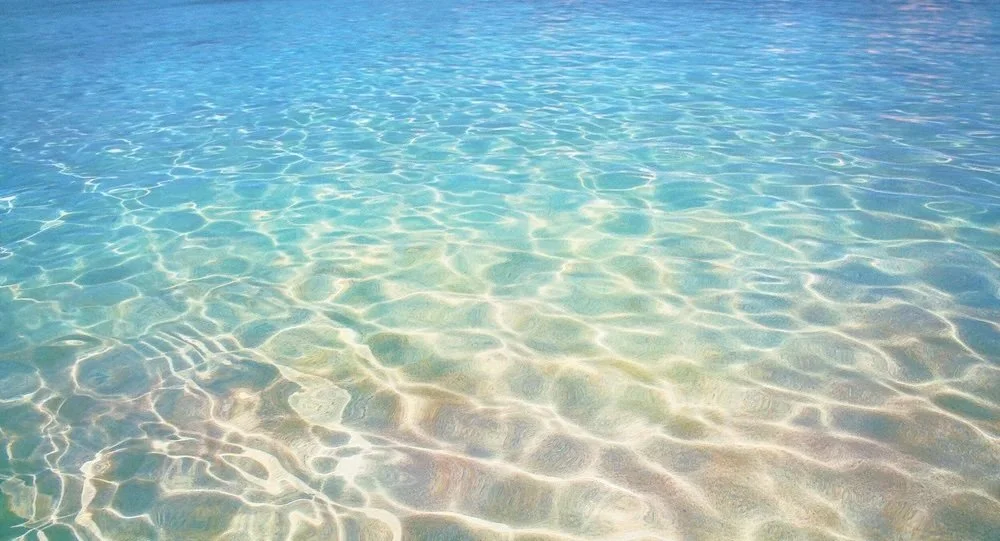
John Mackechnie, Cala Macarella. Screenprint. 57 × 106cm, Date unknown © John Mackechnie