
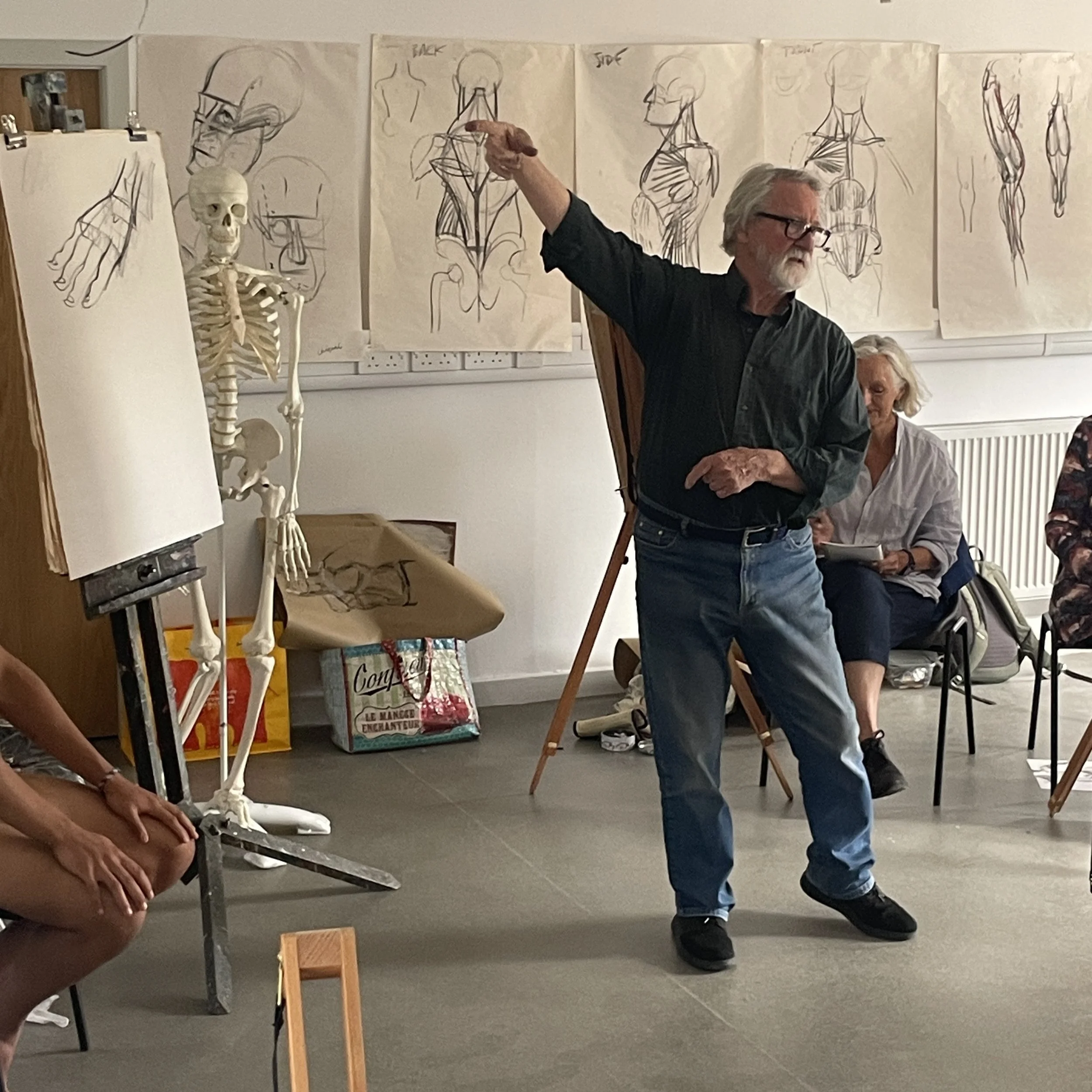
George Donald: Larger Than Life School
We asked Jane Matthews, Project Manager of RSA200, to send us a report on the RSA200 Life Drawing Programme, which had George Donald traversing Scotland from Dumfries to Shetland, imparting his knowledge about drawing and anatomy. What an interesting concept! And what an opportunity for people to learn from such a specialist teacher?. Could it be a model for the future? How was it received? What was learned? Here’s Jane’s missive…
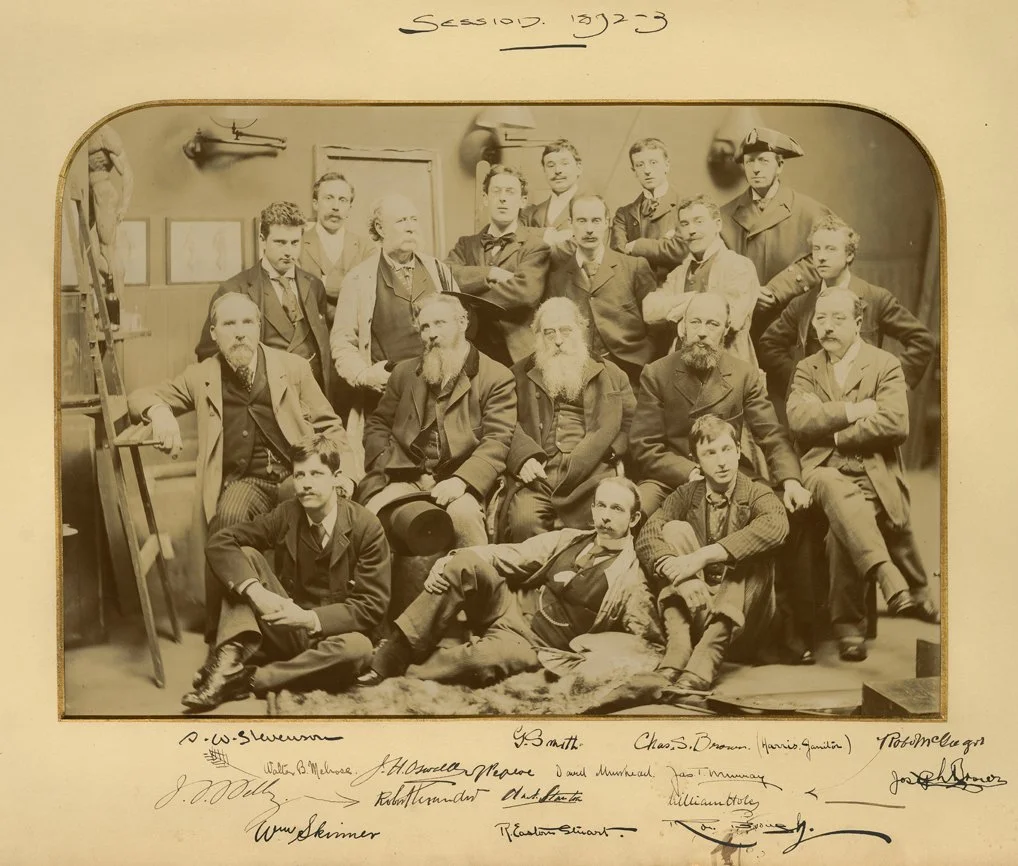
RSA Life Class 1892-3: A group photo including S J Peploe, Photograph courtesy of RSA Collections.
Since its foundation, the teaching of artists has been at the core of the Royal Scottish Academy. The Life School opened in the 1840s, with anatomy and life drawing taught at the Royal Institution Building on the Mound in Edinburgh. For nearly 100 years, the School was the pinnacle of fine art education in Scotland with notable students such as Robert Brough RSA and Samuel John Peploe RSA. Peploe attended between 1892 and 1896 and his study Female Nude with Pitcher of 1895 is a key example of his work during this period. It is one of 11,000 artworks that make up the RSA’s Collection of National Significance today, a collection that also includes a first edition copy of the 16th century book by the father of modern human anatomy, Andreas Vesalius, De humani corporis fabrica (trans. The Structure of the Human Body).
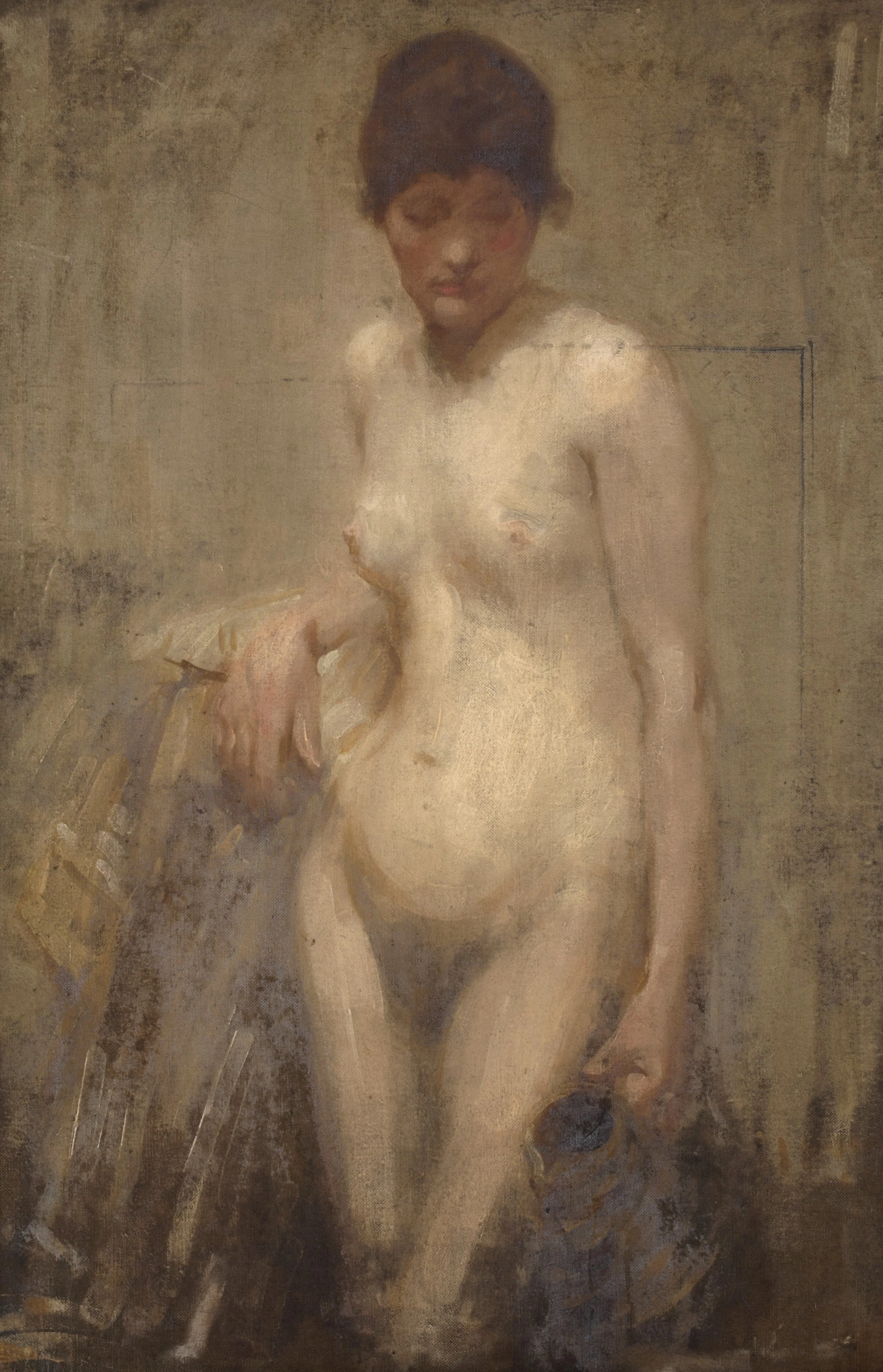
S J Peploe RSA, Female Nude with Pitcher. Oil on canvas. 107 × 71cm. c.1895-6. Courtesy of RSA Collections.
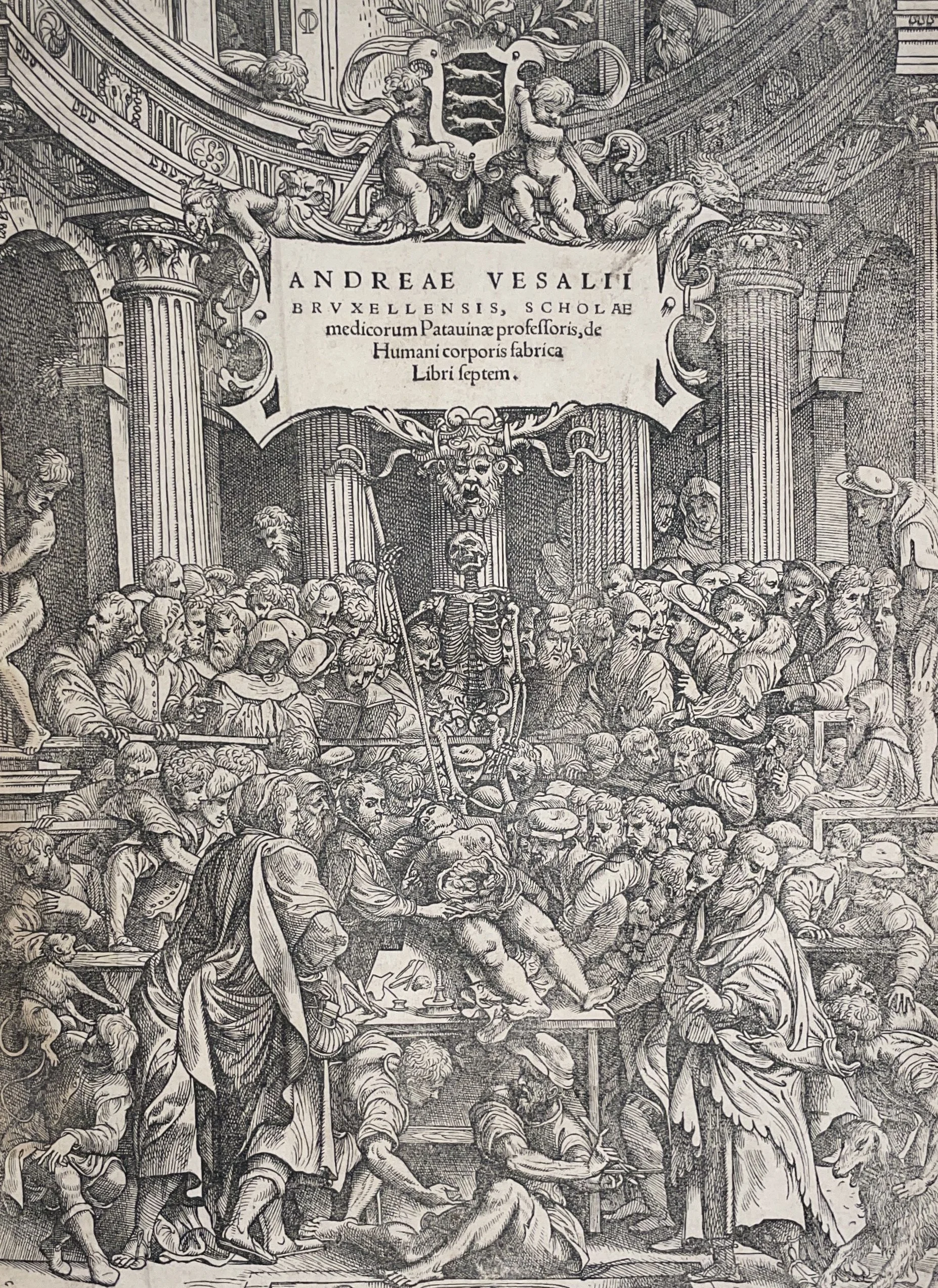
Andreas Vesalius, Frontispiece from Book II of De humani corporis fabrica (trans. The Structure of the Human Body). Basel 1543. Courtesy of RSA Collections.
In 1907, the Life School transferred to the newly established Edinburgh College of Art and continued to function there until 1930. Once ECA became well-established, the Academy’s focus shifted to enabling artistic development through scholarships, awards and prizes.
In 2017, the RSA staged their monumental collections exhibition Ages of Wonder: Scotland’s Art from 1540 to Now at The Mound in Edinburgh with a subsequent touring exhibition of anatomical studies and early paintings from the Life School, including Peploe’s nude. As part of the exhibition at The Mound, life drawing classes were delivered in the galleries, with tutors including John Byrne RSA, Jennifer McRae RSA, Robert Rivers and George Donald RSA. These drew attention to the value of anatomical study of the human form, something that has largely dropped off the art school curriculum and is now only taught as a subsidiary optional module in most art school settings.
And so to 2026, and the RSA’s epic initiative RSA200: Celebrating Together, connecting with over 120 organisations across Scotland and beyond throughout the Academy’s bicentenary year. Generously supported by Museums Galleries Scotland, it has evolved to be the largest festival of Scottish art and architecture ever, shining a light on the Academy’s past, present and future. While the RSA has its historic roots in Edinburgh, the Academy and its collections represent the creative and cultural landscape across Scotland and its members, award-winners and residency artists connect to every part of the country. RSA200: Celebrating Together is a partnership programme of hundreds of exhibitions, talks, screenings, commissions and displays from Shetland to Dumfries and further afield to England, France, Spain and all the way to South Georgia.
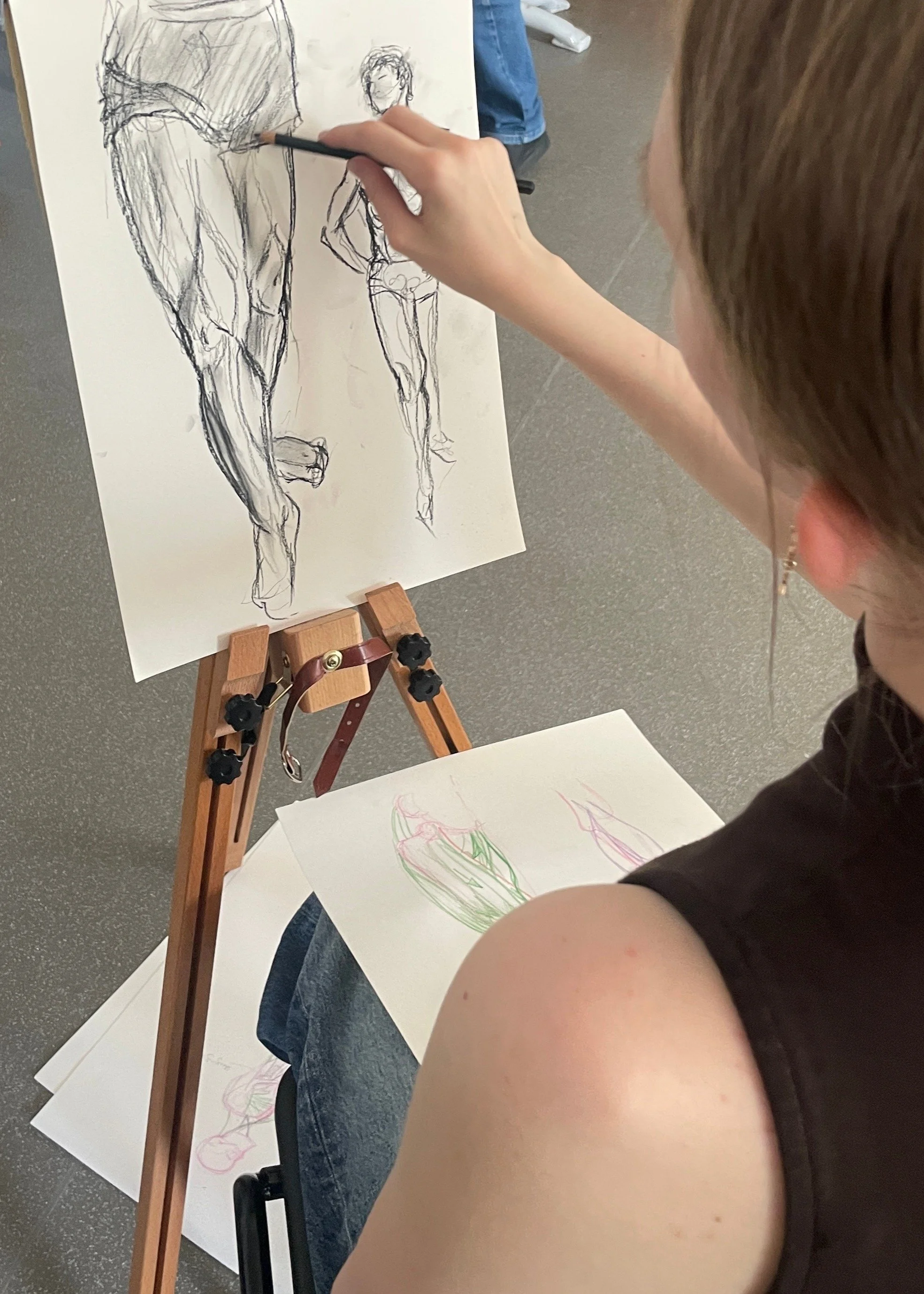
Participant study, photographed at the Hugo Burge Foundation, Earlston, July 2026. Courtesy of the RSA.
With an incredible network of partner organisations came the opportunity to reimagine the Life School as a touring programme of one-day workshops and school visits across Scotland, reaching out across the country and engaging new audiences with the study of anatomy and the history of the Academy.
Sandy Wood, RSA’s Head of Collections, explains, “we wanted to give people around Scotland the opportunity to discover the wonders and benefits of drawing from a living model. Having all but disappeared from art schools today the life school, and the RSA’s role, should be considered with renewed significance in the context of contemporary art training in Scotland.”
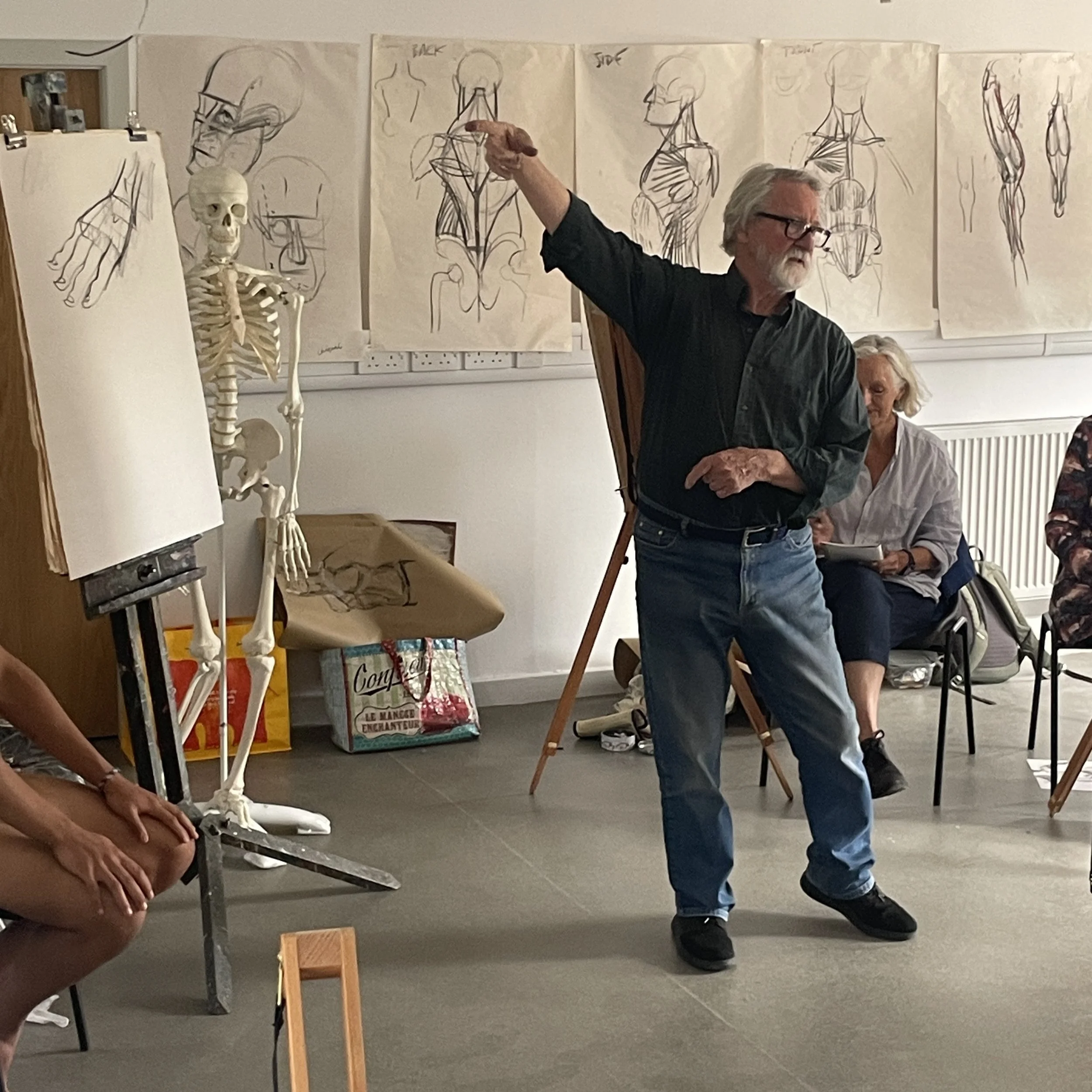
George Donald RSA, photographed at the RSA200 Life Drawing Programme with the Hugo Burge Foundation, Earlston, July 2026. Courtesy of the RSA.
To deliver this programme there could be no better living Academician than painter, printmaker and tutor George Donald RSA. George is a veteran of the study of anatomy and life drawing. He taught at Edinburgh College of Art for 30 years. He made friends with the University’s Professor of Anatomy and drew directly from cadavers. He brought his drawing students to the dissecting rooms and later, on several occasions, taught special drawing courses to medical students. Now in his eighties, George is still a visiting tutor in London and America – teaching a new generation of students, many of whom are studying game design and animation rather than fine art.
And so, from June to September our modern master of anatomy travelled the country with his easel and a model skeleton, delivering participatory one-day workshops with OutPost Arts in Dumfries, The Hugo Burge Foundation in Earlston, An Tobar and Mull Theatre in Tobermory, An Ealdhain Arts trust in Fort William, Shetland Arts in Lerwick and The Pier Arts Centre in Stromness.
For each workshop, the host venue employed a live model and, whether experienced or new to the role, each was keen and as interested to learn as the participants themselves. A note of respect and thanks must go out to all six models. In schools there was no model, but instead an in-depth exploration of how the skeleton affects human form and how this relates to the world around us.
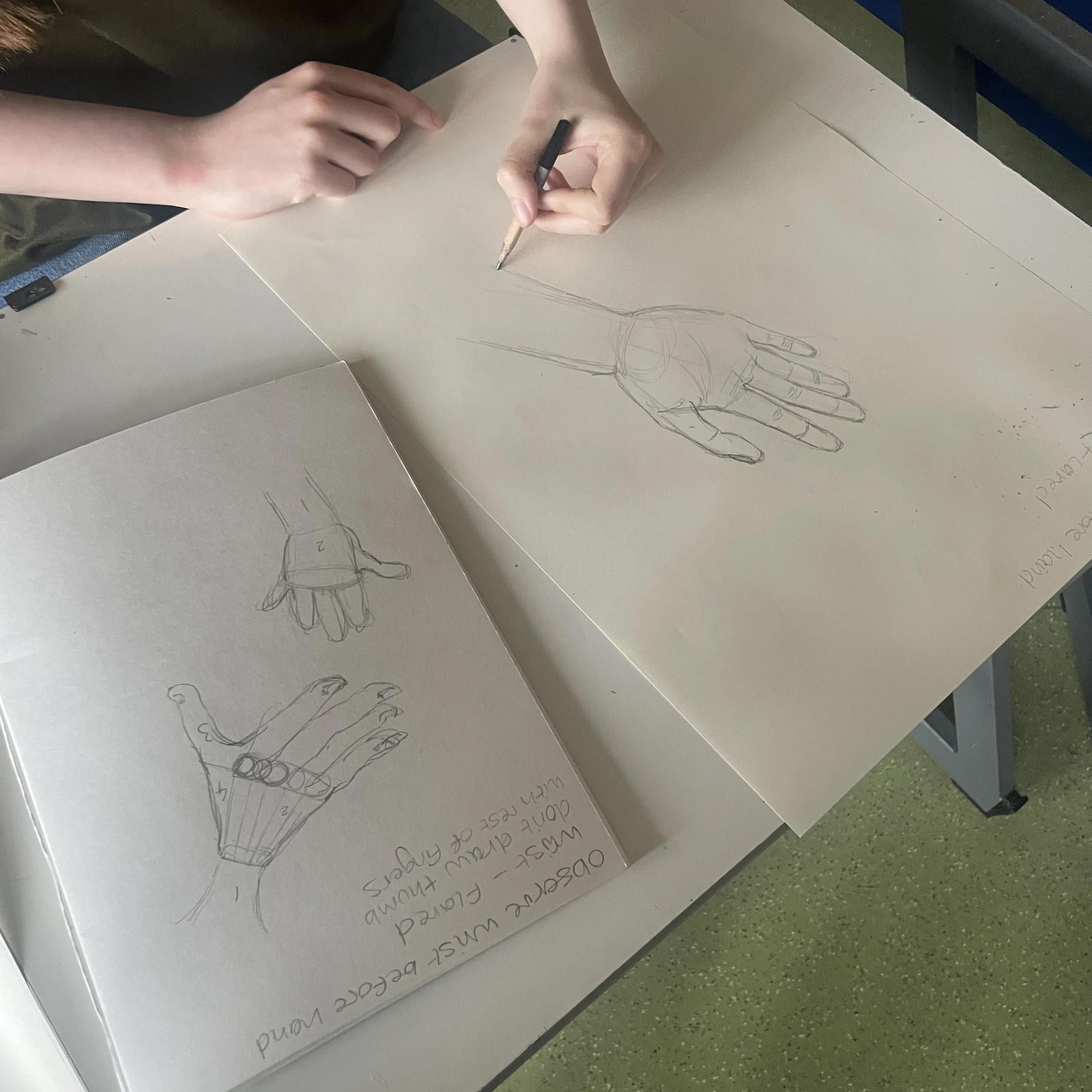
Participant study, photographed at Anderson High School, Lerwick, September 2026. Courtesy of the RSA.
The tour demonstrated that it was about more than just anatomy, a Life School in more ways than one. In Dumfries, the workshop was hosted by Outpost Arts, as part of their Art Journal Project, a social prescribing initiative supporting adults experiencing barriers and inequalities. Through accessible creative activities, participants build confidence, connect with their creative selves, and develop practical tools for wellbeing that extend beyond the sessions.
Lucy Bell, Director of OutPost Arts explained, “The programme that we are delivering is about confronting barriers… to bring people together who do experience those barriers and introducing them to life drawing in this setting with such a skilled practitioner as well, to me the value is immense on a creative level and on a social level as well.
“You can never have enough life drawing, no matter what your creative practice is. There’s something about it that’s beneficial…. It’s hugely important for people who are not regularly taking part in this kind of workshop… there are enormous wellbeing benefits from a confidence point of view.”
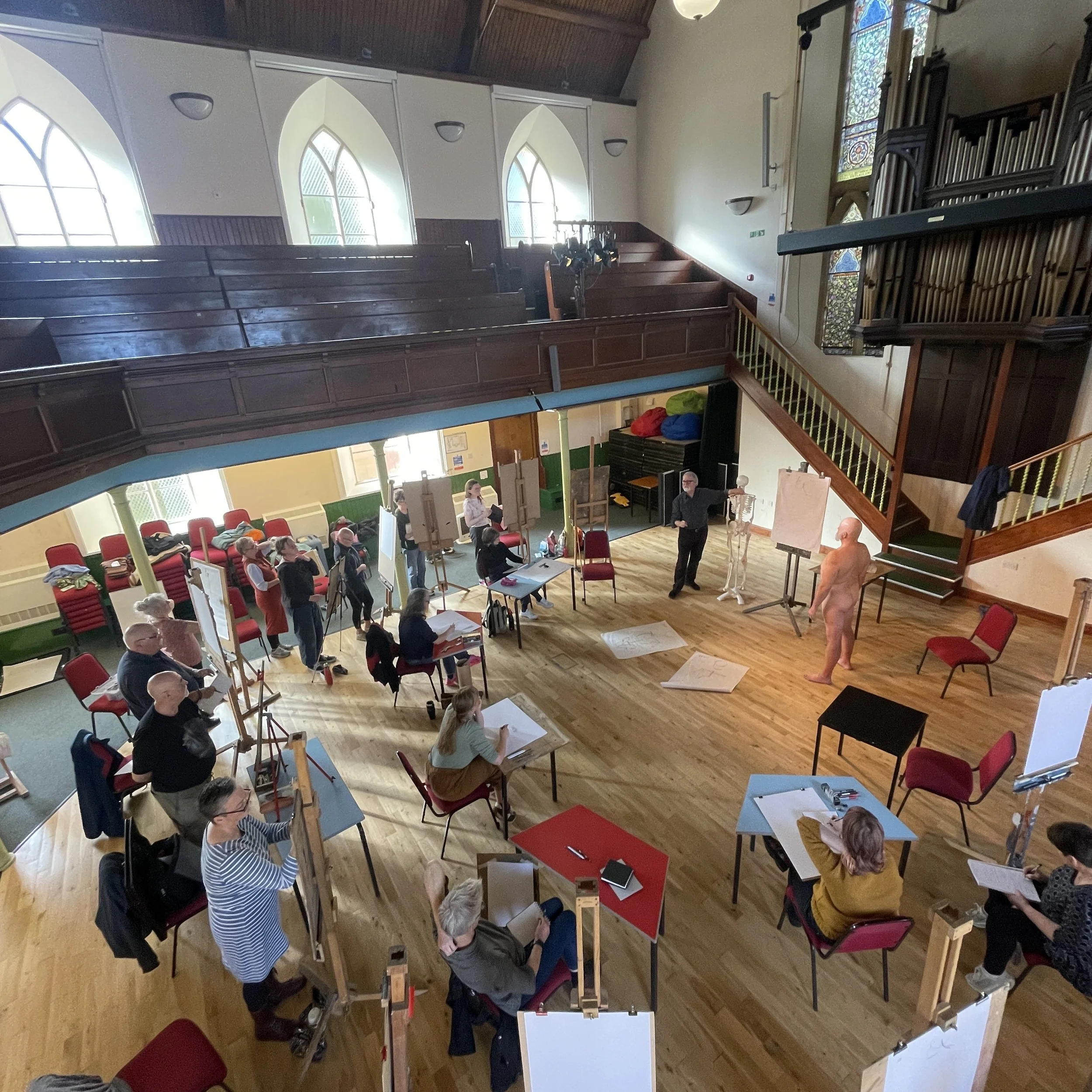
George Donald RSA, photographed demonstrating at the RSA200 Life Drawing Programme with Pier Arts Centre, Stromness, September 2026. Courtesy of the RSA.
In Orkney, George visited Art & Design students at Stromness Academy and Kirkwall Grammar as well as delivering his one-day public workshop in Stromness. Nichola Watson, Principal Teacher of Art at Kirkwall Grammar, summed up the session and the pupils’ response:
“George took them through his knowledge and the craft of drawing the human figure. This is something that pupils do not get to experience, this is a once in a lifetime chance for these kids. And I watched them and they were absolutely listening to everything, he taught them about drawing the figure from the inside out and it was just wonderful to see the process of that and I could see at the end that they were absolutely taken aback by that fantastic demonstration. It was just joy and I’m sure they’re all going to remember this. The staff were riveted and so were the kids.”
Over the six locations, 160 people took part in this opportunity to learn, not just about the infinite variety of the human form but about their own creative approaches too, for young students, experienced artists and those who had never tried drawing from life before. One participant fed back, “For me it’s really good to go back to the basics of the body”, while another said, “It’s been really interesting… hearing all the ways he explains things and how he makes it make sense to everyday life and not just in the art world I think has been really interesting and helpful”. Another said of the experience, “I’ve learned not to be afraid, I’ve learned not to be afraid of the materials”.
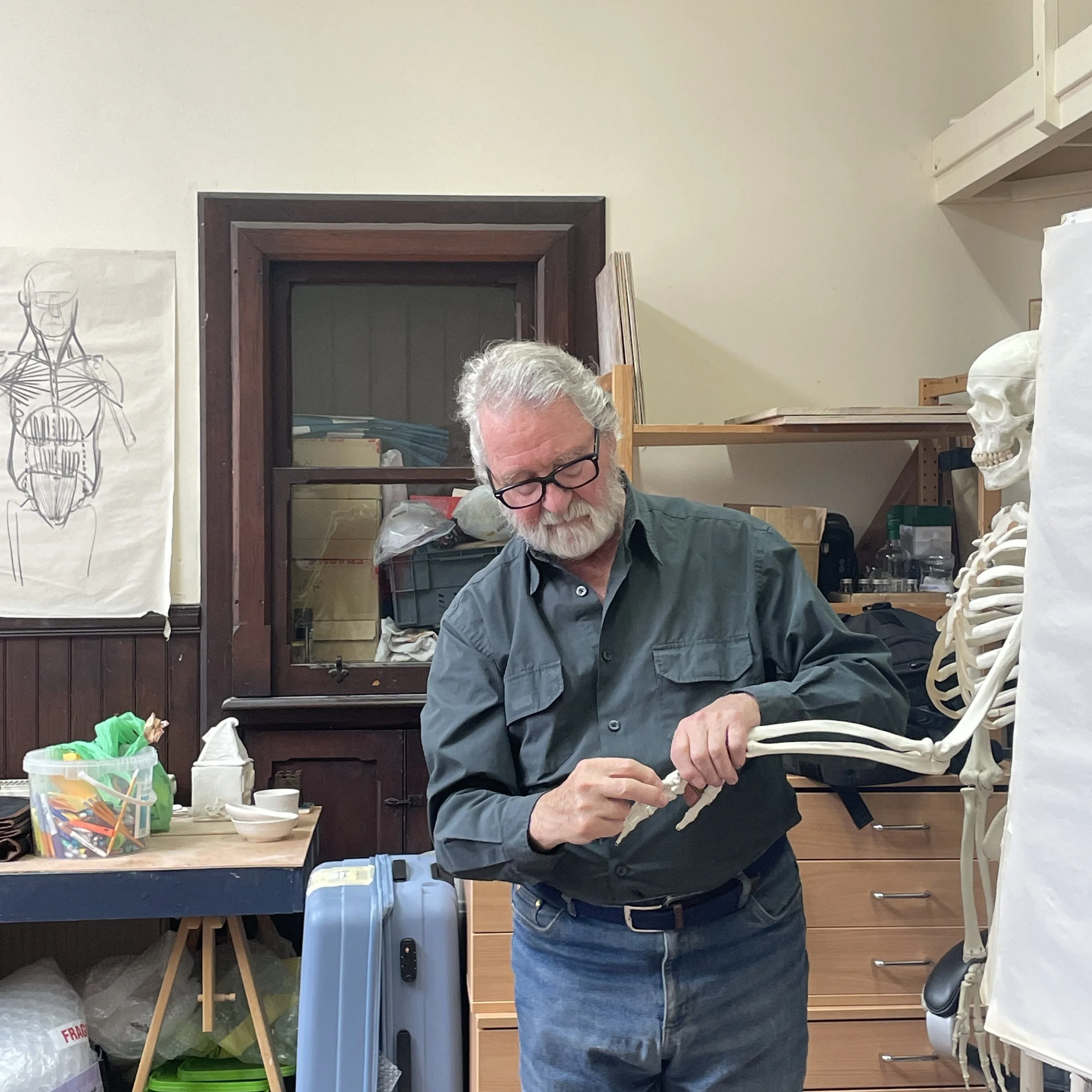
George Donald RSA, photographed at the RSA Life Drawing Programme with An Tobar, Tobermory, August 2026. Courtesy of the RSA.
George Donald feels strongly that life drawing and anatomy is about more than art practice: it’s also a philosophy. “It’s a kind of drawing and a kind of way of thinking, a way of seeing where you take complex things apart, you savour them and put them back together again. That’s a way of seeing not just human beings but clouds, trees, the world. Leading to a better way of expressing things…”
And so, covering over 1500 miles, three islands and with more than 27 hours spent at sea, George Donald has reimagined the Life School across Scotland this summer. Without doubt it was a tall order to cover the basics of human anatomy and life drawing in each place in just one day – condensing about a year’s worth of teaching into six hours – let alone contextualising this within a wider understanding of human anthropology. George has risen to the challenge, and for this the Academy and the participating partners are extremely grateful.
The feedback has been resoundingly positive and with this wealth of interest and support we now have the impetus to expand on this year of incredible partnerships, to build the Academy’s national reach and significance into its next century.
Jane Matthews